

White Masterbatch Ranking: Leading Suppliers and Performance Trends
2026-07-18
The global market for white masterbatch is evolving rapidly, driven by demands for high-opacity, cost-effective solutions. As manufacturers race to deliver superior dispersion and brightness, leading suppliers are reshaping industry benchmarks. This ranking reveals the performance trends defining top contenders, with insights into how innovators like Xinwancai are pushing boundaries. Curious who leads the pack? Let’s dive into the dynamics transforming this competitive landscape.
Current Leaders in the White Masterbatch Space
The white masterbatch market is shaped by a handful of established players who combine technical expertise with robust supply chains. Companies like Ampacet, Cabot, and Plastika Kritis have long dominated the field, each bringing decades of formulation know-how to the table. Their edge often lies in tailoring titanium dioxide dispersion for specific polymers—polyethylene, polypropylene, or engineering plastics—ensuring opacity without sacrificing mechanical properties. What sets them apart is not just scale but a deep understanding of how particle size and carrier resins influence end-product performance, from thin-gauge films to thick-walled containers.
Beyond the giants, a cluster of mid-sized innovators are gaining ground by addressing niche demands. For instance, European manufacturers like Hubron and PolyOne (now Avient) have carved out positions with high-load white masterbatches that reduce dosing errors and improve handling. These firms often collaborate directly with converters to solve real-world processing issues—like plate-out during extrusion or color shift in multilayer packaging. Their agility in customizing thermal stability and UV resistance profiles makes them go-to partners for demanding applications in automotive interiors and outdoor furniture.
In Asia, regional leaders such as Tosaf and Alok Masterbatches are expanding their footprint by blending cost efficiency with localized service. They have adapted formulations to work with locally sourced fillers and recycled content, a growing priority for many converters. The competitive landscape is also witnessing a push toward sustainable solutions, with top-tier players investing in masterbatches that incorporate post-consumer TiO2 or enhance recyclability. While the core technology may seem mature, the real differentiator today is how leaders leverage application engineering and sustainability-driven innovation to stay ahead.
What Makes a White Masterbatch Supplier Stand Out
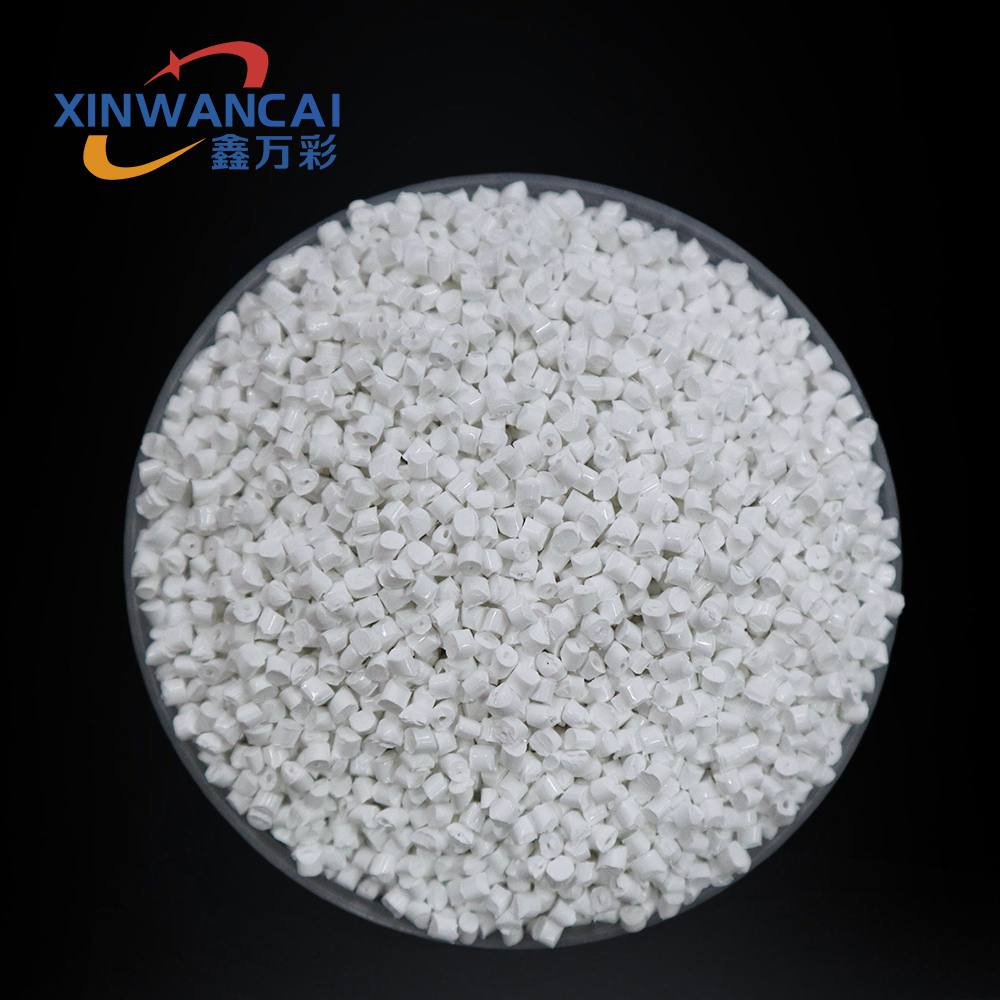
True differentiation in the white masterbatch space begins with a supplier’s command over dispersion. It’s not just about pushing titanium dioxide into a carrier—it’s about engineering a formulation that delivers consistent opacity and tint strength across ranches, even at high dilution levels. A supplier that stands out will have dedicated process controls and real-time testing that catch the slightest drift in melt flow or color values before a single pellet reaches the customer’s feed throat.
Beyond the technical grind, standing out often hinges on how a supplier handles the unexpected. When a converter needs to switch from a standard 60% TiO2 concentrate to a 70% food-contact grade mid-production—with no sacrifice in shelf appeal—the ability to reformulate and deliver within days sets the top-tier apart. It’s the combination of deep application knowledge, a truly responsive technical team, and a willingness to treat each shipment as a project rather than a transaction.
Finally, look for evidence of a supplier that invests in the raw material pipeline itself. The ones who lock in high-grade rutile from multiple sources, run incoming particle-size checks, and openly discuss lot-to-lot consistency without hesitation are the partners that help film, sheet, and fiber producers sleep at night. In an industry where a whisper of yellow can scrap a trailer’s worth of product, this kind of operational transparency isn’t a luxury—it’s the baseline that makes a supplier genuinely stand out.
Performance Metrics That Matter for White Masterbatch
The real-world performance of white masterbatch isn't just about how white it looks—it's about how consistently it delivers across every stage of processing and final application. Optical properties like brightness (L* value) and yellowness index are table stakes, but the metrics that separate reliable batches from the rest often fly under the radar. Dispersion quality, for instance, directly ties to pigment agglomerates that create visible specks or weaken film integrity. A masterbatch that disperses poorly will cause more downtime on extrusion lines due to screen pack clogging, eating into production efficiency long before anyone inspects the final part.
Thermal stability during compounding and final part conversion is another non-negotiable metric. Many processors look at heat resistance only in isolation, but the real test is how the white pigment holds up after multiple heat histories. A masterbatch that starts yellowing slightly after the second pass through an extruder will subtly shift the color of regrind-heavy products, creating batch-to-batch mismatches that quality teams scramble to explain. Melt flow behavior matters just as much—a carrier resin that doesn't match the letdown ratio can cause viscosity mismatches, leading to inconsistent opacity because the pigment isn't being distributed uniformly in the melt stream.
Long-term weathering performance often gets reduced to a single QUV number, but the metrics that actually matter in the field are gloss retention and chalking resistance under combined UV and moisture cycling. A masterbatch that keeps its L* value but loses surface gloss looks chalky and worn, failing the visual standards of outdoor applications. Additionally, lot-to-lot consistency in tinting strength should be measured not just by absolute numbers but by how little adjustment is needed when switching between production batches. The true cost of a masterbatch isn't its price per kilo—it's the hidden expenses of extra sampling, machine stops, and color corrections when these performance metrics drift outside narrow, unspoken limits.
Shifts in White Masterbatch Formulation and Processing
The landscape of white masterbatch formulation is quietly undergoing a rethink, driven less by sudden breakthroughs and more by a steady accumulation of practical pressures. Traditional reliance on commodity titanium dioxide grades, while still widespread, is being challenged by a need for more tailored optical performance. Compounders are experimenting with surface-treated pigments that offer better dispersion in high-speed thin-film applications, reducing the occurrence of specks and streaks that mar final product quality. Meanwhile, processor demand for lower melt temperatures is pushing formulators to reassess carrier resin selection, often swapping out standard polyolefins for specialized low-viscosity grades that blend more readily without compromising opacity. It’s a balancing act—maintaining hiding power while thinning out the melt—that has quietly redefined what a “premium” white masterbatch truly means.
On the processing side, the shift is equally subtle but significant. Older machinery retrofitted with higher-torque screws is forcing masterbatch producers to design for broader compatibility, making a single product work across disparate equipment fleets. This has led to a surge in universal carrier systems that bond adequately with polyethylene, polypropylene, and even some engineering resins without causing delamination or brittleness. The real art, however, lies in dosing consistency—gravimetric feeders are becoming standard not just for accuracy, but for the repeatability they bring to high-cavity molds. A poorly chosen white batch can now trigger cascade defects across dozens of parts in seconds, so the tolerance for blending errors has narrowed sharply. Processors are learning that the masterbatch, far from being a commodity drop-in, is an active variable in cycle time and shrinkage control.
The push toward thinner walls in packaging and lightweight automotive parts has added another layer of complexity. Formulators must now deliver white masterbatches that not only hide the substrate but also withstand aggressive down-gauging without whitening agents migrating to the surface over time. This has accelerated the use of hybrid pigment systems that combine inorganic TiO2 with fine organic extenders, achieving coverage through multiple light-scattering mechanisms. At the same time, processing speeds keep climbing, so the dispersion demands become almost contradictory: faster throughput with even finer particle distribution. It’s a space where incremental tweaks in pellet geometry and additive sync can make or break a production run, and the conversations between plant floor operators and lab technicians have never been more direct or more urgent.
How End-Use Sectors Are Driving Demand
The transformation of energy demand is no longer a distant projection—it’s unfolding in real time, driven by the everyday choices of industries and households. Manufacturing facilities, for instance, are swapping out legacy equipment for high-efficiency electric alternatives, not simply to cut emissions but to lock in lower operational costs. This shift is particularly visible in food processing and light assembly, where continuous operations make energy a major line item. As these sectors modernize, their combined appetite for electricity is reshaping utility load curves in ways that traditional forecasting models never anticipated.
On the commercial side, the surge in data-intensive activities—from cloud computing to AI model training—has turned server farms into one of the fastest-growing consumer classes. These facilities demand power densities that dwarf typical office buildings, and their need for round-the-clock reliability is pushing grid operators to rethink capacity planning. Meanwhile, building owners are retrofitting HVAC and lighting systems with smart controls that respond to occupancy and price signals, effectively turning passive structures into active participants in demand management. The result is a more dynamic, and at times unpredictable, consumption landscape.
Perhaps the most visible shift is happening on the road. Logistics fleets and public transit agencies are pouring investment into electric vehicles, drawn by declining battery costs and tightening emissions rules. This isn’t just a replacement of gasoline with electrons; it’s spawning an entirely new geography of charging hubs that can strain local distribution networks if not strategically sited. As delivery vans, buses, and even short-haul trucks plug in, the ripple effects are forcing a conversation about how to align infrastructure investment with emerging demand hotspots—often in places where the grid was designed for a very different era.
Where the White Masterbatch Market Is Heading Next
The white masterbatch market is quietly shifting gears, moving beyond its traditional role as a simple colorant. Demand is now being shaped by industries that need more than just opacity—they’re looking for functional additives that enhance durability, weather resistance, and processing efficiency. From blown film to injection molding, converters are pushing for higher pigment loading, better dispersion, and lower dosage rates, all without sacrificing mechanical properties. This isn’t just about cost per kilo anymore; it’s about total formulation value, and that’s redefining what suppliers bring to the table.
On the regional front, the story gets more nuanced. While Asia-Pacific still dominates production volumes, the real action is in application-specific grades designed for packaging, automotive, and construction sectors. Companies are investing in twin-screw compounding and tailored carrier resins to match niche polymer systems, creating masterbatches that perform reliably under extreme conditions. Meanwhile, sustainability pressures are quietly rewriting the rulebook—lightweighting, recyclability, and compatibility with post-consumer resins are no longer buzzwords but baseline expectations. Those who can marry high opacity with eco-conscious credentials are capturing attention in markets where regulatory scrutiny is tightening.
Looking ahead, the white masterbatch space is poised for a quiet restructuring. Consolidation among compounders and resin producers points to a future where technical partnerships matter more than volume deals. Small and mid-sized players are carving out niches with ultra-clean, low-volatile masterbatches for sensitive applications like healthcare and food contact. At the same time, the push toward single-material packaging is opening new doors for masterbatches that don’t disrupt the recycling stream. It’s a slow-motion evolution, but the direction is clear: value is migrating from commodity tonnage to engineered solutions, and the market will reward those who read the signals early.
FAQ
It's basically a snapshot of who's leading in production capacity, quality consistency, and innovation. Rankings often highlight companies that excel in titanium dioxide dispersion, custom color matching, and their ability to serve high-growth sectors like packaging and automotive.
Names like Ampacet, A. Schulman (now LyondellBasell), PolyOne (Avient), and Clariant usually dominate. They've built strong reputations through global distribution, technical support, and long-term contracts with major polymer producers. Some regional players like Plastika Kritis in Europe or Alok Masterbatches in India also surface often due to their specialized local expertise.
There's a big push toward higher opacity at lower addition rates, driven by cost pressures. Also, sustainable options with recycled content or bio-based carriers are gaining traction. Many suppliers are tuning their products for thin-film applications and improving heat stability for engineering plastics.
A sudden jump usually means a company invested heavily in new capacity or landed a major contract. Declines can hint at quality issues or raw material sourcing problems. It's also common to see mergers and acquisitions reshuffle the list—like when a global firm buys a regional leader, their combined market share bumps up the ranking.
Not just sales. Industry analysts typically weigh revenue, production output, geographic reach, R&D spending, and sometimes customer satisfaction surveys. Specialty masterbatch producers might rank lower in sheer volume but tops in innovation or niche applications, so you have to read the fine print.
Definitely look at batch-to-batch consistency and technical service response time. A top-ranked supplier won't help if they can't troubleshoot issues on your production floor quickly. Also, check if they have compounding expertise in your specific polymer—processing white in PET behaves differently than in polypropylene, for instance.
Conclusion
The white masterbatch landscape is dominated by a handful of suppliers who combine deep formulation expertise with operational reliability. Leaders like Ampacet, Schulman (now LyondellBasell), and Clariant have secured their positions not just through capacity, but by consistently delivering high-opacity, dispersion-stable grades that integrate seamlessly into downstream processes. What truly sets a top-tier supplier apart is the ability to customize TiO2 loading and carrier resins for specific polymer matrices, while maintaining tight batch-to-batch consistency. Technical support, colour-matching precision, and responsiveness to evolving regulatory requirements—such as food-contact approvals or reduced carbon footprints—are now baseline expectations rather than differentiators. Performance metrics go beyond basic opacity and whiteness index; today’s procurement decisions weigh dispersion quality, filter pressure buildup, thermal stability, and lightfastness, often evaluated through accelerated weathering and rheological profiling.
Formulation trends reveal a shift toward higher filler loadings and processing aids that reduce energy consumption during compounding, driven partly by sustainability targets and cost pressures. End-use sectors are reshaping demand patterns: packaging continues to dominate, but the push for thinner films and mono-material structures demands ultra-high-concentration masterbatches that do not compromise mechanical properties. The construction sector demands UV-resistant, chalking-stable grades for profiles and pipes, while automotive applications increasingly require heat-resistant masterbatches for interior parts. Looking ahead, the market is gravitating toward circular-economy-compatible solutions—recyclate-compatible carriers and masterbatches designed for mechanical recycling streams—while digitalisation in colour management and AI-driven formulation tools promise to further separate the leaders from the followers. The competitive ranking will increasingly reflect a supplier’s ability to anticipate these shifts and co-develop future-proof solutions with brand owners and converters.
Contact Us
Contact Person: JACK
Email: [email protected]
Tel/WhatsApp: 86 18650130917
Website: https://www.xinwancai.com/