

Top Stand-Up Pouch Filling Machine Features That Improve Packaging Efficiency
2026-11-16
Packaging lines often look fine on paper until a stand-up pouch machine slows everything down. The difference between hitting daily output targets and constantly rescheduling orders usually comes down to a few overlooked design details. From fill accuracy to quick-change tooling, the right equipment removes small bottlenecks that quietly drain productivity. At Wanying Machinery, we focus on those practical upgrades that make a measurable impact on the floor. This post highlights the features that actually move the needle in packaging efficiency.
Overfill Costs Fade With Self-Adjusting Fill Heads
Filling lines have long treated overfill as a necessary buffer. A fixed nozzle setting has to account for viscosity shifts, temperature swings, and minor pressure fluctuations, so operators often dial in a little extra product just to stay safe. That cushion quietly becomes a recurring cost, especially when run volumes climb.
Self-adjusting fill heads change the math. Instead of relying on a static target, they monitor fill weight or flow in real time and make small corrections throughout the run. The result is a tighter fill band that stays close to the stated volume, cutting giveaway without demanding constant manual checks.
What fades first is the habit of overcompensating. Once the equipment responds to drift on its own, the need for wide safety margins drops, and the savings show up in raw material, cleanup, and even downstream packaging consistency.
Tool-Free Changeovers Keep Small Teams Productive
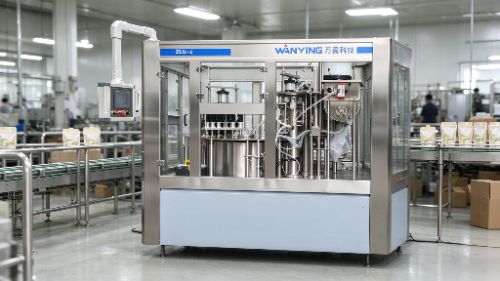
On a small production line, every minute spent hunting for wrenches or waiting on a maintenance tech pulls directly from output. Tool-free changeovers remove that friction. Operators can release, adjust, and reposition guides, rails, or filling heads with hand knobs, levers, and quick-release clamps. The result is less downtime between product runs and fewer interruptions for the rest of the team.
The real advantage shows up when a three- or four-person crew has to switch from one label size to another in the middle of a shift. Instead of coordinating a tool handoff or walking to the shop bench, one person can complete the adjustment at the machine. That keeps the team spread across their normal stations rather than clustering around a stalled line.
It also lowers the barrier for cross-training. When changeovers don't require a feel for torque or familiarity with a specific tool set, newer operators can learn the sequence without as much supervision. Small teams stay flexible, schedules hold up, and the day's run list doesn't fall apart because someone borrowed the wrong Allen key.
Film Drift Corrections Happen Before Sealing
Film drift rarely shows up as a single dramatic shift. More often it accumulates through tension changes, roller wear, or slight splices in the material. If those small movements are left alone until the heat seal closes, the web can sit just outside the seal zone and produce edges that look fine at a glance but fail later under pressure or temperature. Pulling correction back to the pre-seal stage gives operators a window to nudge registration, realign the guide, or adjust unwind tension while the film is still free to move.
That window matters because sealing fixes the position permanently. A drift correction made after sealing usually means cutting out the affected section or trying to hide the misalignment in downstream folding, which rarely works cleanly. On many lines the more reliable habit is to hold the web briefly at a check point, compare the repeat mark or film edge against a reference, and make small corrections before the sealing jaws cycle. It costs a few seconds but avoids winding rolls that carry the same placement error across every unit.
Live Weight Feedback Ends Fill Guesswork
The moment a filler gets live weight feedback, the old routine of weighing a few samples and nudging settings starts to disappear. Every container, pouch, or bottle reports how much product actually landed, and the filler adjusts the next dose without waiting for an operator to notice drift.
That matters most when product characteristics shift from batch to batch. A change in moisture, granule size, or hopper level used to throw off a timed fill. With live weight in the loop, the system tightens the band around the target and keeps running instead of producing a cart full of rejects.
It also changes how operators spend their shift. Rather than chasing individual underweights with manual corrections, they watch trends, handle upstream issues, and let the scale do the fine-tuning that guesswork never could.
Stored Recipes Bring Back Settings in Seconds
A saved recipe works like a snapshot of the exact positions, timings, and output levels you dialed in for a specific job. When you come back to that material or repeat a similar run, selecting the stored recipe drops every parameter back into place at once. There is no need to scroll through menus and try to remember whether the speed was set to 62 or 65, or which cooling delay worked best last time.
The real time savings show up when you switch between tasks that require very different configurations. Instead of rebuilding a setup from scratch and risking a missed checkbox, you load the recipe, let the machine restore the complete state, and make only the small tweaks the current job actually needs. It keeps consistency high and gets you from idle to running in a few seconds.
Sloped, Drainable Frames Make Washdowns Shorter
Puddles have a way of turning a quick rinse into a drawn-out cleanup. The sloped, drainable frame removes that friction by giving water a clear downhill path, so rinse water and loosened debris leave the equipment instead of settling into low spots around mounts and welds.
Crews notice the difference most at the end of a shift. Fewer standing pools mean less towel work, less detergent buildup, and a shorter window between production stops. Over a week of daily washdowns, those saved minutes add up without asking sanitation to move faster.
FAQ
The gains usually come from a mix of servo-driven filling, reliable pouch opening, and automated transfer rather than one single add-on. Machines that pair precise fill heads with sensors that confirm each pouch is open before dosing tend to run longer without operator intervention, which is where real efficiency shows up.
A magazine-fed system keeps a buffer of pouches ready, so the line does not stop every time an operator needs to grab a stack. Pick-and-place arms with vacuum cups also place pouches more consistently, which lowers the chance of misaligned bags jamming at the fill or seal stations.
Overfilling wastes product and money, while underfilling leads to rework or rejected batches. When fillers hold tight tolerances on their own, there are fewer interruptions for weight checks and corrections, so the line keeps a steady cadence instead of starting and stopping for quality adjustments.
Weak or crooked seals cause leakers that have to be caught later, which adds handling and waste. Consistent temperature control, dwell time, and jaw pressure keep rejects low, so fewer pouches need to be pulled off the line and repacked.
Yes, especially when a plant switches between pouch sizes or products several times a day. Tool-free adjustments, recipe storage, and guided changeover steps can cut setup from 40 minutes to under 10, turning changeover time back into production time without rushing operators.
When weighing and rejection happen in line, there is no separate station that creates a queue. A pouch that is outside the target weight is removed immediately, and the filler can receive feedback to correct drift before it produces a long run of bad bags.
Clear fault messages, sensor status views, and historical alarms make it easier to pinpoint the cause of a stoppage. Machines that show exactly which station triggered a fault help maintenance go straight to the problem instead of spending half a shift testing one section after another.
Conclusion
Packaging lines rarely suffer from a single bottleneck, but fill accuracy is often the quiet drain on margin. Self-adjusting fill heads respond to product density and flow changes without manual intervention, so the giveaway that used to hide in every pouch gradually disappears. Paired with live weight feedback, the machine no longer relies on an operator's best guess or a periodic spot check. Each fill is measured and corrected on the move, which keeps dense pastes, powders, and chunky sauces within a much tighter tolerance. Stored recipes reinforce that consistency. Once a product has been dialed in, the settings can be recalled in seconds rather than rebuilt from scratch after a shift or a seasonal item returns. That reduces setup errors and makes it practical to run shorter, more varied batches without eating into the day.
Efficiency also shows up in how quickly a small crew can move from one SKU to the next. Tool-free changeovers remove the usual hunt for wrenches and alignment jigs, so format parts can be swapped by one person without shutting the line down for extended periods. Film drift corrections happen before sealing, preventing the crooked seals and wasted material that often surface only after a bad run has already started. On the sanitation side, sloped, drainable frames let rinse water leave the machine instead of pooling around bearings and seams. Washdowns become shorter and less messy, which is a practical advantage when a facility handles allergens or runs multiple products on the same line.
Contact Us
Contact Person: Tyson
Email: [email protected]
Tel/WhatsApp: +8613396971296
Website: https://www.wanyingmachinery.com