

Top Current Sense Resistors for Accurate Power Monitoring
2026-06-28
Accurate power monitoring starts with the right current sense resistor, but with so many options available, choosing the best one can feel overwhelming. Whether you're designing a battery management system, a motor controller, or a power supply, the precision of your measurements depends heavily on this tiny component. At Milliohm, we understand that every milliohm counts. In this guide, we’ll explore the top current sense resistors that combine low resistance with high accuracy, helping you make informed decisions for your next design.
Understanding the Role of Shunt Resistors in Modern Power Systems
In the intricate web of modern power electronics, shunt resistors serve as quiet sentinels of current measurement. By strategically placing these low-resistance elements in series with a load, the tiny voltage drop they generate becomes a precise, real-time echo of the flowing current. This elegantly simple principle bypasses the bulk and magnetic complexities of traditional current transformers, allowing engineers to monitor everything from battery charge cycles to motor phase currents with remarkable accuracy. The rise of precision analog front-ends and high-resolution ADCs has only amplified their importance, turning a humble metal strip into a critical node for control loops and energy management.
Beyond basic measurement, shunt resistors have carved out a vital niche in the realm of system protection and diagnostics. When a circuit veers into overcurrent territory, the shunt’s instantaneous voltage signal triggers fast-acting comparators that can shut down switches in mere microseconds—far quicker than any fuse. This rapid intervention is indispensable in high-stakes environments like electric vehicle traction inverters or industrial servo drives, where a split-second delay can mean the difference between a graceful shutdown and catastrophic failure. Furthermore, by continuously profiling the current waveform, these components expose subtle anomalies such as bearing wear in motors or developing short circuits, turning raw data into actionable intelligence for predictive maintenance.
The push for higher efficiency has propelled shunt resistors into new voltage and temperature frontiers. Wide-bandgap semiconductors, with their lightning-fast switching edges, demand shunts with rock-bottom inductance to avoid ringing and measurement artifacts. Material science has answered with advanced alloys like manganese-copper and nickel-chromium, which offer nearly flat temperature coefficients and minimal thermal drift, ensuring consistent readings even as ambient temperatures soar. Add to that the integration of galvanic isolation and digital interfaces directly onto shunt modules, and what was once a dumb component is now a smart sensor, relaying current data with galvanic isolation via SPI or I2C. This evolution cements the shunt resistor’s status as a foundational building block that adapts and thrives amidst the relentless march of power technology.
Key Specifications That Define a Resistor’s Sensing Accuracy
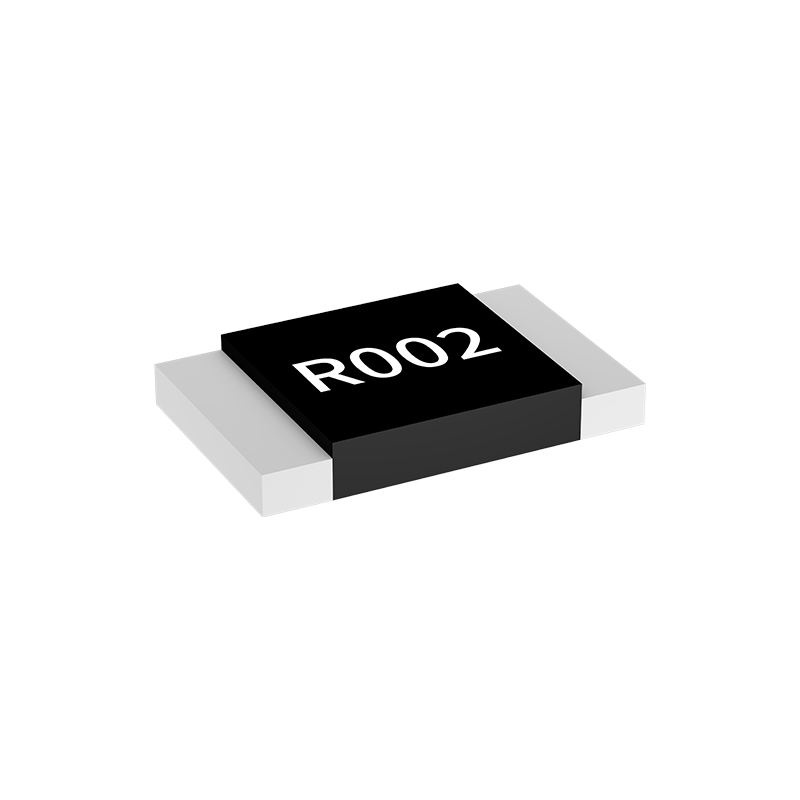
Resistor accuracy extends well beyond the nominal tolerance printed on the datasheet. While a tight initial tolerance might grab attention, real-world sensing precision is shaped by a cluster of parameters that interact with the operating environment. Temperature coefficient of resistance (TCR) becomes decisive when circuits face fluctuating ambient conditions or self-heating from applied power. Even a seemingly minor shift of a few parts per million per degree Celsius can introduce measurement drift that tolerance alone fails to capture. Load-life stability, or the ability to hold its value after thousands of hours under stress, often separates components that last from those that silently degrade signal integrity.
Thermal effects—both external and internal—demand careful attention. A resistor’s power rating sets the ceiling for safe dissipation, but pushing too close to that limit accelerates aging and creates local hot spots that warp the effective resistance. In current-sensing applications, a low TCR alone is not enough if the package cannot shed heat efficiently; the resulting temperature rise can push a precision part out of its sweet spot. Meanwhile, thermal EMF generated at junctions of dissimilar metals introduces a low-level voltage error that masquerades as a signal change, easily overlooked yet costly in high-resolution measurements.
Noise performance and long-term reliability complete the picture. Excess noise, flickering with current flow, can bury faint sensor signals beneath a floor of random fluctuations, and this behavior is strongly tied to resistor construction—thick film, thin film, and foil each have distinct signatures. For designs that expect calibration to hold for years, specifications like moisture resistance and solder-heat stability prove as critical as the initial accuracy number. Ultimately, a resistor’s sensing fidelity is a balance of these factors, each one amplifying or masking the others under real loads, and overlooking any single parameter invites unexpected errors downstream.
Balancing Cost and Performance: When Precision Matters Most
Finding the sweet spot between expenditure and output isn't always straightforward, but in certain fields the margin for error simply doesn't exist. Precision isn't a luxury; it's the bedrock of safety and reliability. When a misdiagnosis can alter a life or a structural miscalculation can lead to collapse, cutting corners on accuracy in the name of budget becomes unthinkable. This is the domain where performance metrics need to be uncompromising, and the cost conversation shifts from "how little can we spend?" to "what's the true price of failure?"
Consider medical imaging, where algorithms that detect tumors must deliver unwavering accuracy. A false negative there doesn't mean a returned product—it means a delayed treatment, and possibly a lost life. Similarly, in aerospace engineering, tolerances aren't just numbers on a blueprint; they separate a routine flight from a catastrophic event. These scenarios demand that the finest granularity of data isn't sacrificed on the altar of computational thrift. Performance here is measured in human outcomes, not just processing cycles.
The path forward often involves architectures that squeeze maximum integrity out of each calculation without blindly doubling resources. Techniques like dynamic scaling, where processing power surges only when ambiguity peaks, or hybrid models that pair lightweight prescreening with in-depth analysis only for edge cases, help maintain a responsible cost base. It's not about choosing between saving money and being precise—it's about designing systems wise enough to know when they can afford to be frugal and when they absolutely cannot.
Overcoming Thermal Drift for Consistent Measurements
Thermal drift can gradually undermine measurement precision, but a few practical steps keep it in check. Allowing instruments a proper warm-up period lets internal components stabilize, minimizing shifts during operation. In environments with fluctuating temperatures, active cooling or isolation from heat sources ensures that readings remain steady even during prolonged use.
Regular calibration against a known reference is another reliable way to correct for drift. Many modern devices offer built-in compensation algorithms, yet they still benefit from periodic manual recalibration, especially when moving between different temperature zones. Maintaining a constant ambient temperature, where feasible, simplifies the process and reduces the need for frequent adjustments.
Sometimes the drift originates from the sensor’s own power consumption, so reducing duty cycles or using lower excitation currents can help. For long-term measurements, logging temperature data alongside primary outputs allows post-processing corrections. By combining good thermal design with mindful operating practices, measurement consistency becomes far easier to sustain.
Material Choices and Their Impact on Long-Term Stability
Every component that ends up in a finished product carries a set of assumptions about how it will perform over time. Smart material choices rarely come down to a single property like tensile strength or hardness — it is the interplay between environment, load cycles, and chemical exposure that determines whether a part will quietly do its job for decades or fail without warning. In coastal installations, for instance, switching from galvanized steel to a duplex stainless grade can mean the difference between a structure that weathers salt spray gracefully and one that needs constant patchwork after just a few seasons. The real challenge is anticipating not just the obvious stressors, but the subtle ones — thermal expansion mismatches, galvanic couples, or ultraviolet breakdown — that only surface after years of accumulated exposure.
Often, the immediate budget drives decisions toward cheaper, more available materials, and that is where the seeds of long-term instability get planted. A polymer that looks identical on a datasheet may lose plasticizers and become brittle in a dry, hot environment, while a slightly more expensive alternative retains flexibility and impact resistance. The cost of that initial compromise isn’t paid upfront; it comes due in warranty claims, unscheduled downtime, or safety recalls that dwarf any upfront savings. Experienced engineers learn to read between the lines of material certifications, questioning not just what a substance is, but how it was processed, whether its microstructure will remain stable under load, and what happens when it meets lubricants, cleaners, or even moisture in the air.
There is also a human tendency to over-rely on accelerated aging tests, which can give a false sense of security. Cyclic fatigue, creep, and stress corrosion cracking often follow non-linear paths that laboratory conditions cannot fully replicate. Some of the worst failures occur in materials that pass standard qualification protocols easily but turn brittle or crack-prone when exposed to the messy, variable conditions of actual use. Long-term stability isn’t a checkbox; it’s a mosaic of small decisions — alloy composition, surface finish, heat treatment, joining method — that collectively determine whether a product becomes a maintenance headache or a dull, reliable workhorse nobody thinks about until it quietly outlasts its expected life.
Practical Layout Tips for Minimizing Signal Interference
When laying out a board, the first thing to watch is how you place your components. Keep high-speed digital circuits physically separated from sensitive analog sections, and never route fast signals near crystal oscillators or reference voltage lines. Even a few millimeters of extra spacing can drop crosstalk dramatically, especially if you avoid running traces in parallel over long distances.
Grounding strategy makes or breaks signal integrity. Instead of a single-point ground that works well only at low frequencies, use a solid ground plane on one layer to provide a low-impedance return path. If you must split the plane for isolation, bridge the gap at a single point directly under the mixed-signal chip, but never cut the plane under a trace—that creates a slot antenna and radiates noise.
Trace routing details often get overlooked. Differential pairs need to be length-matched and kept close together to reject common-mode interference, while clock lines should be as short and straight as possible, with a series termination resistor placed right at the driver. For sensitive analog traces, guard rings and buried routing between ground pours can shield against leakage currents and external electric fields, giving you cleaner signals without extra components.
FAQ
An ideal one offers ultra-low resistance with minimal temperature coefficient, ensuring voltage drop remains linear across loads. Its four-terminal Kelvin connection is key, separating current path from sense lines to eliminate lead resistance errors.
Consider your full-scale current and ADC input range. You want a drop large enough to overcome noise but small enough to avoid power loss. Typically target 50–100mV at max load, then calculate R = V_drop / I_max.
Low TCR matters because self-heating and ambient changes shift resistance, directly impacting measurement accuracy. A 50ppm/°C resistor can drift significantly under load, while 15ppm/°C or lower keeps readings stable across temperature swings.
It's essential. Use Kelvin routing with separate force and sense traces right at the resistor pads. Keep sense lines away from noisy switching nodes and use a differential amplifier close to the shunt to avoid coupling interference.
Thermal EMF arises from junctions of dissimilar metals at the resistor terminals when a temperature gradient exists. It adds a DC offset that can be confused with load current. Choosing alloys like manganese-copper reduces this effect dramatically.
Metal foil provides a low TC, rapid thermal stabilization, and excellent long-term stability. Unlike thick film, foil elements have a homogeneous structure that avoids hot spots and nonlinearity, making them superior for precision monitoring.
For currents above a few amps, 2-terminal layout parasitics can dominate error. A 4-terminal device truly separates current and sense paths, eliminating IR drop in the connection leads—crucial for high-current applications like motor drives.
Conclusion
Accurate power monitoring hinges on the humble shunt resistor, a component whose simplicity belies its critical function. In modern power systems, these resistors provide the fundamental current-to-voltage conversion that enables precise measurements, but not all shunts are equal. Key specifications like tolerance, temperature coefficient of resistance (TCR), and power rating directly define sensing accuracy, with lower TCR values being essential for minimizing error as temperatures fluctuate. Yet, selecting the best current sense resistor involves a delicate balance between cost and performance. High-precision metal foil or wirewound resistors offer outstanding initial accuracy and stability, but their price can be prohibitive for high-volume applications. Thick film alternatives provide a more economical solution, though often at the expense of tighter tolerances. Engineers must carefully match the required precision to the application’s real needs, avoiding over-specification while ensuring reliable data.
Thermal drift poses one of the greatest challenges to consistent measurements, as self-heating and environmental changes can skew readings. Managing this requires both proper component selection and thoughtful layout. Materials like manganin or zeranin, with their inherently low thermal EMF and stable resistance over time, help maintain long-term integrity, especially in harsh conditions. However, even the best resistor can be compromised by poor PCB design. Practical layout techniques—such as using Kelvin connections to eliminate trace resistance, placing the shunt away from heat sources, and routing sense lines as differential pairs—are vital for suppressing signal interference and preserving accuracy. Ultimately, the top current sense resistors are those that combine the right material science with application-aware integration, delivering trustworthy power monitoring without drift or noise.
Contact Us
Contact Person: Yuying Gao
Email: [email protected]
Tel/WhatsApp: +86 18926013721
Website: https://en.milliohm.net/