

Top 10 Vacuum Load Break Switches for Reliable Power Distribution
2026-09-07
Reliable power distribution hinges on equipment that can handle load interruptions safely and efficiently. In this guide, we spotlight the top 10 vacuum load break switches that excel in arc quenching, durability, and operational safety. Whether you're upgrading a substation or designing a new feeder, choosing the right switch matters. Brands like Deepwill are raising the bar with compact, maintenance-friendly designs that don't compromise on performance. Dive in to see which models stand out—and why smart engineers are making the switch.
Vacuum Arc Quenching: Why It Outlasts Air and Oil
Vacuum arc quenching relies on a simple physical fact: once an arc forms in a high vacuum, there are almost no gas molecules left to ionize. The arc is actually sustained by metal vapor from the contacts themselves. When the current crosses zero, that vapor condenses back onto the contact surfaces in microseconds. The result is a very rapid recovery of dielectric strength, which means the gap can withstand voltage almost immediately after interruption.
Air and oil interrupters work differently. Air contains oxygen and moisture, and every arc promotes oxidation and contact erosion. Oil, while better at cooling, gradually breaks down under repeated arcing—it forms carbon particles, sludge, and acidic byproducts. This degradation reduces the medium's insulating ability over time and demands filtration or replacement. Vacuum has none of these aging mechanisms. The contact material is chosen for low erosion and the vacuum stays clean for decades.
For that reason, vacuum interrupters often outlast their air or oil equivalents by a wide margin. The sealed-for-life construction keeps the vacuum stable; there is no oil to test or refill, no compressed air system to maintain. Even after tens of thousands of operations, the contact gap and vacuum integrity remain within specification. This inherent longevity explains why vacuum switching technology has become the default choice for medium-voltage applications where minimal maintenance and long service life matter.
Breaking Capacity or Continuous Current: Which Rating Should Drive Your Choice?
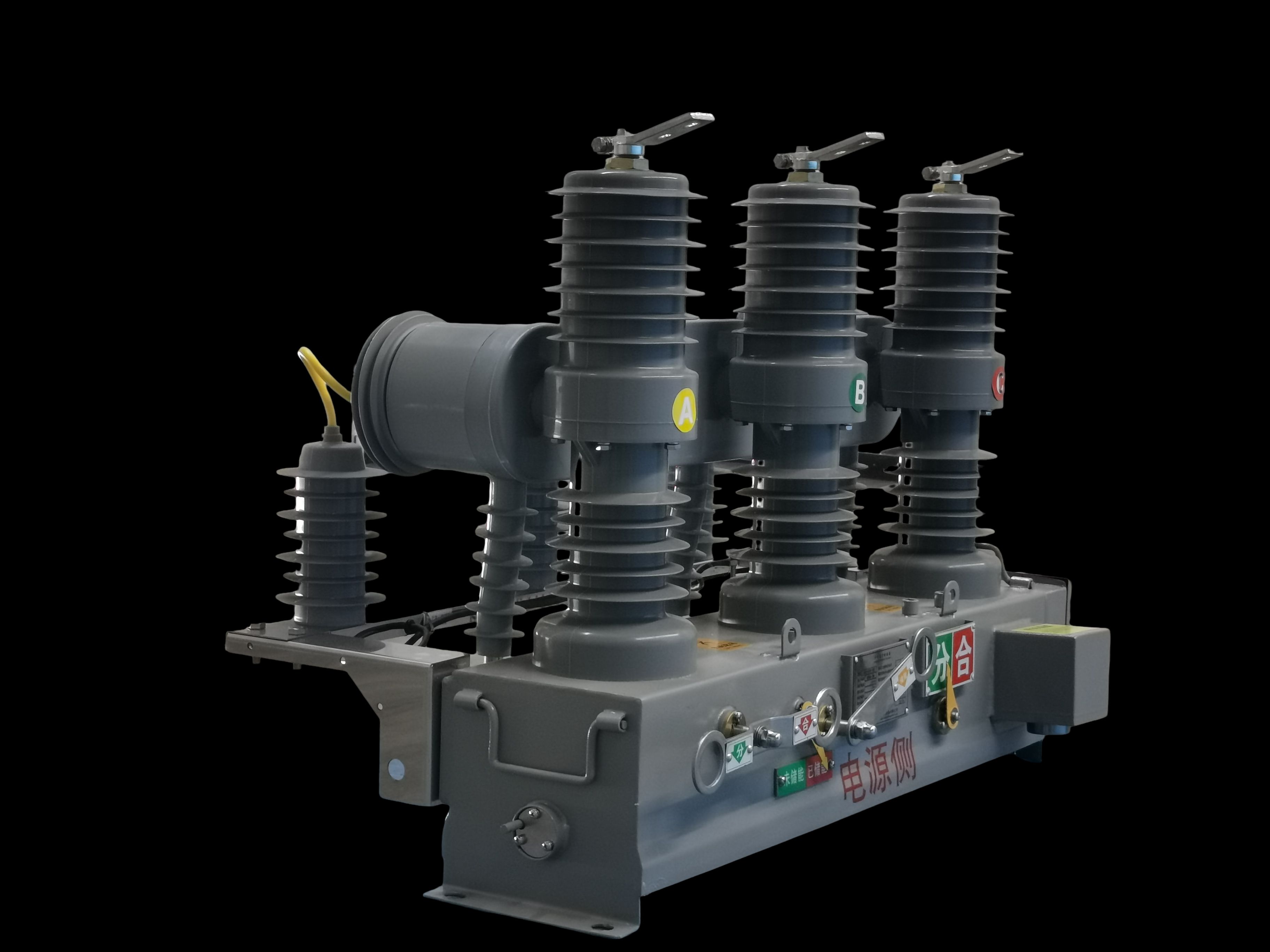
Engineers often start with the continuous current rating because it reflects the load the breaker carries hour after hour. But that figure says nothing about what happens when a short circuit hits. A device rated for 800 A continuous may still fail catastrophically if it lacks sufficient breaking capacity for the available fault current at its bus. Let the worst-case fault, not the normal running load, establish the first filter.
The context matters just as much as the label. On a main incoming feeder close to a transformer, fault levels can run to tens of kiloamps—far beyond the load current—so breaking capacity becomes the deciding spec. Further downstream, where impedance has already tamed the fault current, continuous rating, thermal derating in hot panels, and harmonic heating may carry more weight. A breaker that is oversized for continuous current but undersized for interruption is a hidden liability.
A practical sequence works better than balancing the two in the abstract. Confirm the available prospective short-circuit current at the installation point first, then filter for breakers that exceed that value. Only after that should you compare continuous current, trip curves, and environmental factors. Breaking capacity sets the safety boundary; continuous current fine-tunes performance inside it.
Remote Substations Show Why Mechanical Endurance Beats Electrical Specs
Out in remote substations, the spec sheet rarely tells you which breaker will still close after a decade of dust, corrosion, and half-hearted maintenance visits. Electrical ratings look tidy on paper, but the real failure mode is almost always mechanical: a pitted latch, a stiff charging spring, a linkage that no longer travels far enough. When the nearest crew is hours away, that kind of wear is what takes a substation offline, not a modest difference in interrupting capacity.
Field crews learn to read the physical signs rather than the nameplate. A mechanism that operates smoothly by hand, with clean alignment and no excessive free play, tends to outlast one that barely scrapes through its type tests. In remote settings, where every unplanned trip becomes a logistics problem, mechanical robustness quietly wins over headline electrical performance.
Underground and Pad-Mounted Jobs Where Vacuum Switches Pay for Themselves
On residential underground feeds, a single fault can leave a whole block dark while crews spend hours pulling elbows and testing cables. Installing a vacuum switch at the riser pole or pad-mounted junction changes that equation. Instead of dispatching a line crew to isolate the circuit by hand, operators can open the switch remotely and restore power to everyone upstream in less than a minute. The switch often pays for itself after just one avoided truck roll and overtime call-out.
Pad-mounted vacuum switches also eliminate the messy oil handling and arc-flash exposure that come with older air-break or oil-filled designs. Because the contacts operate inside a sealed vacuum bottle, there is no external arc, no gas to refill, and no routine contact maintenance. For a utility with hundreds of pad-mounted transformers in loop schemes, that reduction in preventive maintenance hours adds up fast — especially in tight easements or vaults where work space is at a premium.
The real payoff shows up during storm restoration. A vacuum switch at the normally open point lets dispatchers reconfigure the grid without sending a crew into a flooded vault or a backyard covered in downed limbs. Every switching operation that happens from the control room instead of the field is money saved on labor, fuel, and vehicle wear. Over the life of the switch, those savings can easily exceed the initial purchase and installation cost several times over.
The Maintenance Step Most Utilities Overlook Until It's Too Late
Valve exercising is one of those unglamorous jobs that never makes it onto a utility's priority list until a water main ruptures at 2 a.m. The crew arrives, digs down to the line, and reaches for the isolation valve—only to find the stem frozen by years of mineral buildup and neglected packing. What should have been a thirty-minute shutdown turns into a city block without water for hours, because the valve that was supposed to isolate the break hasn't been turned since it was installed a decade ago.
Regular valve cycling—opening and closing each distribution valve annually or biannually—prevents the internal corrosion and sediment locking that cause this scenario. It's not expensive, but it is tedious: every valve in the system gets a turn count, a torque check, and a fresh dose of food-grade grease on the stem threads. Some utilities also use this time to update GIS records, correcting mislabeled or shifted valves that would otherwise send a repair crew on a wild goose chase during an emergency.
The payoff comes quietly. When a break does happen, the isolation zone shrinks from twenty blocks to five. Repair times drop by half. Insurance claims and boil-water notices stay rare. But because none of that shows up on a quarterly operations report, the maintenance step stays invisible—until the night a crew stands over a valve that won't budge, and everyone suddenly remembers why they should have turned it sooner.
Smart Diagnostics Without Ripping Out Your Existing Switchgear
Retrofitting aging switchgear with modern monitoring often feels like a forced choice between expensive replacement and risky blind operation. Smart diagnostic systems now sidestep that dilemma by attaching non-invasive sensors to existing enclosures, cable terminations, and bus joints. Thermal, partial discharge, and humidity signals stream continuously to a compact edge gateway, giving operators a live health picture without interrupting service or altering the original protection scheme.
The real advantage emerges in how maintenance shifts from calendar-based routines to condition-based actions. Instead of opening panels on a fixed schedule, teams receive early warnings about loosening connections, insulation degradation, or environmental stress. Faults are caught before they escalate into arc flashes or unplanned outages, while the legacy switchgear remains fully compliant and untouched. This approach preserves capital investment and extends asset life, all while reducing the frequency of intrusive inspections.
FAQ
They use vacuum interrupters to quench arcs quickly, which reduces contact wear and keeps maintenance demands low. That design also handles frequent switching without degrading performance, making them dependable in medium-voltage setups.
Air-break switches rely on ambient air and arc chutes to extinguish arcs, which can be slower and more affected by humidity or contamination. Vacuum switches seal the contacts in a vacuum bottle, so arc extinction is nearly instantaneous and unaffected by external conditions.
Key factors include rated voltage and current, short-circuit making capacity, mechanical endurance, and whether the switch supports visible isolation. Also check the operating mechanism—manual or motorized—and how easily it integrates with existing protection schemes.
Yes, many models come in weatherproof enclosures with appropriate IP ratings. Outdoor units often include features like anti-condensation heaters and stainless steel hinges to handle temperature swings and moisture without compromising the vacuum interrupter.
Most vacuum interrupters are maintenance-free for decades, but periodic checks on the operating mechanism, lubrication of moving parts, and verifying contact wear indicators are wise. Also test the auxiliary contacts and inspect bushings for tracking or cracks.
They are designed primarily for load breaking and normal switching operations. For fault clearing, they typically work alongside fuses or circuit breakers, though some models offer a limited fault-make capacity to safely close onto a fault.
By enabling quick, low-arc switching and visible isolation, they allow utilities to reroute power and isolate faulty sections with minimal downtime. Their rugged construction also reduces outage frequency caused by switch failure.
A stored-energy mechanism gives fast, consistent contact movement regardless of operator speed, which is critical for clean arc interruption. Motorized options add remote control capability, reducing the need for field personnel and speeding up restoration.
Conclusion
Vacuum load break switches have become the default choice for distribution feeders where air and oil interrupters struggle with moisture, oxidation, and arc byproducts. Because the arc is contained and quenched inside a sealed vacuum bottle, the contacts stay cleaner and the mechanism lasts far longer than conventional alternatives. However, spec sheets often mislead buyers: a switch rated for 630 A continuous current may not have the breaking capacity needed to interrupt a downstream fault safely, so the short-circuit rating should drive the selection, not the thermal limit. In remote substations, this distinction is critical because the switch may sit untouched for months, then be expected to operate once under harsh conditions. Mechanical endurance, not just electrical performance, determines whether it will actually open or close when called upon.
Underground vaults and pad-mounted installations add practical reasons to favor vacuum switches. Their sealed construction keeps moisture and contaminants out, reduces overall footprint, and often eliminates the need for regular oil filtration or air gap adjustments. Even so, many utilities overlook the one maintenance step that prevents most unexpected failures: periodic verification of vacuum integrity inside the interrupter. Modern non-intrusive diagnostics now make this easier by monitoring trip coil current, contact timing, and partial discharge activity using existing instrument transformers. You get early warning of degradation without ripping out switchgear or taking a feeder out of service. The best vacuum load break switches for reliable power distribution combine high breaking capacity, proven mechanical life, and the ability to accept smart condition monitoring as a retrofit, not a full replacement.
Contact Us
Contact Person: Julion
Email: [email protected]
Tel/WhatsApp: 8617351370631
Website: https://www.deyunelectric.com