

Substantial Wheat Flour Machinery: Unlocking High-Volume Milling Efficiency
2026-07-08
In the world of grain processing, efficiency isn't just a goal—it's the foundation of profitability. For mills handling substantial wheat volumes, the right machinery can mean the difference between struggling to meet demand and effortlessly scaling production. That's where PINGLE comes in, redefining high-capacity milling with engineering that turns raw wheat into premium flour, faster and smarter. But what truly sets modern substantial wheat flour machinery apart, and how can it unlock your operation's full potential? Let's explore the innovations making it happen.
Inside the Roller Mill: How Heavy-Duty Engineering Sustains Round-the-Clock Grinding
At the heart of any large-scale grinding circuit, the roller mill’s endurance comes down to fundamentals often overlooked: the way massive castings manage dynamic loads. A typical roller assembly weighs several tonnes and spins under constant centrifugal stress, so the hub and shaft connection isn’t just bolted—it’s often shrunk-fit with deliberate interference, creating a monolithic joint that resists fretting and fatigue. Shafts are forged from vacuum-degassed alloy steel, then nitride-hardened where the roller bearings ride, leaving a surface that withstands micro-pitting far longer than through-hardening alone. Even the bearing housings get special treatment: they’re split horizontally not for convenience, but to allow precise preload adjustment using matched spacer rings, so the tapered roller bearings can handle the combined radial and thrust loads without developing edge stresses that would force a shutdown every few weeks.
What keeps a mill running unattended between scheduled outages is the lubrication and sealing system, and here the engineering diverges sharply from textbook designs. Instead of a simple constant-level oiler, the bearing circuit often includes a circulating pump with a thermostatically controlled cooler—but the real cleverness is in the return line. A sight glass with a magnetic chip collector sits just before the sump, and the flow is deliberately routed at a shallow angle so that entrained air separates out by gravity. This prevents frothing, the silent killer of oil films in high-speed contacts. Meanwhile, the labyrinth seals on the roller shafts aren’t the usual metal-on-metal type; they’re machined with a series of radial passages that use centrifugal force to fling out any contaminant that gets past the initial lip, keeping the grease barrier intact even when the mill is blanketed in abrasive dust.
Continuous operation also demands a design that anticipates thermal growth without compromising geometry. The massive frame plates that hold the grinding rollers aren’t simply welded together—they’re keyed and bolted with oversized holes, then the whole assembly is stress-relieved as a unit before final machining. When the mill heats up, the roller carriers expand outward on a controlled arc dictated by the pivot bearings, which are preloaded angular-contact sphericals. The grinding gap stays nearly constant from cold start to steady state because the supporting arms are fabricated from a low-expansion alloy that bucks the trend of the cast housing. Even the spring-loading mechanism has a built-in override: a nitrogen-charged accumulator that absorbs overpressure spikes when uncrushable material slips through, saving the roll journals from sudden bending moments that would send a lesser mill straight to the repair bay.
Why Smart Automation Now Drives Every Stage of High-Capacity Milling
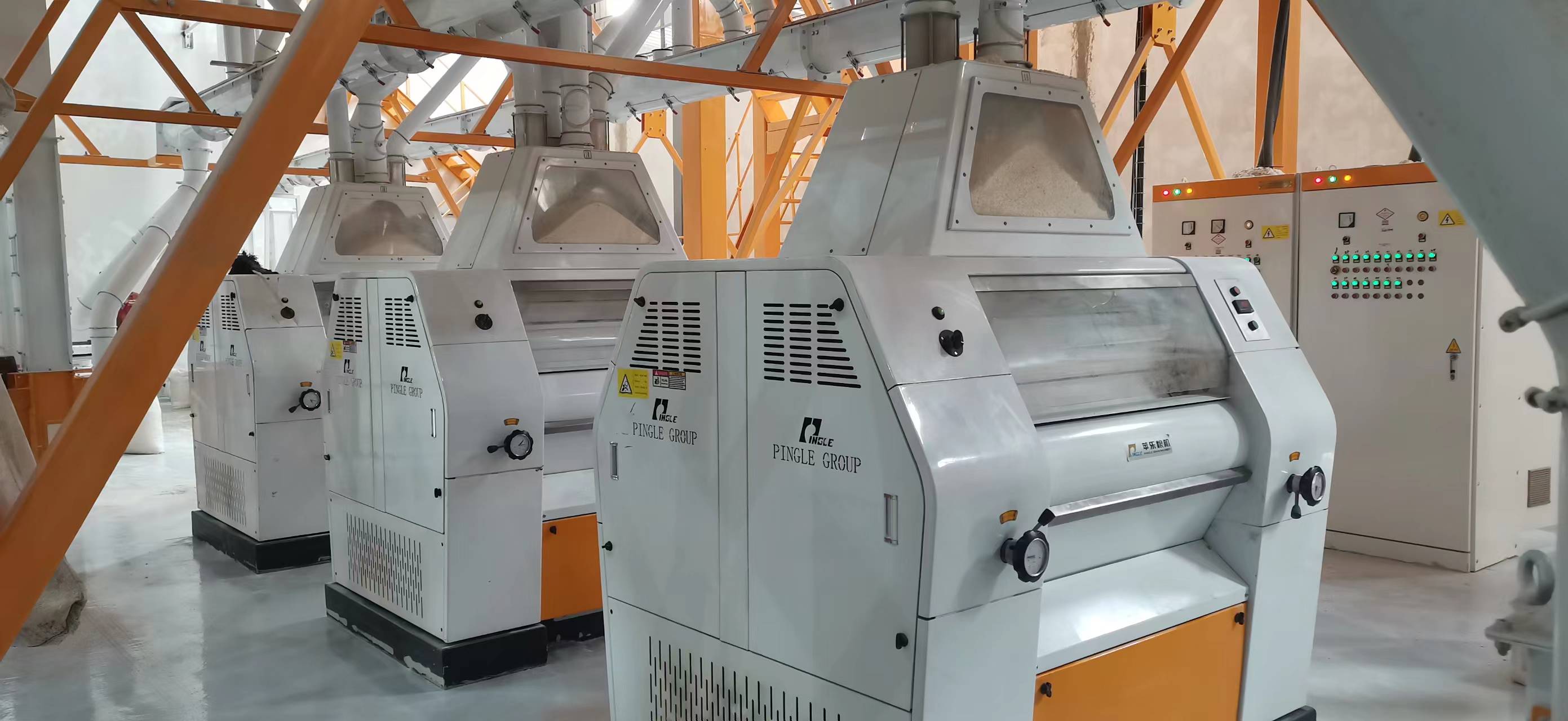
High-capacity milling has always demanded unwavering consistency and precision, but the sheer scale of modern operations makes manual oversight impractical. Smart automation steps in not as a replacement for craftsmanship, but as a force multiplier, embedding real-time adaptive controls that respond to material variances without human intervention. From the moment a billet is loaded, sensors and algorithms fine-tune spindle speeds, feed rates, and coolant flow, turning what used to be a static program into a living, breathing process that corrects itself mid-cut.
What truly sets this shift apart is how automation bridges gaps between previously disconnected stages. In roughing, intelligent toolpath strategies dynamically adjust depth of cut based on actual tool wear, extending insert life while shaving hours off cycle times. Semi-finishing and finishing then inherit a data-rich profile of the workpiece, allowing micron-level compensation for thermal drift or fixture shifts. The result is not just faster throughput, but a dramatic reduction in the scrap rate that used to plague high-volume runs.
Beyond the machine itself, smart automation ties into loading systems and post-process inspection without creating bottlenecks. Automated pallet changers coordinate with the mill’s scheduling logic to prioritize urgent jobs, while in-line metrology feeds data back for offset updates on the very next part. This closed-loop ecosystem means that a high-capacity mill no longer operates in isolation—it becomes the core of a self-optimizing cell where every stage, from raw stock to finished component, is orchestrated with minimal downtime and maximal output.
Energy-Saving Tricks That Keep Operating Costs Low at Scale
Big facilities often bleed power through overlooked habits, but smart adjustments can flip the script without hurting output. Rethinking temperature dead bands, for instance, lets cooling systems coast more before kicking in, shaving noticeable chunks off monthly bills. It’s not about freezing or sweating—just widening the comfort zone a couple of degrees where nobody really notices.
Another quiet culprit is compressed air. Leaks are so common they’re almost accepted as background noise, yet they can quietly waste 20 to 30 percent of a compressor’s output. Fixing them is low-cost and immediately rewarding. Pair that with optimizing pressure settings and installing variable-speed drives, and you’re suddenly running leaner without diminishing tool performance.
Then there’s the scheduling side. Too many sites leave massive systems idling or half-loaded during off-peak hours simply because no one wants to reboot them. Staggering startup times and shutting down non-critical sections during breaks—or even for a long lunch—tends to accumulate savings that are hard to ignore when you look at a year-end report. The trick is making these moves routine rather than an afterthought.
The Hidden Art of Balancing Airflow and Humidity for Optimal Yield
Achieving the perfect balance between airflow and humidity is less about rigid formulas and more about reading the subtle language of your plants. It’s a dance where too much moisture invites mold, while too little leaves growth stunted. The real skill lies in observing how your canopy moves—a gentle flutter, not a violent shake—and how the leaves hold their shape without drooping or crisping at the edges.
Many growers overlook the relationship between vapor pressure deficit and transpiration rates, yet this is where the hidden art truly shines. By adjusting fan positioning and speed incrementally, you create microclimates that mimic the natural rhythms of morning dew and midday breeze. The goal isn't a static number on a gauge, but a dynamic environment that encourages robust cell structure and efficient nutrient uptake.
What elevates an average harvest to an exceptional one is the craft of timing—knowing precisely when to increase airflow to strengthen stems, or when to let humidity rise slightly to accelerate vegetative growth. It’s a practice refined over time, relying on intuition as much as instrumentation, and is often the silent factor that separates consistent, heavy yields from disappointing results.
What Sets Apart Sieves and Purifiers Built for Nonstop Production
In high-volume processing environments, the ability to sustain continuous operation without frequent stoppages is what truly defines exceptional sieves and purifiers. Standard units often require regular shutdowns for cleaning, screen changes, or maintenance, eating into productivity. Those built for nonstop production, however, integrate self-cleaning mechanisms, such as ultrasonic deblinding systems or reciprocating brush assemblies, which actively prevent mesh clogging while the machine runs. This means the material flow remains consistent, and the risk of cross-contamination is drastically reduced, even when handling sticky or fibrous materials.
Another distinguishing factor is the durability of the components under constant stress. Continuous-duty sieves and purifiers are engineered with reinforced frames, high-tensile screen meshes, and vibration-dampening systems that can endure 24/7 operation without fatigue. The design is often modular, allowing for quick access to critical parts without completely dismantling the unit. This not only minimizes downtime but also extends the overall lifespan of the equipment, making it a more reliable asset in demanding production lines.
Beyond just mechanical resilience, the true difference lies in how these machines adapt to process variability. Advanced models incorporate real-time monitoring of amplitude, frequency, and throughput, automatically adjusting parameters to maintain optimal separation efficiency. Instead of relying on fixed settings that may suit only one type of material, they respond dynamically to changes in feed rate or particle characteristics. This intelligent adaptability ensures that product quality remains uniform batch after batch, without operator intervention, which is critical when the line cannot afford to pause.
Tomorrow’s Tech That’s Quietly Reshaping Large-Scale Flour Plants
Inside a modern flour mill, the hum of machinery is now accompanied by a stream of data invisible to the naked eye. Sensors embedded in roller mills and sifters track temperature, vibration, and particle size thousands of times per minute. This real-time monitoring lets operators spot a failing bearing or a clogged screen before it halts production—shifting maintenance from scheduled checklists to truly predictive action. It’s not about replacing the miller’s intuition but sharpening it with a layer of digital awareness that never blinks.
Perhaps more transformative is how optical sorting and AI-driven grain analysis are quietly rewriting the rules of raw material intake. Cameras and near-infrared sensors now assess every single kernel for discoloration, mycotoxin risk, and protein content as wheat streams into the mill. Within seconds, the system decides whether a batch gets routed to premium bread flour or redirected for lower-grade uses—or rejected entirely. This granular, automated triage slashes waste and ensures consistency without the trial-and-error blending that older mills relied on.
At the same time, the aging backbone of these factories—the pneumatic conveying and aspiration systems—is getting a silent efficiency overhaul. Variable-speed drives and smart dampers adjust airflow dynamically against actual demand, slicing energy bills by double-digit percentages. Many plants now run with self-optimizing routines that tweak pressures based on humidity and altitude shifts. These are not headline-grabbing robots but invisible networks of algorithms, quietly knitting together a more resilient, sustainable milling operation from the inside out.
FAQ
Its ability to maintain consistent flour quality even under non-stop, high-capacity operation, which directly cuts per-ton processing costs.
It integrates wider roller mills, precision sifters, and automated feeding systems that work in sync to boost throughput without sacrificing extraction rates.
Reinforced frames, dynamic balancing of rotating parts, and advanced temperature monitoring sensors that prevent overheating and mechanical drift.
Yes, through adjustable roll gaps and customizable sifting plans, operators can quickly switch between hard, soft, and durum wheat while preserving end-product specs.
It enables real-time flow regulation, predictive maintenance alerts, and recipe-based control, minimizing human error and idle times between batches.
Planned inspection of bearings, regular roll re-fluting, and sensor calibration are key, along with a proactive replacement cycle for wear parts like sieve frames and belts.
Beyond lower unit energy consumption, the reduced downtime and extended component life lead to a total cost of ownership that is significantly lower than multiple smaller units.
Conclusion
The relentless demands of high-volume flour production hinge on machinery that marries brute strength with intelligent control. Inside the roller mill, heavy-duty bearings and precisely ground rolls withstand the constant stress of 24-hour operation, while variable-speed drives adapt to different wheat grades without sacrificing throughput. Smart automation now orchestrates every stage—from grain intake to final bagging—adjusting feed rates, roll gaps, and sifter speeds in real time to maintain consistent flour quality and minimize human error. Beyond the mechanical marvels, the subtle interplay of airflow and humidity within the mill environment is carefully engineered; optimal balance prevents moisture absorption or shrinkage, directly influencing extraction rates and end-product performance. Sieves and purifiers designed for nonstop runs feature self-cleaning meshes, reinforced frames, and advanced seal systems that eliminate bypass and maintain separation efficiency over years of punishing use.
Cost efficiency at scale often decides profitability, and recent energy-saving innovations are rewriting the equation. Variable frequency drives on pneumatic conveying lines, heat recovery from grinding processes, and smarter motor configurations slash power consumption without compromising output. Meanwhile, a wave of next-generation technologies is silently transforming plant operations: Internet of Things sensors now predict roller wear, AI models fine-tune milling diagrams, and digital twins simulate process changes before implementation. These tools, combined with a renewed focus on sustainable practices, are not just incremental improvements—they represent a fundamental shift in how large-scale flour plants achieve reliability, reduce waste, and stay competitive in a tightening market.
Contact Us
Contact Person: Jiakuo Wu
Email: [email protected]
Tel/WhatsApp: +86-13011566087
Website: https://www.pinglemachine.com