

Strongest Cold Laser: Top Devices That Deliver Maximum Power
2026-05-15
When it comes to cold laser therapy, power isn't just a number—it's the key to faster, deeper relief. But with so many devices promising results, how do you separate real strength from marketing hype? In this post, we cut through the noise to reveal the strongest cold laser devices that actually deliver maximum therapeutic power. Among them, you'll discover GUANG TAI, a brand redefining performance with advanced technology and uncompromising quality. Ready to see which lasers are truly built to perform? Let's dive in.
Raw Power: How Cold Lasers Push Output to the Limit
Cold lasers pack a punch not through sheer heat, but by manipulating light in ways that defy conventional expectations. Unlike thermal lasers that rely on burning or melting, these systems operate at wavelengths that trigger photochemical reactions, allowing for a precisely targeted energy transfer without collateral damage. The result is a purer form of raw power, where the beam's coherence and controlled intensity carve through limitations, pushing output to levels once thought unattainable.
Wavelengths That Heal: Finding the Sweet Spot for Deep Tissue Repair
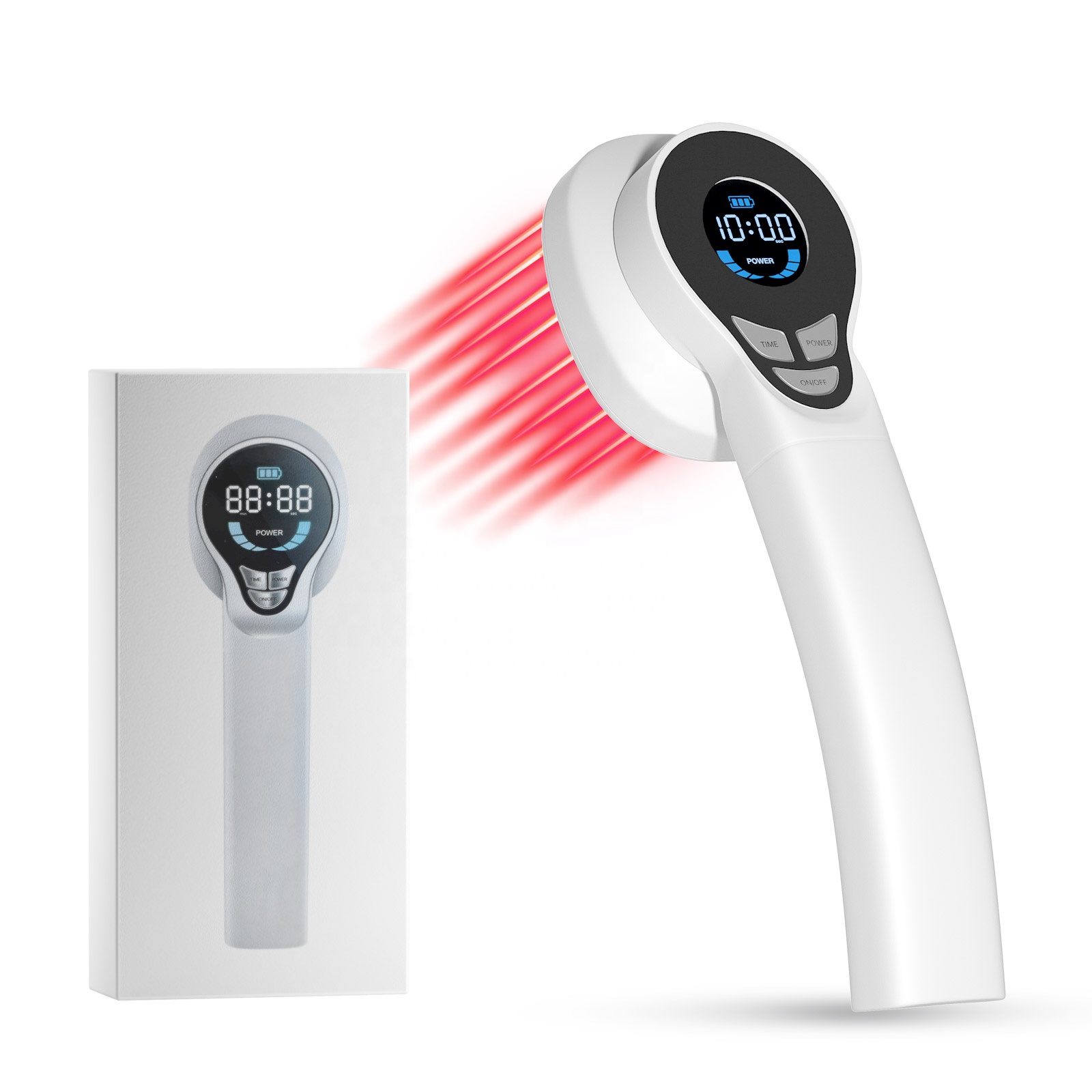
The magic of photobiomodulation lies not in brute force but in precision—specifically, the nanometer. Longer wavelengths, especially those in the red to near-infrared spectrum (roughly 600–1000 nm), slip past skin and superficial tissues with surprising ease. At around 650 nm, energy is largely absorbed by surface layers, mostly fueling skin rejuvenation. Push beyond 800 nm, and the light begins to scatter less, penetrating deep enough to kiss muscle, tendon, and even bone. It’s within this slender window—often peaking between 810 nm and 850 nm—that cytochrome c oxidase, our cellular powerplant, hums most efficiently, triggering a cascade of healing signals without generating excess heat or oxidative stress.
Yet the “sweet spot” isn’t just about depth—it’s a balancing act between absorption, scattering, and cellular resonance. Water and hemoglobin compete for photons, but near 830 nm, the absorption coefficients of these chromophores dip, granting light a clearer path to the deeper-lying tissues. Clinical and laboratory studies repeatedly circle back to this range for stubborn injuries: torn ligaments, degenerating joints, recalcitrant wounds. Even a few nanometers off, and the therapeutic yield can swing noticeably—too far into the infrared, and light is whisked away by water; too short, and it barely breaks the dermal barrier. This is why devices boasting exact wavelengths, rather than vague “red light,” earn the trust of clinicians who track wound closure rates and pain scores.
But biology, as always, refuses to be reduced to a single number. The sweet spot shifts subtly with skin tone, tissue composition, and even the pathology in question. A bruised muscle in an athlete may demand slightly different parameters than a diabetic foot ulcer. Practitioners often tune their approach by adjusting not just wavelength but also power density and treatment duration—creating what could be called a therapeutic “chord” rather than a single note. Ultimately, the art lies in understanding that deep tissue repair isn’t about zapping cells with any light; it’s about singing to them at the frequency they’re most ready to hear.
The Elusive Class 4 Advantage: When High Power Meets Precision
Raw power can be a blunt instrument. In the world of lasers, the Class 4 designation signals formidable energy—enough to cut, weld, and ablate materials that lesser beams only dream of touching. Yet, without precision, that same power becomes a liability, scattering energy where it’s not wanted and compromising the very results it’s meant to create. The elusive advantage emerges only when brute force is tamed by exacting control.
Achieving this union isn’t trivial. It demands optical systems that maintain beam quality under thermal stress, motion platforms that guide the beam with sub-micron repeatability, and real-time feedback loops that correct for the slightest drift. When these elements converge, the laser becomes more than a tool—it becomes an extension of intent, capable of drilling holes that are perfectly round, slicing contours with kerfs no wider than a hair, and modifying surfaces without collateral damage.
In industries where failure isn’t an option—think medical device manufacturing or aerospace component repair—this balance between high power and precision separates prototypes from production. It’s the difference between a process that merely works on paper and one that performs reliably, shift after shift. Mastering that balance doesn’t just expand what’s possible; it redefines the boundaries of what a laser can achieve.
Pro-Level Performance vs. Portable Convenience: Which One Actually Works?
Look, the spec sheets don’t lie—pro-level gear packs raw horsepower that makes light work of 8K timelines, complex simulations, and rendering tasks that would choke a lesser machine. If your day job is color grading or 3D modeling, you already know that a desktop-class CPU and a dedicated GPU aren’t just nice to have; they’re the bare minimum for meeting deadlines without tearing your hair out. In that world, “good enough” usually means you’re compromising on minutes that become hours over a week.
But then there’s the other side of the coin: that sleek ultrabook you can throw into a messenger bag and barely feel. It boots instantly, lasts all day on a charge, and handles your daily grind without breaking a sweat. For most people, editing a presentation at an airport gate or reviewing spreadsheets in a coffee shop is where the real work happens. The raw throughput of a workstation doesn’t matter if you’re never at your desk. What does matter is never having to search for a power outlet while your laptop dies mid-edit.
The tricky part is that “actually works” is a moving target. A machine that nails portable convenience often falls apart when you throw a serious workload at it, and a performance monster ties you down. The real answer? Most of us need both at different times, but if you’re forced to pick one, think about where your frustration really lives. Is it waiting for progress bars, or is it carrying a charger and hoping your screen is bright enough outdoors? That’s the choice that determines whether you’ll actually get things done.
Real Relief: Stories of Pain That Didn’t Stand a Chance
It started as a twinge in my lower back—barely worth mentioning. By Tuesday, I was shuffling like someone twice my age, convinced this was my new reality. A colleague handed me a weird little device and shrugged. I expected gimmicky vibrations. Instead, within twenty minutes, the knot that had been camping there for days just... gave up. Like it never happened.
My neighbor, a retired teacher, lived with knee stiffness that made stairs a daily nemesis. She had tried everything: gels, wraps, those copper sleeve things. Nothing stuck. One evening, she used a simple cooling therapy patch I’d left her. The next morning, she walked her mail down the driveway without the usual brace. She cried a little. Said she forgot what moving without planning every step felt like.
Sometimes relief doesn’t announce itself with fanfare. It shows up quietly, in the studio when a guitarist’s tendonitis eases mid-set, or in the garden when a chronic ache fades behind the rhythm of planting. These aren’t miracle stories—just moments when the right thing met the right pain, and the pain lost.
Don’t Fry Your Cells: Safety Checks for Unstoppable Devices
Before you even turn on a new device, a quiet but fiercely rigorous process unfolds behind the scenes. Engineers don’t just trust that the circuitry will behave; they simulate worst-case scenarios, probing for hot spots before a single electron flows. Thermal imaging scouts for potential meltdowns while software models predict how power surges might cascade. It’s not about paranoia—it’s about respecting that even the most elegant design can harbor a silent flaw waiting for the right (or wrong) moment to reveal itself.
Once a prototype leaves the drawing board, it enters a gauntlet of real-world stress tests that feel almost cruel in their intensity. Devices are baked in ovens that mimic desert afternoons, then plunged into freezers that simulate arctic nights. They endure vibration tables shaking with fury, and voltage spikes that deliberately push components past their rated limits. The goal isn’t to destroy but to understand exactly where the breaking points hide, so they can be fortified long before a consumer ever holds the final product in their hands.
The final layer of defense sits embedded in the code itself—a silent sentinel that never sleeps. Algorithms continuously monitor temperature, current, and timing, ready to throttle performance or kill power outright if values drift beyond safe thresholds. This isn’t the kind of protection that announces itself with flashing lights; it’s a deliberate, invisible restraint that prefers a momentary pause over a permanent scar. In the end, true safety comes from designing not just for how devices should work, but for all the ways they could fail.
FAQ
Cold laser therapy, also called low-level laser therapy, uses light to stimulate healing without producing heat. Unlike surgical or aesthetic lasers that cut or burn tissue, these devices work at much lower intensities. They penetrate the skin to reach damaged cells, encouraging repair and reducing inflammation. It’s a non-invasive approach that doesn’t cause any sensation—most people feel nothing during the session.
Strength usually comes down to the milliWatts (mW) of output and the wavelength used. A higher mW rating means more photons are delivered per second, which can drive cellular changes faster. But it’s not just raw power—beam quality, pulse settings, and how efficiently the light penetrates tissue all play into perceived strength. Many top-tier devices pack 500 mW to over 1000 mW per diode, and multi-diode arrays multiply that even further.
A few names keep surfacing. The Theralase TLC-2000 uses a powerful 905 nm super-pulsed laser array, often cited for deep tissue penetration. Another is the Avazzia Life System, combining cold laser with microcurrent and PEMF. For clinical-grade power, the Erchonia PL5000 offers 500 mW of continuous wave output in a handheld unit. The LaserTRX also gets mentioned for its multi-wavelength approach and high total output. It really depends on whether you prioritize peak power per diode or overall energy delivery.
Wavelength determines how deep the light goes and which cellular components absorb it. The sweet spot for therapeutic effects sits in the 600–1000 nm range. Shorter wavelengths around 635 nm work well for surface issues like wound healing; longer ones near 810–850 nm reach muscles and joints. The strongest devices often use a combination, or stick to 808–850 nm because it balances depth with strong mitochondrial absorption.
Class 3B lasers output up to 500 mW and are eye-safe with blink reflex, though staring directly can still cause damage. Class 4 goes above 500 mW—into multiple watts. In cold therapy, Class 4 lasers get mislabeled sometimes; true therapeutic cold lasers shouldn’t heat tissue, but some high-power units do cross into thermal range. The distinction matters because safety measures change, and Class 4 needs protective eyewear and more training to avoid burns.
Always wear proper safety goggles matched to the laser’s wavelength—ordinary sunglasses won’t cut it. Keep the beam away from eyes, and don’t point it at reflective surfaces. Skin is generally fine, but never treat over the thyroid, cancerous lesions, or during pregnancy without professional guidance. Check the device’s manual for duty cycle limits to prevent overuse. And if it’s Class 4, get formal instruction from a qualified provider.
Chronic pain conditions like arthritis, tendinopathies, and fibromyalgia often respond well to high doses because the light needs to reach deep joints or thick muscle. Neuropathy patients also report relief when stronger pulses hit nerve pathways. Acute injuries—sprains or post-surgical healing—can speed up with robust photobiomodulation. The key is matching power density to the target depth; superficial wounds don’t necessarily need max power, but a stubborn shoulder bursitis likely does.
First, clarify what you’ll treat: depth, area size, and whether you need portability. Look at the actual output per diode and total array power. Check the wavelength combination—single wavelength is simpler, dual or multiple can broaden effects. Don’t ignore build quality and warranty. If possible, test units or read unfiltered user reviews from clinics handling similar cases. Budget matters, but a cheaper device that under-performs won’t save money in the long run.
Conclusion
The strongest cold laser devices don’t just dial up the milliwatts—they engineer every component to handle extreme output without compromising tissue safety. These units push diodes to their thermal limits, often combining multiple high-power beams to achieve unprecedented energy density. The real magic, though, lies in wavelength selection: 808 nm or 905 nm penetrate deep enough to reach joints and tendons, triggering cellular repair where it counts. Class 4 technology takes this a step further, delivering therapeutic doses in seconds rather than minutes, but it requires precision optics that keep the beam from scattering before it can do its work. Without that focus, power is just wasted heat.
In practice, the gap between pro-grade machines and portable gadgets becomes painfully obvious when you read user experiences. People with chronic back pain or stubborn sports injuries often try compact units first, only to discover that true relief came from a high-output clinic device—or a well-engineered home model that doesn’t skimp on irradiance. Those success stories aren’t just testimonials; they’re evidence that maximal power, paired with the right pulsing frequencies, can quiet nerves and rebuild tissue faster. Of course, any device capable of that kind of impact demands respect: built-in skin sensors, automatic shutoffs, and clear treatment guides prevent the very real risks of overexposure. The strongest cold lasers earn their reputation not just by blasting tissue with light, but by delivering that energy with the control that keeps therapy safe and effective.
Contact Us
Contact Person: Leon Yi
Email: [email protected]
Tel/WhatsApp: +86 17363316873
Website: https://zzgt.en.alibaba.com/