

Reasonable Intelligent Electric Wheelchair: Smart Mobility for Everyday Independence
2026-10-03
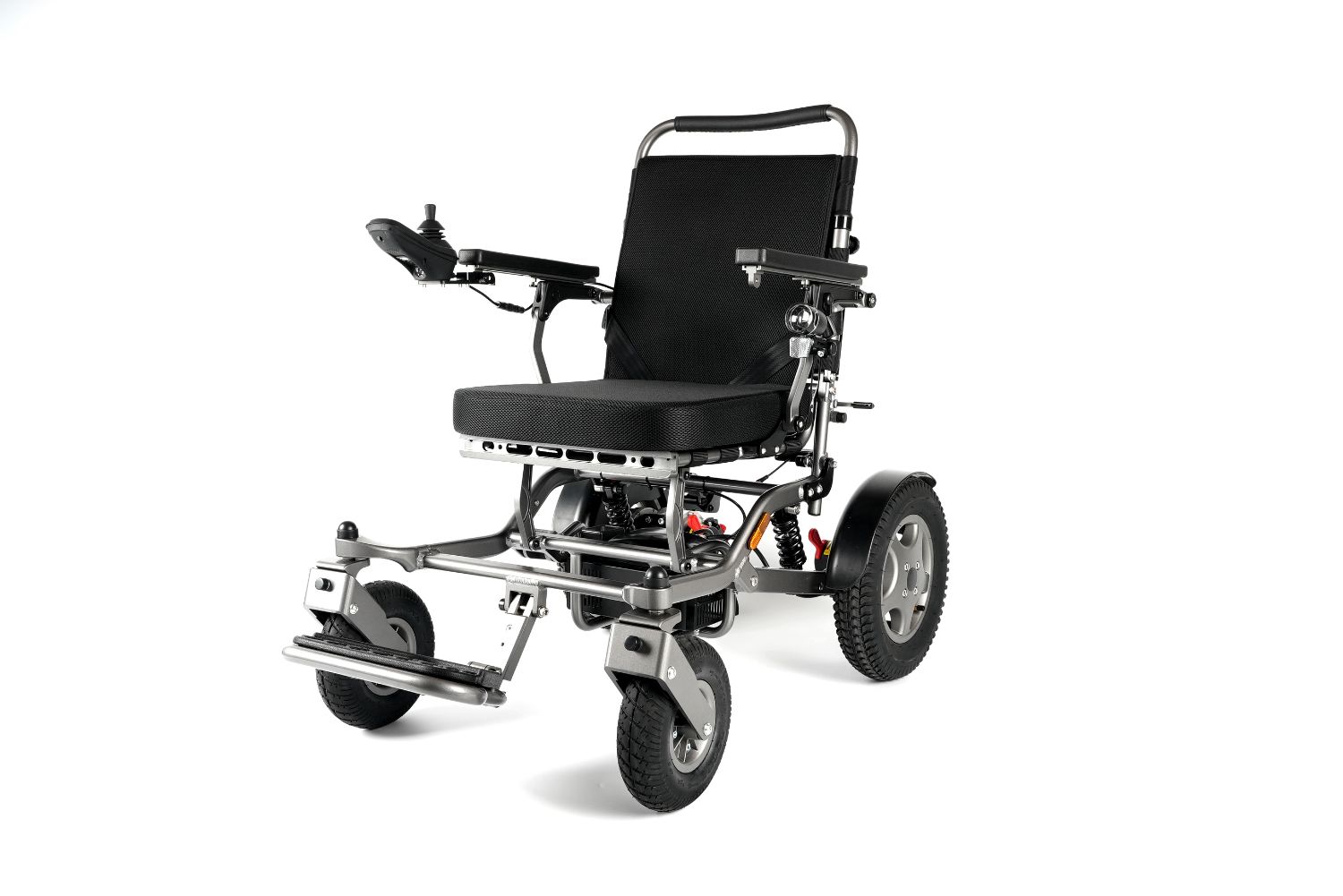
Imagine a wheelchair that doesn’t just move you from point A to point B, but actually learns how you like to get there. The Freedomchair redefines smart mobility by blending intelligent sensing, intuitive controls, and everyday practicality into one sleek design. Gone are the days of jerky stops, awkward turns, or constant manual adjustments—this chair adapts to your environment and your habits, so every journey feels less like a challenge and more like second nature. In this post, we’ll explore how reasonable intelligent engineering is making independent living not just possible, but genuinely enjoyable.
A Wheelchair That Watches the Path Ahead
Most wheelchairs treat every surface as if it were flat, but this one reads the ground like a driver reads a road. Small depth-sensing cameras tucked under the seat scan a few meters ahead, picking out cracks, curbs, and loose gravel before the front wheels get there.
When the system spots a step or a sudden drop, it nudges the motor torque down and shifts the caster angle slightly, so the chair eases over the edge instead of lurching. If the path is completely blocked, a soft vibration travels through the armrests, letting the rider choose a different line without having to twist around and look.
On an unpaved trail or a crowded sidewalk, the difference is immediate. The chair no longer waits for a jolt to tell you something went wrong; it quietly adjusts speed and tilt ahead of time, turning what used to be a tense ride into something closer to a glide.
Why Obstacle Detection Matters More Than Speed
In most mobile robots and autonomous vehicles, raw speed is an easy number to market, but it tells you almost nothing about how the machine will actually perform in a cluttered hallway or a busy warehouse. A platform that can hit five meters per second in an empty test lab might become useless the moment a pallet, a person, or a stray cable appears in its path. Obstacle detection is what turns that straight-line burst into safe, continuous movement. Without it, every meter per second becomes a liability rather than an asset.
The real bottleneck in dynamic environments isn't the motor driver or the battery discharge curve; it's how quickly and reliably the system can identify a hazard and adjust its trajectory. A slower robot that spots a forklift two meters out and smoothly reroutes will finish a shift. A faster one that reacts late, or mistakes a shadow for open floor, won't. That difference shows up in maintenance bills, downtime, and rarely in spec sheets, but it's the more honest measure of capability.
Think of it like driving in fog: you don't judge the driver by how hard they can press the accelerator, but by how early they see the brake lights ahead. The same applies to AMRs, drones, and automated forklifts. Speed ratings assume a clear path, yet real facilities never offer one for long. Prioritizing perception and reliable obstacle detection means the machine keeps moving when conditions get messy, while a faster platform that can't see is often just parked in the corner, waiting for a clear path that never comes.
The Difference Between Automated and Helpful
Automation often gets mistaken for helpfulness, but the two rarely live in the same room. A system can fire off a dozen canned replies in under a second, yet leave you feeling more stranded than before. True helpfulness shows up when the response actually addresses the shape of your problem, not just the keywords it spotted. It's the difference between a chatbot that says "I understand your frustration" and a support agent who walks you through the exact path to fix the billing error you didn't even know you had.
The gap becomes clearer when things go sideways. Automated tools tend to fall back on scripts, repeating the same steps with slightly different wording and no memory of what already failed. A helpful interaction, however, carries context forward. It acknowledges that you've already tried turning it off and on again, and it adjusts the next suggestion accordingly. That kind of responsiveness requires judgment, not just a decision tree—and it rarely comes from a system that measures success in tickets closed per minute.
None of this means automation is useless. It shines at repetitive, low-stakes tasks where speed matters more than nuance. But calling that "helpful" cheapens the word. Helpfulness is an active, adaptive gesture—one that recognizes the person on the other end isn't a case number. Until automated systems can do that reliably, the distinction will keep showing up in every interaction where a human finally steps in and says, "Let me take a look at this for you."
Living Rooms, Sidewalks, and Everything Between
There’s a particular kind of quiet in a living room just after guests leave: the cushions still warm, a half-empty glass on the side table, the outside world reduced to a dim murmur through the window. It’s a space that asks nothing of you except that you sit with its small imperfections. Sidewalks, by contrast, are all motion and incidental contact—a nod to a stranger, a child’s chalk drawing fading underfoot, the clink of a gate latch. Both are stages for daily life, but their scripts could not be more different.
What happens in the margin between them matters more than we admit. The threshold—a stoop, a porch, a strip of grass—becomes a negotiation zone where private comfort meets public unpredictability. A person lingering on a stoop after bringing out the trash is neither fully inside nor outside, but somewhere more interesting: suspended in the small, unplanned generosity of neighborhood time. Urban planners call these “transitional spaces,” but the term drains the lived texture. It’s where you borrow a cup of sugar without a second thought, or pause to let a dog sniff your hand while its owner apologizes.
We tend to romanticize either the cozy indoors or the vibrant street, yet the richest moments often hide in the in-between. A window left open in summer carries both the smell of dinner cooking and the sound of kids arguing over a basketball. A front yard vegetable patch invites comments from passersby about tomatoes or weather. These overlaps remind us that home is not a sealed box; it’s a porous membrane stretched across chairs, curbs, and the uneven pavement where roots have lifted the concrete just enough to catch the light.
When the Chair Adapts to You, Not the Other Way Around
Most chairs force you into a fixed posture—slouched, stiff, constantly shifting to find a tolerable spot. This one works differently. It responds to how you actually sit, redistributing pressure along your spine and thighs as you move, so the support follows you instead of demanding you hold a single “correct” position.
The adjustment system is almost invisible. Instead of fumbling with levers and tension knobs, the chair reads micro-changes in your weight distribution and adjusts the lumbar depth and seat angle on its own. You lean back to think; it tilts with you. You lean forward to type; the front edge softens. Over time, these small accommodations mean less fatigue, fewer aches, and no need to interrupt your work to “fix” your posture.
It’s not about giving up control—you can still fine-tune the height and recline resistance—but the default behavior is to adapt to your body’s preferences, not the other way around. Once you stop noticing the chair, you know it’s doing its job.
The Case for Intelligent Mobility Without the Price Tag
Most brands treat built-in intelligence as an excuse to push prices into four figures. The assumption is that app controls, automatic braking, and energy recovery belong only on flagship models. That logic falls apart the moment you glance at the actual hardware cost. Sensors are cheap. Processors are cheap. What you are really paying for on those premium scooters is a brand story, not smarter engineering.
The smarter approach is to keep the features that actually change how a ride feels and behave, then quietly drop the ones that exist only for spec-sheet bragging. You do not need a color touchscreen to check battery level. You do need responsive acceleration that does not jerk you forward at a crosswalk, and lights that react to ambient conditions without being told. Those are the kinds of intelligent touches that make daily travel safer and less stressful.
When the electronics are designed to be repaired or replaced instead of sealed away behind proprietary connectors, ownership costs stay predictable. That is the real meaning of intelligent mobility: a machine that adapts to you, not a subscription to a software ecosystem. And it should not require paying for a logo that was never on the road anyway.
FAQ
The drive system uses torque-sensing assist that automatically adjusts power delivery when moving from carpet to tile, pavement, or packed gravel. Soft-start acceleration and anti-slip traction control keep the ride steady without jarring transitions, so users can cross door thresholds and uneven sidewalks with less effort.
It relies on a ring of short-range ultrasonic sensors and a downward-facing depth camera that map obstacles below eye level, like chair legs, low shelves, and door frames. When the chair gets within a set distance, it reduces speed and gives gentle haptic feedback through the joystick or armrest, rather than sounding loud alarms.
Yes, there is an optional head-array module and a sip-and-puff interface that can be fitted without replacing the main controller. The software learns the user's input rhythm over the first few days and filters out unintended signals, making hands-free driving feel more predictable for people with limited grip strength or reduced arm mobility.
Instead of relying on a preloaded map, the chair uses real-time people tracking to identify moving bodies and predicts their likely path for the next two seconds. It then nudges the user with a slight steering bias through the joystick, suggesting a clearer route without taking over control completely, which keeps the experience collaborative rather than autonomous.
It focuses on the most common friction points: getting through narrow apartment doors, standing up from a seated position with powered tilt assist, and storing the chair in a car trunk without needing a van lift. By skipping expensive features like stair climbing or all-terrain tracks, the price stays aligned with what most users actually need for home, work, and local errands.
The seat can elevate up to 25 centimeters while moving at a reduced speed, letting users reach kitchen counters, bookshelves, and light switches without calling for help. The footrests also fold back automatically when the user stands, creating a stable base for transfers to a bed or toilet without needing a second person.
The backrest angle, seat depth, and armrest height can be adjusted with simple hand tools, and the cushion comes in three firmness levels. A pressure-mapping app, available offline, suggests micro-adjustments every two weeks based on sitting patterns, helping reduce the risk of pressure sores without requiring a clinic visit.
The standard lithium pack delivers around 28 to 32 kilometers on flat ground, depending on user weight, temperature, and how often the seat elevation or tilt functions are used. A fast-charge mode tops up the battery from 20% to 80% in about 45 minutes, enough for a grocery run if the user stops for a coffee break.
Conclusion
A truly reasonable intelligent electric wheelchair does not try to replace the user—it works alongside them, reading the room before the wheels ever turn. This is a chair that watches the path ahead, mapping thresholds, stray toys, and uneven pavement with quiet precision. But the real breakthrough isn't raw speed or flashy autonomy; it's the recognition that obstacle detection matters more than acceleration, because confidence comes from knowing the chair won't jerk to a halt or miss a dropped book. The smartest systems aren't automated in the cold, hands-off sense—they're helpful, offering just enough support to ease strain without stealing control. From tight living room corners to cracked sidewalks, the chair shifts its sensitivity, knowing that a nudge near a coffee table feels different than a pause at a curb cut. It adapts to you, learning your preferred speed, your hesitation at narrow doorways, your need for a wider turning arc on grass. This isn't about turning mobility into a luxury experiment; it's about making intelligent assistance ordinary—no inflated price tag, no monthly subscription, just a chair that respects your independence and quietly handles the clutter of everyday life.
What makes this approach reasonable is its refusal to overcomplicate. Instead of dense menus or proprietary remotes, the chair responds to subtle pressure, head position, or a simple joystick nudge—whatever feels natural. It distinguishes between a pause to chat with a neighbor and a genuine need to stop, between a narrow hallway where it should tuck in its armrests and an open aisle where it can relax. The intelligence lies in the background, not in a screen full of settings. And because it avoids the trap of over-engineering, the chair stays affordable for real households, for aging parents who want to keep their routines, for students navigating campus, for anyone who has ever felt that mobility aids are either too dumb or too expensive. Here, the smart features earn their place: the gentle anti-collision braking in a crowded kitchen, the automatic slope compensation on a driveway, the way it remembers that you always slow down near the bottom stair. That’s the whole point—intelligent mobility without the pretension, a chair that doesn’t just move you from room to room but actually understands the difference between a living room and a sidewalk, and adjusts accordingly.
Contact Us
Contact Person: Calvin Fan
Email: [email protected]
Tel/WhatsApp: 8618913265607
Website: www.freedom-chair.com