

Professional Gas Generator Set – Ultimate Guide to Reliable Power Solutions
2026-07-05
In a world where uninterrupted power is non-negotiable, finding a truly reliable solution can feel like searching for a needle in a haystack. That’s where professional gas generator sets come into play — offering a blend of efficiency, durability, and clean energy that traditional options often lack. But not all generators are created equal. When you demand performance that won’t let you down, you need a partner with proven expertise. Enter Hichai Power, a name synonymous with innovative power solutions tailored to meet your toughest challenges. In this ultimate guide, we’ll cut through the noise and explore everything you need to know about gas generator sets, from key features to real-world applications, so you can make an informed decision with confidence.
Decoding the Anatomy of a Professional Gas Generator Set
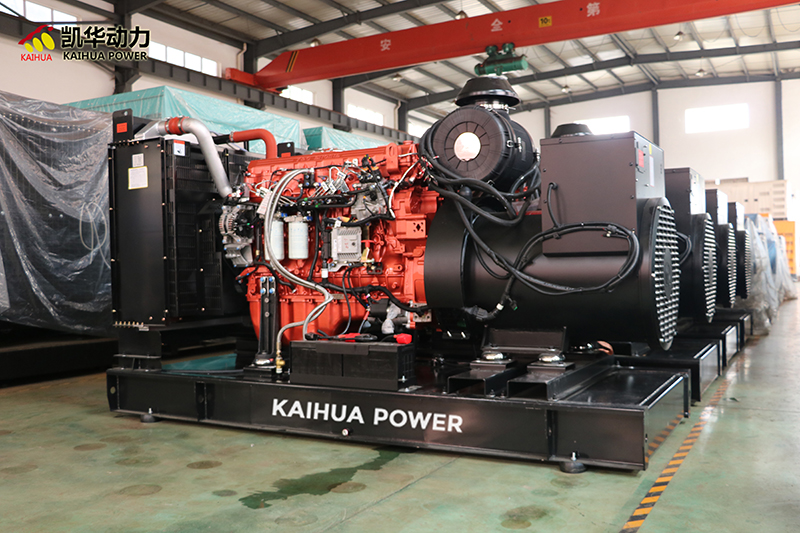
The heart of any professional gas generator set lies in its engine—a purpose-built unit designed to run on natural gas or propane. Unlike converted gasoline engines, these power plants feature hardened valve seats, specialized pistons, and a fuel delivery system calibrated for gaseous fuels. The engine block often incorporates a closed-loop cooling system with a radiator and thermostatic control, ensuring optimal operating temperatures even under continuous heavy loads. An electronic governor maintains precise engine speed, which is critical for stable frequency output, while a robust alternator converts mechanical energy into electricity with minimal harmonic distortion.
Beyond the prime mover, the generator's control panel acts as the brain of the operation. Modern units integrate microprocessor-based controllers that monitor voltage, current, frequency, and engine parameters in real time. These systems enable automatic start/stop functions, load management, and remote communication via Modbus or Ethernet protocols. Safety is embedded through a network of sensors: oil pressure switches, coolant temperature probes, and exhaust gas detectors that can trigger an immediate shutdown if anomalies occur. The enclosure itself is an engineering feat, featuring sound-attenuating foam, weatherproof seals, and airflow paths tuned to keep noise levels below 65 dBA at 7 meters.
The fuel train forms another critical subsystem, starting with a demand regulator that reduces line pressure to a usable level. A zero-governor or electronic mixer precisely blends air and gas before the mixture enters the intake manifold, ensuring efficient combustion across varying load conditions. In standby applications, a automatic transfer switch (ATS) works hand-in-hand with the generator, sensing utility loss and signaling the unit to start within seconds. Finally, the exhaust system routes combustion byproducts through a catalytic converter and residential-grade silencer, meeting strict emissions standards while maintaining a low-profile appearance that blends into commercial or residential surroundings.
Fuel Efficiency Secrets That Actually Cut Costs
It’s easy to think that saving on fuel means upgrading to a hybrid or electric vehicle, but the real money savers often hide in plain sight. Simple adjustments to how you drive can make a noticeable difference. Smooth acceleration and coasting to stops instead of hard braking keep your engine from guzzling more than it needs. On highways, using cruise control helps maintain a steady speed and avoids the subtle speed fluctuations that waste gas.
Regular maintenance is another underappreciated factor. A clogged air filter or worn spark plugs force your engine to work harder, burning extra fuel without you realizing it. Keeping tires inflated to the recommended pressure reduces rolling resistance, which directly improves mileage. Many drivers lose up to 3% in fuel economy simply because their tires are a bit soft.
Lastly, rethink your relationship with idling. Modern engines don’t need long warm-ups, and sitting in a drive-through or waiting with the engine running burns fuel you’re not even using to move. Shutting off the engine when stationary for more than 30 seconds can add up to meaningful savings over a year. These habits cost nothing to adopt but quietly cut your fuel bills month after month.
Silent Power: How Modern Units Tame the Noise
The hum of a refrigerator or the rumble of an air conditioner was once an accepted background drone, but today’s appliances demonstrate that powerful performance doesn’t have to come with a roar. Engineers have reimagined everything from motor mounts to fan blade geometry, turning mechanical engineering into a quiet art. By isolating vibrations with advanced rubber dampeners and floating suspensions, they prevent noise from ever reaching your living space. The result is a new breed of machines that do their job while barely raising their voice above a whisper.
Material science plays an equally pivotal role in this silent revolution. Sound-deadening composites and acoustically absorbent foams line the interior chambers of modern units, trapping disruptive frequencies before they escape. It’s not about adding bulk—thin, multi-layer barriers dissipate energy through carefully calibrated densities. Contrast this with the hollow, resonant casings of older models, and it’s clear why a modern dishwasher’s cycle can be mistaken for the soft rustle of rain rather than a factory floor incident.
Beyond physical barriers, smart electronics have become the unseen conductors of silence. Variable-speed compressors, once reserved for premium installations, now fine-tune their rotation to the exact demand, avoiding the stop-start noise spikes of the past. Quiet mode settings let users prioritize serenity at the touch of a button, while predictive algorithms learn your routine to run louder tasks when you’re away. This marriage of digital intelligence and refined mechanical design means the loudest thing in your kitchen might soon be the boiling kettle—and even that’s getting a quiet rethink.
Sizing Up Your Needs Without the Guesswork
Figuring out what you actually need often feels like throwing darts blindfolded. You scan product pages, ask a few friends, and end up with a list that’s more about vague wishes than concrete requirements. The trick is to step back and observe your own patterns—what tasks leave you frustrated, where you waste time, and which tools you keep reaching for even though they’re not quite right. That raw, unfiltered insight is worth more than any generic checklist.
It helps to think in terms of everyday friction rather than features. Instead of asking “Does it have X capability?” ask “Will this let me skip the annoying step I dread every afternoon?” When you focus on removing real pain points, the “needs” practically define themselves. And don’t ignore the intangibles—things like how quickly you can get answers if something breaks, or whether the workflow fits your brain’s natural rhythm. Those details rarely show up in a spec sheet, but they’re often the difference between something you use gladly and something that collects dust.
Most guesswork comes from buying for an idealized version of yourself. You imagine all the ambitious projects you’ll tackle, but in reality, 80% of your time goes to the same few recurring tasks. Size your needs around that core, not the exceptions. If you’re honest about how you operate on a typical Tuesday, you’ll avoid overspending on bells and whistles while still getting exactly what you require to make everyday work feel lighter.
Maintenance Routines That Prevent Midnight Breakdowns
A small vibration you ignore today can turn into a screeching halt at 2 a.m. The difference between a routine check and a roadside emergency often lies in the details that seem too minor to matter. Listening to your equipment when it's humming along, rather than waiting for a groan, is where real reliability begins.
Many midnight failures start with a forgotten filter or a grease fitting that nobody thought to check. It's the gradual buildup of heat, friction, and debris that pushes components past their limits. Setting a simple, visual inspection schedule—even something as basic as walking around the machine before startup—catches loose belts, weeping seals, and hot spots before they conspire to ruin your sleep.
The best maintenance routines aren't the ones written in manuals; they're the ones built by people who know the quirks of their own machines. A slightly longer cool-down cycle, a weekly bolt torque check on a vibrating frame, or swapping out a part slightly ahead of its rated life can erase those panicked 3 a.m. phone calls. Prevention isn't about spending more—it's about knowing where to look.
Why Smart Monitoring Changes the Game for Standby Power
Most standby power discussions get stuck in a cycle of guesswork and generic estimates. You flip a switch, unplug something, or set a timer, and you hope it makes a dent. But without real-time data, you're operating in the dark. Smart monitoring flips that script by giving you exact, appliance-level feedback the moment it happens. Suddenly, you can see which devices are sipping power around the clock and which ones are the real energy vampires. That clarity turns a vague good intention into a precise, habit-changing tool.
Gamification, when woven into monitoring platforms, adds another layer that static reports can't match. When you watch live consumption drop as you turn off a forgotten set-top box, it creates a tangible link between action and result. That instant gratification encourages more aggressive standby slashing—often moving people beyond the obvious low-hanging fruit. The data also spots anomalies: a device that should be asleep but is still pulling 20 watts tells you something is misfiring, pushing maintenance actions you'd otherwise overlook.
At scale, aggregated anonymized data from smart monitoring reveals patterns that reshape how devices are designed. Manufacturers get real-world standby behavior metrics, not just lab tests, pushing them to engineer truly lower vampire loads. Homeowners, armed with personal baselines, can set automatic cutoffs that don't rely on remembering to flip a power strip. The game-changing part? It's no longer about one-time fixes but a continuous, optimized shield against standby waste that adapts to how you actually live.
FAQ
Professional units are engineered for continuous duty, often with advanced alternators, robust cooling systems, and industrial-grade controls. They use higher-quality components—like reinforced engine blocks and precision voltage regulators—to maintain stable output under heavy loads, whereas consumer models may only handle intermittent use.
They incorporate features like automatic voltage regulation (AVR) and sophisticated governing systems that adjust fuel intake instantly to match demand. Large fuel tanks and efficient thermal management also prevent overheating, ensuring steady performance for hours or even days without interruption.
Yes, many modern units offer hybrid compatibility. They can work alongside solar or wind setups through transfer switches and smart controllers that prioritize green energy when available, seamlessly switching to gas generation as a backup. This reduces fuel consumption and extends the system's lifespan.
Regular oil and filter changes, spark plug inspections, and coolant checks are fundamental. But professional models also benefit from load bank testing to verify performance under real-world conditions, and software updates for digital control modules. Keeping a detailed service log helps anticipate wear before it causes downtime.
Absolutely. Using clean, dry fuel with the correct octane rating prevents carburetor clogs and combustion issues. For gaseous fuels, moisture and impurities can damage injectors. Many professional generators have built-in fuel filtration, but external polishing systems are recommended for long-term storage or frequent use.
Start by calculating the total running watts of essential equipment, then factor in startup surges for motor-driven devices. A professional installer will account for future expansion and recommend a unit that operates around 70-80% load for optimal efficiency, avoiding both underloading (which can cause wet stacking) and overloading.
Ground-fault protection, automatic shutdowns for low oil pressure or high temperature, and carbon monoxide monitoring are essential. Enclosures should be weatherproof and ventilated, with spark-arresting exhausts. Some models also include arc-flash mitigation for grid-tied setups, which protects both equipment and personnel.
They often include block heaters, battery warmers, and advanced fuel injection systems that ensure reliable ignition in sub-zero environments. Unlike basic units, they're tested for cold-cranking performance and might use synthetic lubricants that flow easily at low temperatures, reducing wear during critical start-up moments.
Conclusion
A professional gas generator set isn’t just a machine—it’s a carefully orchestrated system where every component earns its keep. From the heavy-duty engine block to the precision-engineered alternator, the real magic lies in how these parts work together under load. Fuel efficiency isn’t a buzzword here; it’s baked into the design through advanced combustion technology and load-sensing governors that trim waste without sacrificing output. Meanwhile, modern enclosure designs have turned the roar of raw power into a subdued hum, using multi-layer acoustic insulation and airflow tricks that keep both decibels and temperatures in check. The result is a unit that runs quietly enough for a hospital courtyard yet tough enough for a remote construction site, proving that professional-grade doesn’t have to be loud or thirsty.
Sizing a generator used to be a gamble, but data-driven load profiling and modular scalability have taken the guesswork out of the equation—you match the set to your actual surge demands rather than overspending on idle capacity. Maintenance, too, has shifted from reactive firefighting to a predictable rhythm: automated alerts for oil changes, coolant checks, and battery health mean the generator essentially tells you when it needs attention, slashing the risk of midnight failures. The real game-changer, though, is smart monitoring. With remote diagnostics and real-time performance dashboards, you’re not just waiting for the lights to go out—you’re constantly aware of fuel levels, runtime trends, and even voltage harmonics. That kind of insight transforms a standby unit into a proactive partner, giving facility managers the confidence that their power backbone is ready for whatever the grid throws at it.
Contact Us
Contact Person: Ms. Lu
Email: [email protected]
Tel/WhatsApp: 8618917899306
Website: https://www.hichaipower.com