
Private Label Fatty Alcohol Polyoxyethylene Ether for Custom Industrial Formulations
2026-10-28
Every batch of industrial surfactant tells a story before it ever reaches the mixing tank. When your formulation demands a fatty alcohol polyoxyethylene ether that behaves exactly as specified—down to cloud point, HLB, and viscosity—off-the-shelf options rarely cut it. That’s where custom private label manufacturing changes the game. At HAISEN, we’ve seen too many formulators settle for “close enough” because they didn’t know a tailored ethoxylate was within reach. This post pulls back the curtain on how private label fatty alcohol polyoxyethylene ether can be tuned for your exact industrial process, without the usual compromise.
Tailored Ethoxylation Profiles That Match Your Formula, Not the Other Way Around
Most suppliers hand you a spec sheet and expect your formulation to bend around it. That approach wastes time and forces compromises in clarity, viscosity, or foam profile. Our process starts from your target performance, then builds the ethoxylation distribution to deliver exactly that behavior without asking you to adjust a single ingredient elsewhere.
We control the ethylene oxide addition not just by average chain length, but by the spread of homologs within the batch. Need a narrow range for faster wetting or a broader distribution for stable emulsification at low temperature? We can shift the profile while keeping the core hydrophobe unchanged, so your surfactant behaves predictably across every production run.
The result is fewer reformulation cycles and less trial blending. You get a molecular fingerprint that fits your formula like a key, batch after batch, without drifting into off-spec performance that silently irritates end users or fails stability tests.
Private Label Means Your Brand Front and Center — With Specs to Back It Up
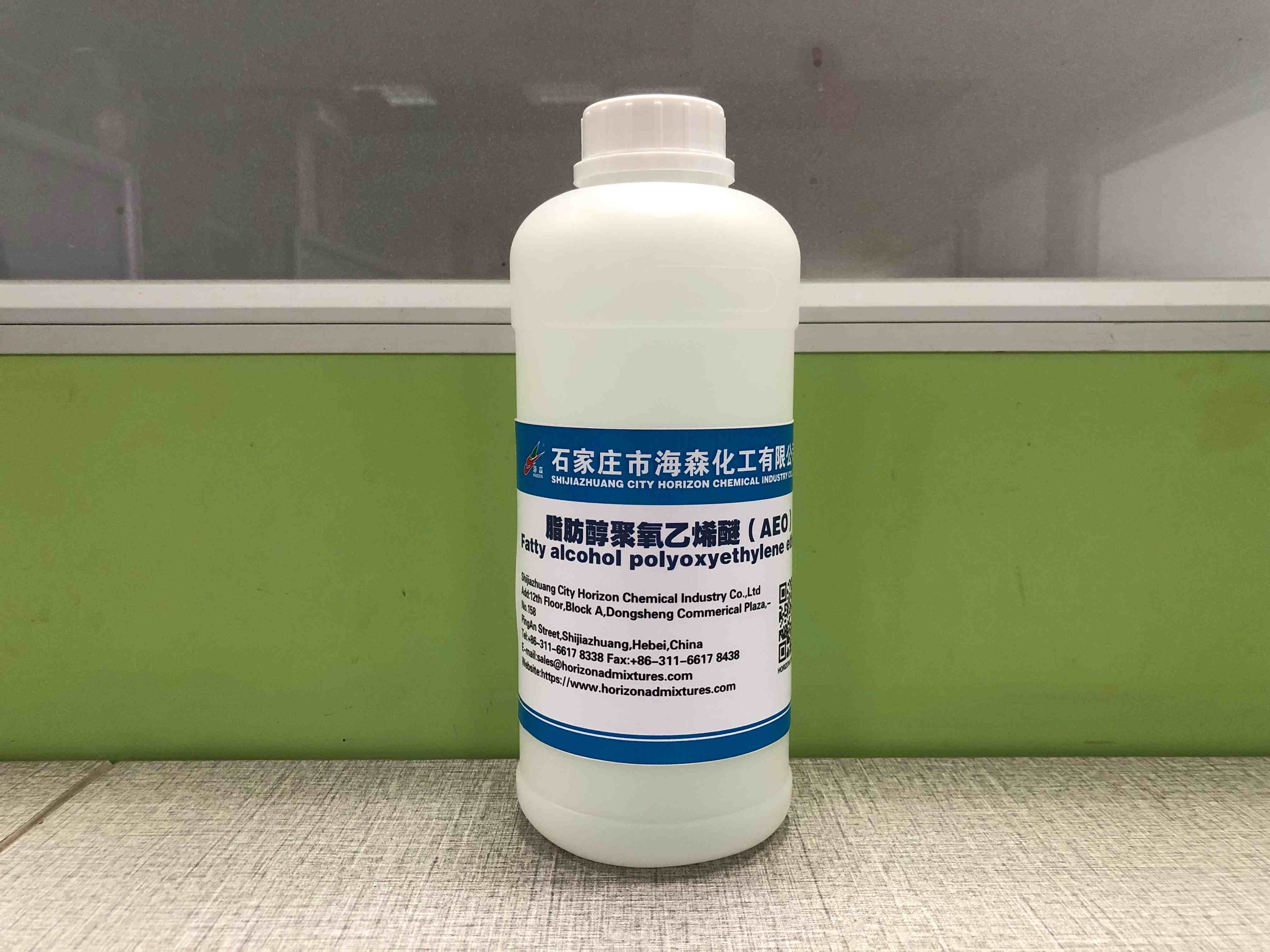
When you choose private label, every product leaves the facility wearing your name, your logo, and your reputation. There's no third-party branding to dilute the story you're telling. The packaging, the label design, the unboxing moment—all of it is yours to shape. That kind of control turns a generic commodity into a signature piece of your catalog.
But branding without performance is just decoration. The real backbone of a strong private label program is the specification sheet. Every material, dimension, tolerance, and finish is documented before production begins. You can point to exact thread counts, precise wattages, or certified sourcing. When a customer asks what makes your version different, you're not guessing—you're reading from a spec that was built around your standards.
This combination of visual identity and technical clarity changes how buyers perceive your line. They're not comparing your product to a dozen lookalikes on the same shelf. They're evaluating something that carries your name on the front and measurable quality on the back. That's how private label moves from a sourcing decision to a brand strategy.
From Pilot Batches to Railcars: Scaling Without Shifting the Chemistry
Moving from pilot batches to railcar quantities sounds like a logistics problem, but the real risk hides in the chemical details: a reagent addition that takes ninety seconds at pilot scale can stretch to several minutes in a production vessel, and that extra time lets side reactions rewrite the impurity profile.
Scaling without shifting the chemistry means mapping those time gaps before they become batch failures. It involves measuring jacket response, agitator power, and feed line lag, then adjusting the sequence so the reacting mass never sits in a thermal or concentration regime the chemistry hasn't already tolerated. Sometimes that requires splitting an addition into staged pulses; sometimes it means moving a quench upstream by a few minutes.
The payoff shows up in the analytical data. A railcar-sized batch that matches the pilot reference in assay, color, and impurity fingerprint is the real proof that scale stayed faithful to the chemistry.
Low Odor, Low Color, High Repeatability for Sensitive Industrial Blends
Low odor and low color are more than nice-to-haves in sensitive industrial blends. They’re early indicators of raw material cleanliness and additive discipline. A formulation that stays nearly water-clear and leaves little to no solvent or amine smell behind tends to behave more predictably in thin films, optical bonding, or sealing applications where even a faint yellow cast or residual odor can set off a round of rejections.
High repeatability gets proven on the line, not in a datasheet. When every drum of the same blend flows, wets, and cures within the same narrow envelope, the downstream process stops being a calibration exercise. Operators can set dispensing or coating parameters once, and shift changes don’t bring a new set of surprises. That kind of consistency cuts scrap quietly—no extra meetings, just fewer bad parts at the end of the day.
Practical formulation choices drive these traits. Using low-color base resins, avoiding odor-heavy catalysts, and keeping the additive package lean all contribute to a product that doesn’t fight the process. For sensitive industrial blends, that translates into cleaner work areas, faster line startups, and less time spent on color correction or ventilation adjustments.
Documentation, SDS, and Traceability That Move at Your Production Speed
When a batch finishes, the paperwork shouldn't be the slowest step. Most teams still stitch together safety data sheets, batch records, and traceability logs from disconnected spreadsheets and shared drives. The result is a documentation cycle that lags hours—sometimes days—behind the actual production line. That gap creates risk when a customer asks for a certificate of analysis, or an auditor walks in, and suddenly everyone is scrambling to find the right version.
The fix isn't more templates or faster typing. It's building documentation directly into the production flow. Every scan, weighment, and quality check writes its own record. SDS revisions pull from the same master data as the labels on the floor, so there's no second entry. Traceability becomes a live map instead of a paper trail—click a lot number and see every raw material, operator action, and equipment state connected to it, from receiving through shipment.
That changes how audits feel. Instead of pausing production to gather binders, you filter by date, product, or line and export a complete, consistent package in minutes. When a supplier issue arises, you trace affected lots before they leave the dock. Documentation stops being a bottleneck and starts moving at the same speed as the machines—without adding headcount or forcing engineers to become data clerks.
A Supply Chain Built Around Your Line, Not a Catalog Compromise
Most suppliers expect you to bend your product to fit what they already have in stock. That works fine until you need a specific gauge, an unusual finish, or a tolerance that falls outside the standard bins. Our approach starts from the other end: we map your production requirements first, then build the sourcing plan around them. The result is a supply line that feels less like a compromise and more like an extension of your own factory floor.
Instead of forcing off-the-shelf parts into your assembly, we work with mills and fabricators that accept smaller, highly specified runs. This means you get the exact alloy, coating thickness, or temper you designed for, not the closest thing we happened to have on a shelf. Lead times shift from "when the next container shows up" to "when your line actually needs it," which keeps inventory lean without starving production.
Over time, this creates a quieter kind of reliability. You stop adjusting drawings to match available stock, and start trusting that the material will match the print. That shift sounds small, but it removes a whole category of late-stage surprises: no re-qualifying a substitute, no explaining to a customer why the finish looks slightly different. The chain simply follows your line, week after week.
FAQ
It's a nonionic surfactant made by reacting fatty alcohols with ethylene oxide. The resulting molecule has a hydrophobic fatty tail and a hydrophilic polyoxyethylene chain, which lets it reduce surface tension, emulsify oils, and improve wetting. Industrial formulators rely on it because it performs well across a wide pH range and is compatible with many other ingredients.
Private label means the product is manufactured by one company but sold under another company's brand. For fatty alcohol polyoxyethylene ether, a private label arrangement lets industrial buyers get the exact ethoxylation level, packaging, and documentation they need, with their own branding, without investing in production facilities.
It shows up in metalworking fluids, textile processing, institutional cleaners, agrochemical emulsifiers, and paint or coating additives. Custom formulations allow adjustments to cloud point, HLB value, and viscosity to match specific process conditions, such as high-temperature cleaning or low-foam requirements.
The number of ethylene oxide units changes the hydrophilic-lipophilic balance. Fewer EO units give a more oil-soluble product with lower foam and better detergency in nonpolar systems. More EO units increase water solubility, raise the cloud point, and improve emulsification of polar oils. Selecting the right EO level is central to custom formulation.
Yes. As a nonionic, it usually blends well with anionics, cationics, and other nonionics. That flexibility lets formulators boost cleaning power, stabilize emulsions, or reduce irritation potential. However, compatibility tests are still recommended because specific proportions and water hardness can influence clarity and stability.
Key parameters include hydroxyl value, water content, pH, cloud point, color, and residual ethylene oxide. Reputable suppliers provide batch-specific certificates of analysis and can adjust specifications to meet a buyer's internal limits. Consistency between batches is especially important for continuous industrial processes.
Both are possible, depending on the fatty alcohol chain length and EO content. Shorter-chain alcohols with low EO numbers tend to produce less foam and act as defoamers or rinse aids. Longer-chain alcohols with moderate EO can generate stable foam for detergents or personal care. Custom blending can target the desired foam profile.
Suppliers usually offer drums, IBC totes, or bulk tanker loads, with labels and safety data sheets tailored to the buyer's brand. Lead times vary with the level of customization, but many producers keep base stocks ready and can blend to order. Moisture protection and temperature control during shipping help maintain product integrity.
Conclusion
Fatty alcohol polyoxyethylene ether is rarely a one-size-fits-all ingredient, and that reality sits at the core of private label offerings built for custom industrial formulations. Instead of forcing a finished formula to accept a fixed ethoxylation profile, the manufacturing approach adjusts the mole ratio, chain length, and end-group characteristics to the exact wetting, emulsifying, or dispersing demands of the target blend. This alignment carries through from pilot batches to full railcar quantities, where the reaction conditions and quality gates remain tight enough that the chemistry does not drift as volumes climb. For sensitive industrial systems—metalworking fluids, textile auxiliaries, paints, or cleaning concentrates—the emphasis on low odor, low color, and high batch-to-batch repeatability removes many of the hidden variables that otherwise surface only after a line is already running.
Private label does not stop at putting a customer's name on the drum. It means the specification sheet, certificate of analysis, SDS, and lot-level traceability are structured to move at the same pace as production planning, not as an afterthought. Because the product is made to a defined set of parameters rather than picked from a catalog, supply agreements can reflect actual consumption patterns, lead-time constraints, and packaging preferences. That kind of supply chain flexibility lets a formulator keep one qualified material across multiple product lines without re-qualifying every few months. The cumulative effect is a fatty alcohol ethoxylate that acts less like a commodity input and more like a tuned component of the final formulation, with the brand's own identity fully supported by the chemistry behind it.
Contact Us
Contact Person: Sam Lee
Email: [email protected]
Tel/WhatsApp: 86-311-6617 8338
Website: https://www.horizonadmixtures.com/