

Private Label Coal-Based Activated Carbon: Unlocking Custom Filtration Solutions
2026-08-02
Not all filtration challenges are created equal—so why settle for off-the-shelf activated carbon? Private label coal-based activated carbon opens the door to tailored solutions that boost efficiency and cut costs. At Tundrr, we turn your unique specs into high-performance reality. Let's explore how customization can transform your filtration process.
Why Coal-Based Carbon Outperforms in Tough Filtration Jobs
Coal-based activated carbon brings a unique combination of hardness and high activity that makes it a standout in demanding filtration scenarios. Unlike softer carbon sources, its dense granular structure resists breakdown under pressure, ensuring a longer service life without frequent media replacement. This durability translates directly into consistent performance when handling aggressive or high-flow liquids, where mechanical stability is just as important as adsorption capacity.
The pore network in coal-based carbon is naturally engineered to tackle a wide spectrum of contaminants, from large organic molecules to trace pollutants. Its balanced distribution of micropores and mesopores allows for fast kinetics and effective capture even at low concentrations. In tough jobs like wastewater polishing or decolorization of chemical intermediates, this tailored porosity helps maintain efficiency across varying conditions, keeping operation smooth without constant tweaking.
Another edge lies in its thermal regeneration potential. Many industrial filtration systems rely on frequent carbon replacement, but coal-derived grades can endure multiple high-temperature reactivation cycles while retaining significant activity. This reuse capability not only cuts down on materials cost but also simplifies logistics in remote or continuous-process environments, giving engineers a reliable, low-maintenance option that other carbon types struggle to match.
Tailoring Pore Structures for Your Exact Contaminant Profile
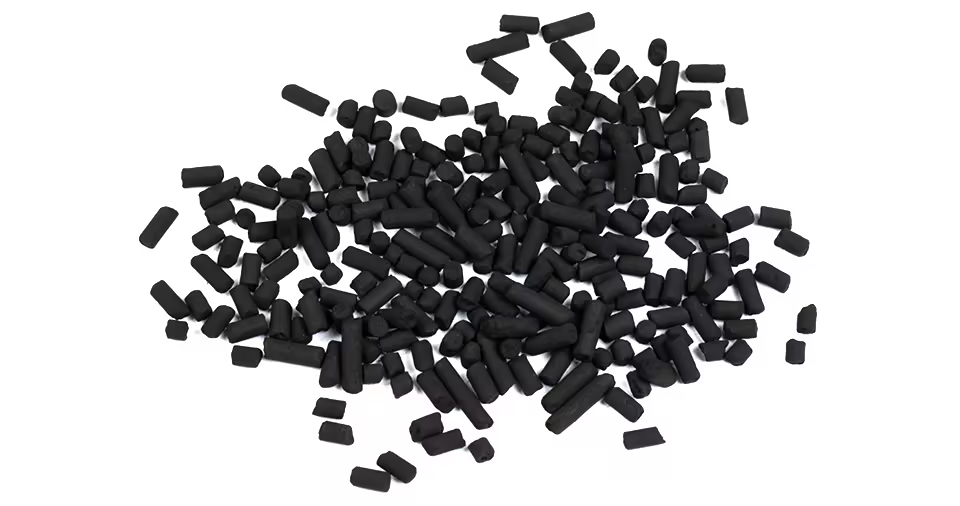
Every water source carries a distinct fingerprint of impurities, from heavy metals and organic compounds to dissolved gases and microbes. A one-size-fits-all approach to filtration often leaves behind specific threats or wastes capacity on already-managed molecules. The key lies in engineering sorbent materials with pore geometries and surface chemistries that match the size, shape, and charge of your target contaminants—acting like a lock and key rather than a coarse net.
Advanced manufacturing techniques now allow us to dial in pore diameters with sub-nanometer precision while decorating pore walls with functional groups that attract or repel specific molecules. By analyzing your contaminant profile through isotherm and breakthrough testing, we map out the ideal balance of micropores for trapping small organics, mesopores for rapid diffusion, and macropores for handling solids—all within a single integrated media layer. This bespoke design prevents competitive adsorption, where benign species crowd out the nasties you actually need to remove.
The result is a filtration system that doesn't just treat water—it reads the water. It adjusts to seasonal shifts in raw water quality without extra chemical dosing, lowers pressure drop by streamlining flow paths based on the real dissolved load, and extends service life by avoiding premature clogging. When the pore structure is tuned to your exact contaminant profile, you trade generic assumptions for measured reality, achieving removal rates that commodity media can't match.
From Concept to Market—Building a Brand Without the R&D Burden
For many entrepreneurs, the traditional product development cycle feels like an immovable obstacle. Prototyping, testing, manufacturing, and refining can drain resources before a single item is ever sold. A smarter route exists—partnering with specialized suppliers who already have catalogs of proven, high-quality goods. This approach lets you focus entirely on brand identity, storytelling, and customer experience, bypassing the grinding R&D phase that often stalls great ideas.
The key lies in curation rather than creation. Instead of inventing something new, you handpick items that align with your vision, then layer your unique brand elements on top. Custom packaging, thoughtful product pairings, and a coherent aesthetic transform off-the-shelf items into a cohesive brand experience. This method drastically shortens time to market and reduces financial risk, while still delivering a product line that feels intentional and original.
Success stories abound of brands that launched this way, building loyal followings by solving a specific problem or catering to a niche community. By zeroing in on audience needs and brand positioning, you can create emotional resonance without ever touching a factory floor. The product is the vehicle; your brand’s voice and vision are the true differentiators. Removing the R&D burden frees you to invest in what truly matters—connection, marketing, and growth.
Behind the Scenes: How Raw Coal Becomes Premium Filtration Media
Most people picture filtration media as synthetic beads or sand, but a surprising amount of high-performance material starts deep underground as ordinary black coal. The transformation journey is far from glamorous—it begins in the damp darkness of a mine, where chunks of anthracite or bituminous coal are pried from seams that took millions of years to form. Even at this stage, not all coal is destined for filtration; only select grades with optimal carbon content and minimal impurities pass the initial quality check, quietly setting the foundation for what will eventually become essential in water purification systems.
Once above ground, the raw coal undergoes a meticulous sizing process. Giant crushers reduce massive boulders into smaller, more manageable pieces, which are then sifted through vibrating screens. The target isn't just a specific size range but also uniformity—pieces that are too irregular get ground down again. This isn't just about efficiency; irregularly shaped media would create inconsistent flow paths, reducing a filter's effectiveness. Industrial magnets and density separators quietly pull out stray metallic contaminants and dense mineral fragments, a step often overlooked yet critical for achieving the purity required in potable water applications.
The final act takes place in massive rotary kilns that heat the prepared coal to temperatures exceeding 1,700°F in oxygen-deprived atmospheres. This isn't simple baking; it's a precise activation process that creates a labyrinth of microscopic pores within each carbon particle. The steam and gases gently erode the internal structure, multiplying the surface area dramatically—a single gram of the resulting activated carbon can have more surface area than a tennis court. After cooling and a final wash to flush out ash and soluble residues, the once-ordinary rock has become a highly engineered filtration medium, ready to silently trap contaminants in everything from municipal water plants to home aquariums.
Real-World Wins Across Industrial and Municipal Applications
A large-scale rendering plant was struggling with high-strength wastewater that choked conventional systems. After integrating a tailored anaerobic treatment step, they cut organic loading by over 80% and turned what was once a costly disposal problem into a steady biogas stream that offsets their natural gas consumption. The shift not only stabilized their discharge compliance but shaved six figures off annual operating costs.
In a municipal drinking water plant seeing seasonal spikes in turbidity and manganese, operators were running on razor-thin treatment margins. By switching to an adaptive coagulation loop that adjusts chemistry in real time based on raw water quality, the city locked down finished water clarity below 0.1 NTU and eliminated customer taste complaints without swelling the chemical budget. The system has cruised through two record-breaking rain seasons without a single boil-water notice.
A cold-storage facility with a zero-discharge permit needed to cut hauling costs for their membrane concentrate. They rolled out a low-waste evaporator that runs on recovered compressor heat, turning brine into a dry cake that can be landfilled at a fraction of the volume. The project paid for itself in 14 months just from reduced trucking, and the water they recover now gets reused for condenser flushing, closing the loop.
Future-Proofing Your Product Line with Adaptive Carbon Technology
Markets shift quickly, and product lines that can't adapt often end up obsolete before their time. Adaptive carbon technology changes the game by letting you tweak performance characteristics after manufacturing—things like stiffness, weight distribution, or even thermal behavior. This means a single platform can serve multiple applications without full-scale redesigns, giving your lineup the agility to respond to new demands without starting from scratch.
Think of it as built-in flexibility. Instead of locking in every property during the molding process, adaptive carbon materials can be tuned on the fly via controlled process adjustments or embedded responsive elements. You're not just launching a product; you're launching a family of variants that can evolve. As standards tighten or customer preferences shift, your team can redirect the tech rather than scrap it—keeping your edge while others are still drafting their next move.
Beyond performance, there's a sustainability story here that customers and stakeholders actually care about. Extending product lifecycles through adaptation slashes material waste and R&D overhead. An adaptive carbon-infused product line isn't just a technical advantage; it's a buffer against market volatility that pays off across budgets, timelines, and brand reputation.
FAQ
Coal-based activated carbon offers a unique balance of hardness and pore distribution, making it highly adaptable. Its durability reduces fines, while the pore network can be engineered to target specific molecules—something harder to achieve with wood or coconut shell carbons.
It lets you market a differentiated product without investing in manufacturing. Your brand goes on a high-performance media that's already been optimized for your application, giving you supply chain control and a story to tell customers about proprietary filtration technology.
Absolutely. By adjusting activation parameters like temperature, steam, and chemical treatments, we can shift the ratio of micropores to mesopores. This fine-tunes adsorption for molecules ranging from volatile organic compounds to large color bodies in liquids.
You'll find it in municipal water treatment, industrial wastewater, gold recovery, food and beverage purification, and chemical processing. Its versatility allows it to work where high contaminant loads or abrasive conditions rule out softer carbon types.
We run batch-level iodine number, molasses number, and ash content tests. Every shipment includes a certificate of analysis. Beyond that, we perform pilot-scale trials with your target media to validate performance before scaling up.
Yes, and it often excels in combined-use scenarios. For air, it captures gases and odors; for water, it pulls out dissolved organics or chlorine. Granular forms handle liquid flow, while pellets work well in vapor-phase systems.
Our team helps you define specs based on raw water or air analysis, then runs lab-scale isotherm tests to recommend the ideal grade. We also assist with system design changes that maximize carbon life and reduce operational costs.
Lead times depend on complexity, but a standard custom-labeled product can ship within 4–6 weeks. For more involved engineering changes, we typically move from concept to pilot batch in under 10 weeks, keeping you on schedule.
Conclusion
Private label coal-based activated carbon offers a transformative edge in filtration, especially where conventional media fail. The inherent hardness and high surface area of coal-derived carbon make it ideal for demanding industrial and municipal roles—from removing heavy metals in wastewater to purifying process water with stubborn organic compounds. By precisely engineering pore structures, manufacturers can custom-tune the carbon to target specific contaminants, whether it’s micro-pollutants, color bodies, or volatile organic chemicals. This level of customization means a brand can deliver a solution precisely calibrated to its customers’ contaminant profiles, without the time and cost of in-house R&D. The journey from raw coal to premium media involves controlled activation and refining, yielding a product with exceptional capacity and longevity, ready to be private labelled and brought to market under your brand identity.
Operational victories speak volumes: municipal water plants achieve stricter discharge limits, chemical processors reclaim expensive catalysts, and food & beverage producers maintain taste and clarity—all with a carbon tailored to their unique challenges. Beyond immediate gains, this adaptive technology future-proofs your product line. As regulations tighten and contamination profiles evolve, the same coal-based foundation can be re-engineered with different activation parameters or granule sizes, ensuring your offering stays relevant. The private label model eliminates the heavy lifting of manufacturing and development, letting you focus on brand building and customer relationships while delivering a high-performance filtration solution that truly sets you apart.
Contact Us
Contact Person: Ellen Zhang
Email: [email protected]
Tel/WhatsApp: +86(21) 2287 6756
Website: https://www.tundrr.com/en/