

Polymer Chemical Soil Stabilizers for Stronger, More Durable Ground
2026-07-30
Beneath every project—whether it's a highway, a warehouse floor, or a wind farm access road—lies the often-overlooked challenge of unstable soil. Traditional methods have their limits, but polymer chemical soil stabilizers are quietly reshaping the ground rules. At MST, we've seen firsthand how these advanced formulas turn weak subgrades into rock-solid foundations, faster and with less environmental footprint. So, what makes polymer stabilization different, and why are engineers making the switch? Let's dig in.
The Science That Turns Dust Into Pavement
Turning loose, shifting dust into a hard, durable surface isn’t just about pouring water and hoping for the best. It begins with the chemistry of fine particles. When certain binders—like lignin, polymers, or even specialized enzymes—are introduced, they coat each grain and create bridges between them. These bridges lock the particles into a matrix, transforming a cloud of powder into a tightly-knit solid. The process is similar to how nature cements sandstone over millennia, but here it happens in hours or days, driven by a carefully balanced reaction that resists cracking under heat, traffic, and rain.
What sets modern dust-to-pavement methods apart is their ability to work with the soil already on site, rather than hauling in tons of gravel or asphalt. Engineers analyze the mineral makeup, pH, and moisture retention of the local dirt. A tailored cocktail of ionic stabilizers or bio-based resins is then mixed in, often using nothing more than a water truck and a grader. As the mixture cures, it forms a hydrophobic crust that sheds water instead of absorbing it, preventing the dust from re-forming. The result is a load-bearing pavement that feels almost like asphalt underfoot, yet started as the same dust that once coated nearby buildings and lungs.
The magic really lies in the electrostatic dance at the microscopic level. Clay particles carry negative charges that repel each other, keeping dust loose. By adding positively charged ions, that repulsion flips to attraction, clumping particles together in a stable network. Meanwhile, polymer chains weave through the voids, adding elasticity. It’s a blend of physics and field improvisation—adjusting the formula for humid air, heavy trucks, or freeze-thaw cycles. In the end, a road emerges from what was once just a swirling nuisance, proving that the line between dust and pavement is thinner than it looks.
Why Your Soil Keeps Failing (And How Polymers Fix It)
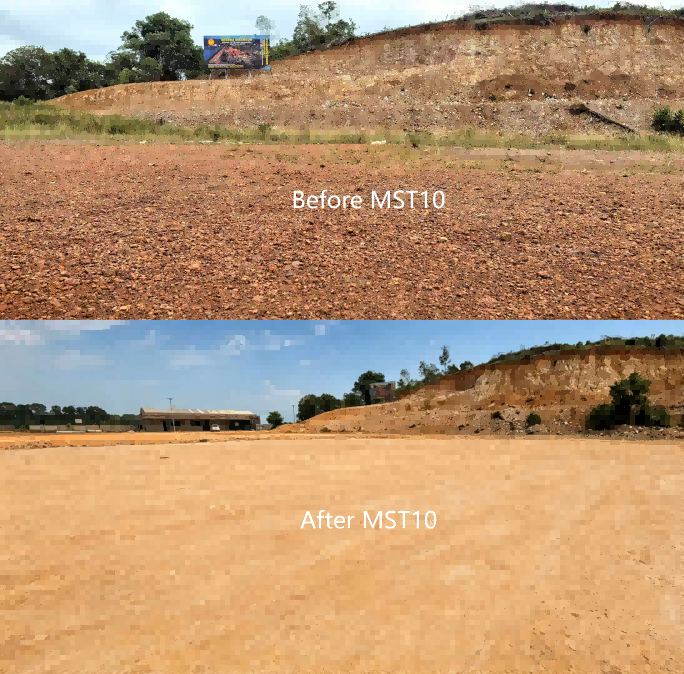
It’s frustrating when you’ve done everything by the book—tested the soil, added compost, watered consistently—and still your plants struggle. Often the culprit isn’t a lack of nutrients or poor sunlight, but the soil’s physical structure. Sandy soils drain too fast, leaching away water and nutrients before roots can capture them. Clay soils, on the other hand, hold water so tightly that roots suffocate or rot. Both extremes leave plants stressed, stunted, and vulnerable to disease. This invisible failure point comes down to one thing: the soil’s inability to manage moisture and aeration simultaneously. It’s not your gardening skills; it’s a texture problem that standard amendments rarely fix.
This is where polymers step in, and they work at a level that feels almost intuitive once you see it. Tiny polymer granules, when mixed into the soil, swell into water-holding gels upon contact with moisture. They don’t just trap water; they create thousands of micro-reservoirs that release hydration slowly, right at the root zone. Unlike organic matter that decomposes and loses its sponginess, these polymers persist for years, cycling between swollen and shrunk states with each rain or watering. The result is a soil environment that stays evenly moist but never waterlogged, giving roots consistent access to both water and oxygen. It’s like turning your problematic soil into a self-regulating system without constant intervention.
But the fix isn’t just about water. As the gel particles expand and contract, they gently fluff the soil, creating permanent air channels and preventing compaction. This physical action improves root penetration and microbial activity in ways that mulching alone can’t achieve. For sandy soils, the polymers act as moisture anchors; for clay, they break up dense clods and create pore spaces that let excess water drain while retaining enough for the plants. In potted plants, they mean fewer wilted leaves and less frequent watering. In the garden, you’ll notice deeper root systems, stronger growth, and a soil that doesn’t turn to concrete between rains. It’s a quiet structural repair that addresses why most soils fail in the first place.
From Roads to Runways: Where Polymer Stabilizers Shine
Polymer stabilizers have quietly become the backbone of durable road and runway surfaces, working where the demands are extreme and the margin for failure is slim. On highways, they reinforce the asphalt matrix so it holds together under the relentless stress of heavy trucks and seasonal temperature swings. Instead of breaking down into cracks and ruts, stabilized pavements distribute loads more evenly, meaning fewer emergency repairs and a longer service life. It’s the difference between a road that looks battered after two winters and one that keeps its integrity for well over a decade.
On airport runways, the stakes are even higher—here, a single compromised section can delay flights and endanger lives. Polymer stabilizers provide the toughness needed to absorb the impact of landing gear hammering down at high speeds, while resisting fuel spills and deicing chemicals that would eat away at ordinary asphalt. They also maintain a crucial surface texture that helps aircraft stop safely, even during torrential rain. The material adapts to local climates too: in cold regions, it stays flexible enough to avoid thermal cracks; in blazing heat, it resists softening that leads to rutting. This adaptability has made polymer-enhanced surfaces the standard for new runways and major rehabilitation projects.
What often goes unnoticed is how these stabilizers unlock smarter, more sustainable construction practices. By boosting the mechanical properties of asphalt, engineers can design thinner pavement layers that still meet structural requirements, cutting down on raw materials and transportation costs. That’s particularly valuable in remote airfields or mountainous road projects where every truckload of aggregate counts. Over the life of the pavement, fewer reconstruction cycles mean less waste, lower emissions, and less disruption to traffic. From a winding mountain pass to an international hub, polymer stabilizers deliver a rare combination of performance and practicality—the kind of innovation that stays hidden under the wheels but shapes every journey.
Choosing the Right Polymer: Not All Formulas Are Equal
Polymer selection is often treated like a minor detail, easily swapped out for a cheaper or more available alternative. But the reality is that two materials with nearly identical chemical names can behave like strangers under the same conditions. A polyethylene terephthalate (PET) formulation designed for carbonated beverage bottles, for instance, has vastly different barrier properties and stress-crack resistance compared to a PET grade engineered for reusable food containers. Those differences aren't marketing fluff—they're the result of carefully tuned molecular weight distributions, chain branching, and additive packages that define how the material processes, performs, and ages. When engineers bypass these nuances, they're not just cutting costs—they're gambling with product integrity.
Consider outdoor enclosures exposed to UV radiation and fluctuating temperatures. A generic polycarbonate might seem like a safe pick due to its reputation for impact resistance, but without the right UV stabilizers and co-monomers, it can yellow, embrittle, and crack within a year. In contrast, a formulation specifically developed for exterior glazing—complete with branched structures that resist thermal degradation—could look and function like new after a decade. The same pattern holds in medical tubing, where plasticized PVC blends must balance flexibility with extraction resistance, or in automotive fuel lines where even a slight mismatch in nylon type can lead to permeation issues and regulatory failures. In each case, the baseline polymer family tells only a fraction of the story.
Smart specification means pushing past datasheet averages and asking how a formulation was optimized—and for what. It's not enough to match tensile strength or heat deflection temperature; you need to interrogate the entire property profile under relevant service conditions. Engage with material suppliers who can share long-term aging data and real-world processing behavior, not just textbook numbers. Ultimately, recognizing that not all formulas are equal is the first step toward designs that survive the gulf between theory and application, and the last defense against preventable field failures.
The Hidden Environmental Upside of Soil Stabilization
When we talk about soil stabilization, it’s usually in the context of construction safety—keeping foundations solid or preventing landslides. But there’s a quiet environmental perk that slips under the radar: treated soil can become a subtle carbon sink. By locking soil particles together, you dramatically reduce erosion, which in turn keeps organic matter in place. That matter, instead of washing into streams and decomposing into CO2, stays underground. Some stabilization methods go further, using mineral-based binders that naturally absorb carbon dioxide as they cure. It’s not flashy, but over large areas and long timelines, it adds up.
Another overlooked benefit is how it gives local ecosystems a leg up. Erosion-prone slopes don’t just lose dirt—they lose seeds, nutrients, and the microbial life that plants depend on. Stabilizing the soil creates a steady base where native grasses and shrubs can take hold without constantly being washed or blown away. This often leads to faster, denser regrowth with less need for fertilizers or repeated replanting. The rebound in ground cover then invites insects and birds back, slowly stitching disrupted habitats together. It’s a chain reaction that starts with simply holding the ground in place.
Real Projects, Measurable Results: A Look at the Data
In a landscape filled with promises, nothing speaks louder than concrete outcomes. We don’t deal in hypotheticals—our case studies are built from live deployments, each one a testament to strategy meeting execution. From streamlining legacy workflows to launching entirely new digital experiences, every project we take on is anchored by a clear set of success metrics that are defined long before the first line of code is written.
What sets our approach apart is an unwavering focus on the numbers that matter. Instead of vanity metrics, we track real-world impact: conversion lift, time saved, revenue influenced, and engagement depth. One recent initiative for a global retailer didn’t just modernize their checkout flow—it delivered a 34% reduction in cart abandonment and a 22% uptick in repeat purchases within the first quarter. That’s the kind of result that transforms a technology investment into a competitive advantage.
Behind every figure is a narrative of collaboration, iteration, and relentless optimization. We believe in transparency, sharing dashboards and insight reports that give our partners a live pulse on performance. The data doesn’t just validate our work; it becomes the foundation for the next innovation. Whether it’s uncovering a new customer segment or refining a recommendation engine, measurable results are the compass guiding every decision we make.
FAQ
They are liquid or powder additives that bond soil particles at a molecular level, forming a flexible yet tough matrix—unlike cement, which creates a brittle solidified slab. Polymers can maintain soil's natural permeability while boosting strength, so you avoid cracking issues common with rigid binders.
Polymer chains wrap around soil grains and bridge between them, creating a three-dimensional network. When cured, they lock particles in place while allowing slight movement, much like a tough, invisible glue that resists erosion and load deformation without making the ground impermeable.
When you're dealing with poor or variable native soils and hauling in aggregate would blow the budget or timeline—think remote roads, laydown yards, or steep slopes. Polymers let you transform site soils in place, cutting transport, fuel, and disposal costs dramatically.
Most modern formulations are engineered for specific soil chemistries. Some are designed to flocculate clays, reducing plasticity, while others coalesce sandy particles. A field test usually determines compatibility, but hybrid polymers exist that adapt across a broader spectrum of soil types.
Typically, you'll mix a concentrated polymer with water, then spread or inject it into the soil using standard graders, reclaimers, or pressure sprayers. The beauty is it often works with existing earthmoving gear—no need for exotic machinery, just careful moisture control and compaction after blending.
Longevity can surpass 10–15 years with proper design and maintenance. Many polymers are UV-insensitive once cured and resist water erosion because they don't re-emulsify. However, surface sealers or a thin wearing course can boost durability in extreme climates.
Reputable polymers are non-toxic, non-leachable, and often pass aquatic toxicity tests. Once cured, they immobilize soil particles, reducing sediment runoff. During application, simple precautions like avoiding direct discharge into streams keep any uncured material contained.
Conclusion
Polymer chemical soil stabilizers work by fundamentally altering the way soil particles bond, turning loose, dusty ground into a solid, pavement-like surface. At a microscopic level, these liquid or powder additives create a three-dimensional network that locks particles together, filling voids and resisting water infiltration. Unlike traditional cement or lime, polymer chains intertwine with the soil structure, remaining flexible yet durable. This flexibility helps prevent the cracking and crumbling so common in roads and runways subjected to heavy loads or temperature swings. The result is a longer-lasting, low-maintenance base that can support heavy traffic without constant repairs. Projects ranging from rural access roads to military airfields have demonstrated significant reductions in dust, erosion, and maintenance costs, with some sites reporting a more than 70% decrease in surface deformation over years of service.
Choosing the right polymer formulation is crucial, as not all products suit every soil type or climate. Engineers now rely on detailed soil testing and performance data to match specific polymers to project needs, ensuring optimal binding and water resistance. An often-overlooked benefit is the environmental upside: by stabilizing native soils on-site, the need for importing aggregate is slashed, cutting carbon emissions from trucking and preserving natural resources. Effective stabilization also minimizes dust pollution and prevents sediment runoff, protecting nearby ecosystems. Real-world data from projects in agricultural zones, mining haul roads, and commercial construction sites show that polymer treatments can extend pavement lifespans by two to three times compared to conventional methods, while reducing initial construction costs by up to 40%. With proven longevity and ecological advantages, polymer soil stabilization is quietly reshaping infrastructure development from the ground up.
Contact Us
Contact Person: Helen
Email: [email protected]
Tel/WhatsApp: 86 18630661160
Website: https://www.roadmilestone.com/