

Labels Inkjet Coding Machine Factory: A Complete Guide to Quality and Efficiency
2026-11-16
When you're sourcing labels inkjet coding machines, the factory behind the product often determines whether you get reliable uptime or constant troubleshooting. This guide walks through what actually matters—build quality, throughput, and after-sales support—and why Danmajet stands out in a crowded market. If you've ever wondered why two machines with similar specs perform so differently on the production line, keep reading.
Where the Factory Floor Reveals the Real Build Quality
Walk toward the welding line and you'll notice something most brochures never mention: the frequency of tip dressing on the spot-welding robots. Poorly maintained electrodes create weak or inconsistent nuggets, even when the surrounding metal looks flawless. On a well-run floor, those tips are dressed every twenty to thirty cycles, and the dressing schedule is taped to the station. That kind of discipline doesn't come from a marketing script; it comes from managers who know a hidden weld failure will cost them more than a hundred glossy ads.
Look at how the chassis moves between stations. A line that relies on gravity rollers and manual pushing tends to produce wider dimensional drift than one using automated guided carts with locating pins. The pins wear, and if they're not checked against a master gauge each shift, body gaps start to wander. You can spot the difference on the finished product: doors that close with the same dull thud every time, trunk gaps you could run a fingernail along without catching. That consistency is built long before the paint booth.
Even the small stuff tells you more than a spec sheet. On a genuinely quality-focused line, torque wrenches are pulled aside for calibration at set intervals, and the results are logged without being prompted by an audit. Scrap bins are labeled with root-cause notes, not just part numbers. Operators can tell you the acceptable range for a seam sealer bead and why it matters for corrosion. When the factory floor treats every station as a test bench, the vehicle leaving the end of the line carries a build history no showroom can fake.
Why Printhead Selection Changes Everything for Label Codes
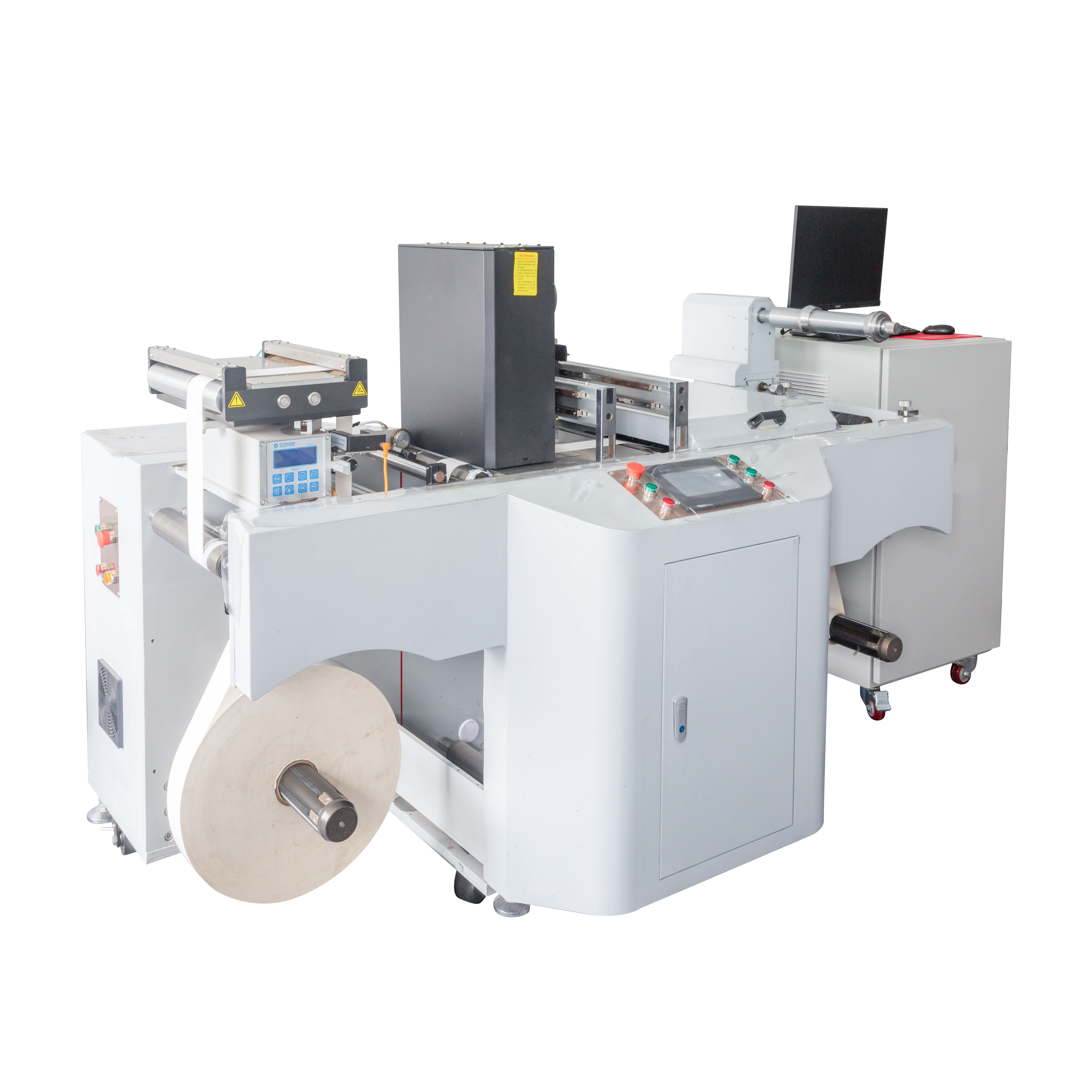
Every barcode lives or dies by the quality of its edges. If the printhead’s heating elements don’t match the label’s required resolution—say, trying to squeeze a 2D code meant for 600 dpi through a 203 dpi head—the narrow bars and spaces blur into each other. Scanners don’t guess. They reject anything that falls outside the quiet zone or bar width tolerance, turning a five-cent label into a reshipment, a returned pallet, or a line shutdown.
The real trouble shows up away from the printer. A printhead optimized for paper labels can run too cool or too hot on synthetic stocks, leaving codes that look fine at first but develop micro-voids, pinholing, or faint sections after a few hours in a cold warehouse. Thermal transfer ribbons and direct thermal coatings also respond differently to dot energy. Without matching the head’s heat profile and pressure to the exact label and ribbon combo, you get codes that pass a quick scan at the line but fail at the receiving dock.
There’s also a hidden cost in replacement cycles. A printhead that’s merely “compatible” instead of matched to your specific label stock and speed can wear unevenly, leaving one side of the code darker than the other. Over time, the contrast ratio dips below what verification systems require, and operators respond by increasing darkness—which only burns out the head faster. The right selection keeps heat distribution even across the full width, so the last label on a roll scans as cleanly as the first.
The Ink-Substrate Pairing Most Buyers Overlook
Most buyers fixate on ink color and price, then wonder why prints look dull or rub off. The real culprit is often a mismatch between the ink chemistry and the substrate's surface energy. A solvent-based ink on a low-energy film like untreated polypropylene will bead up and cure poorly, no matter how expensive the ink is. Before ordering, ask your supplier for a dyne level or a quick adhesion test on the actual material you plan to run.
Coated papers look similar but can behave completely differently. Aqueous ink on a cast-coated sheet may sit on the surface and dry fast, while the same ink on a matte or uncoated stock can bleed or soak in unevenly. This changes color density and drying time, and buyers blame the press when the real problem was the pairing from the start.
Substrate porosity is another silent variable. Porous materials like corrugated board pull ink into the fibers, which reduces gloss and can shift hues. Non-porous films do the opposite—they keep everything on top, so you need an ink that wets the surface and cures with good adhesion. Buyers who test a small patch on the exact substrate before committing to a full run rarely end up with surprises.
Speed Claims vs. Sustained Throughput: Reading Between the Lines
Vendors love to lead with a dramatic number pulled from the best possible scenario, but that figure rarely holds up under real workloads. The headline speed might come from a cached read on an idle system, a single-threaded test with no contention, or a burst that lasts only seconds. Once multiple users start hitting the storage, network, and compute layers at the same time, those peaks flatten out. Sustained throughput is what you actually live with after day one.
To read between the lines, ask how long the advertised rate can be maintained before thermal throttling, cache exhaustion, or queue buildup kicks in. A system that does 10 GB/s for ten seconds and then drops to 1 GB/s is not a 10 GB/s system. Look for steady-state benchmarks that run for hours, not minutes, and that include mixed block sizes, concurrent streams, and background tasks. Those numbers tend to be lower but far more honest.
Another telltale sign is how the vendor defines the workload. If the fine print says “peak,” “burst,” or “up to,” treat it as a ceiling, not a promise. Real sustained throughput is about consistency under pressure, and that requires considering the whole data path—clients, network, storage media, and software overhead. The gap between the flashy number and the steady one is where disappointment usually lives.
In-House Testing Protocols That Keep Bad Units from Shipping
Every board that leaves our floor passes through three separate test stations before it ever reaches the packing line. First is incoming inspection, where we pull a random sample from each reel of capacitors and resistors and run them through an LCR meter. If any reel shows more than two outliers, the whole batch goes back to the supplier. That single rule has cut our field failures by a third.
On the line, each assembled unit gets a full functional test under load—not just a quick power-on. We cycle the inputs through all specified voltages while logging output ripple and thermal drift. Any unit that drifts more than 2% from nominal gets flagged and sent to rework. After that, we run a 48-hour burn-in at 50°C ambient, then retest the same parameters. This catches marginal solder joints and early-life semiconductor faults that would otherwise slip through.
Before boxing, we do a final audit on every lot: pull five units at random, open them up, and inspect under magnification for flux residue, cold joints, or misaligned connectors. If any of the five fails, the entire lot goes back through the full test sequence. It adds a few hours to lead time, but it is why our return rate stays under half a percent.
When a Modular Design Saves You More Than a Lower Price
A lower sticker price can be tempting, but modular design flips the math on its head. Take a simple laptop hinge or a camera lens mount: if one piece wears out, you swap that single module instead of tossing the whole device. The upfront cost might be 10–15% higher, yet you avoid buying a complete replacement every two or three years. Over five years, that difference compounds into hundreds of dollars saved—without sacrificing performance.
The real savings kick in when you need an upgrade rather than a repair. With a sealed, non-modular product, a faster processor or a bigger battery means a brand new purchase. A modular system lets you change just the part that matters: swap the RAM, swap the sensor, even swap the outer shell if your taste changes. This keeps your gear feeling current without the environmental and financial hit of a full replacement cycle.
It also changes how you budget for failures. Instead of dreading a single cracked screen that totals your device, you know the exact cost of that one module—often a fraction of the original price. That predictability beats chasing a “deal” on something designed to become e-waste after its weakest component gives out. Choose the product that respects your wallet over time, not just at the checkout counter.
FAQ
A dependable factory shows its priorities through component choices and testing habits. Look for in-house printhead calibration, use of industrial-grade pumps, and burn-in tests that run for days rather than hours. The best shops also keep detailed traceability records for every machine they ship, so a defect can be traced to a specific batch of parts.
Consistency comes from tight control over ink viscosity, temperature, and nozzle firing frequency. Top factories integrate real-time monitoring sensors that adjust droplet formation on the fly. They also match the machine's encoder signal to the line speed precisely, so each label gets the same crisp code even when the conveyor speed fluctuates.
Yes, if you can. Walk the production floor and pay attention to how subassemblies are handled. Are printheads protected from static and dust? Do workers use torque wrenches or just guess? Quiet, organized stations and visible reject bins usually indicate a culture that cares about long-term reliability, not just volume.
The better ones will run adhesion and contrast trials on your actual label stock before recommending a configuration. They may change nozzle size, ink chemistry, or add air purge for dusty lines. Customization usually involves close back-and-forth with their application engineers, and they should be willing to show you test samples from similar past jobs.
Look for remote diagnostics built into the controller, not just a phone number. Serious factories offer scheduled preventive maintenance kits, local spare parts stocks, and training for your line operators. They track mean time between failures on their own machines and use that data to improve future batches, which is a strong sign of an efficiency-driven culture.
Automation in the factory itself matters less to you than automation in the machine. However, a factory with automated optical inspection during assembly can catch soldering or alignment errors sooner, reducing early failures. That means fewer unplanned stops and lower lifetime service costs, even if the initial price is slightly higher.
Be wary of vague claims like "high resolution" without droplet size specifications. Check if the factory uses sealed printhead modules or open designs that invite contamination. If they refuse to share MTBF data or won't let you speak to existing customers, that's usually a bad sign. Also thin, flimsy cable harnesses often indicate cost-cutting in areas you can't see.
They run every unit on a simulated line for at least 24 to 48 hours, cycling through different speeds, temperatures, and label gaps. Some use high-speed cameras to verify drop placement accuracy. Then they pack with desiccant and shock indicators, so you can tell if the machine was mishandled during shipping before you even power it on.
Conclusion
A real assessment of a label inkjet coding machine starts on the production floor, not in a brochure. Pay attention to how the chassis is welded, whether cable looms are protected from ink mist, and if the linear rails are shielded. These details predict long-term repeatability far better than a polished demo video. Printhead selection then shapes everything about code quality. Thermal and piezo heads behave differently with fast-drying solvent inks, and a printhead with poor drop velocity control will smear or skip on thin film labels. The most costly mistake, however, is ignoring the ink-substrate pairing. A solvent ink that bonds well to polypropylene may crack on varnished paper or fail to adhere to a flexible pouch. Buyers who test only one material often discover field failures weeks after installation.
Equally important is separating sprint speed from sustained throughput. Many factories quote maximum line speed but omit the impact of printhead warm-up cycles, ink drying time, or buffer zones that force the coder to pause. A machine that runs 120 meters per minute for ten seconds is useless if it overheats after an hour. In-house testing protocols are what separate disciplined factories from assemblers. Look for twenty-four-hour continuous print tests, temperature chamber runs, and nozzle plate inspections before packaging. Finally, modular design often beats a lower sticker price. If the ink system, printhead carriage, and controller board can be replaced individually, one failure costs minutes instead of days and keeps future upgrades open. That flexibility extends machine life and protects your coding investment far more than a discount.
Contact Us
Contact Person: Jacky
Email: [email protected]
Tel/WhatsApp: 086 15000607053
Website: https://www.danmajet.com