

Inflatable Seal Ball Segment Valve Manufacturer: Key Factors to Evaluate Before Partnering
2026-08-27
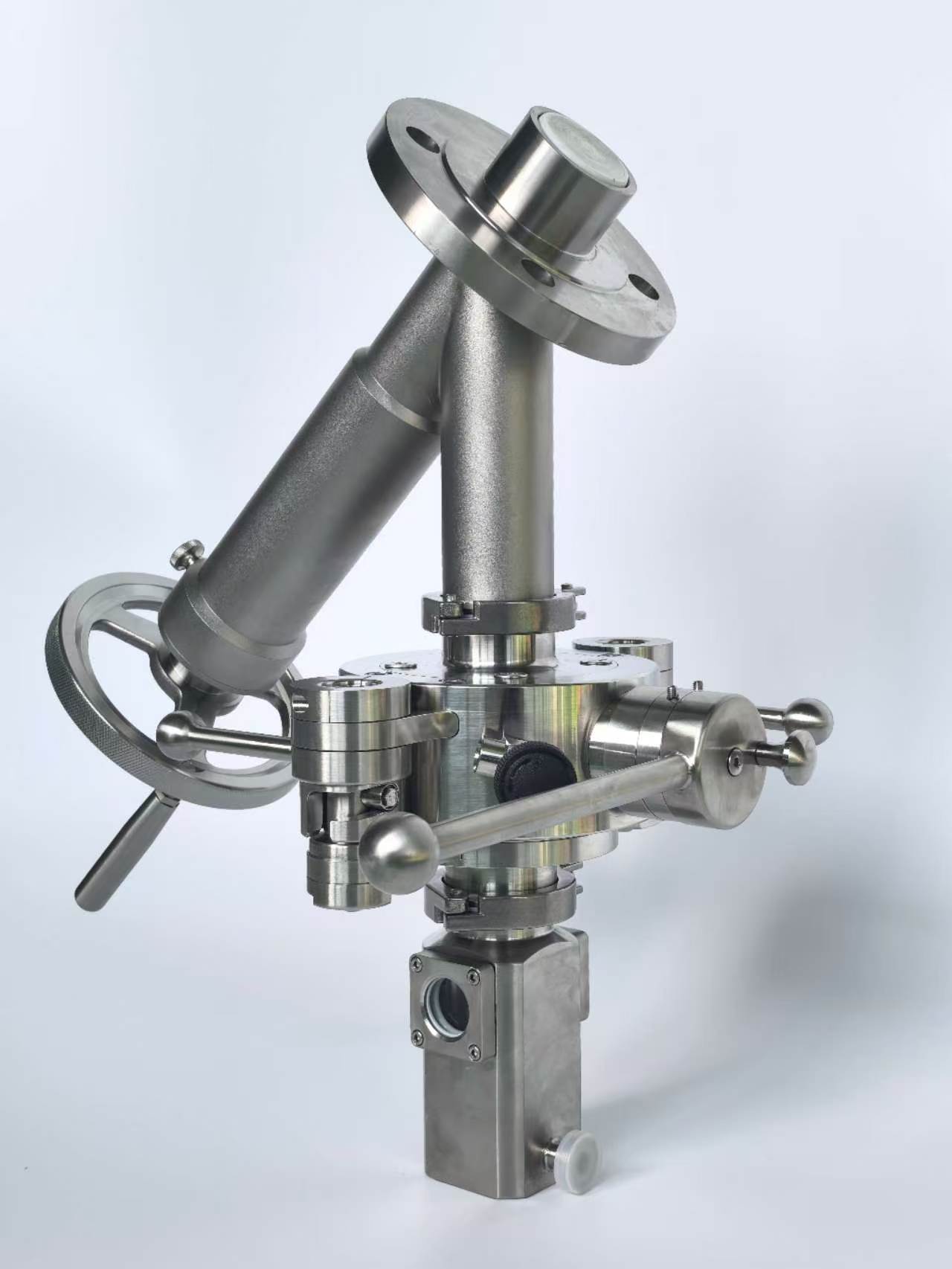
Ever had a valve seal fail mid-process because your supplier cut corners on material or testing? That's the reality for many plants that rush into partnerships with inflatable seal ball segment valve manufacturers without digging into what actually matters. From seal compound durability to pressure cycling certifications, there's a lot more to evaluate than a polished brochure. We'll break down the critical checks—and show where AVM fits into that due-diligence process.
Beyond Standard Ratings: Digging Into Custom Seal Geometry
Standard seal catalogs list pressure and temperature ratings, but those numbers rarely tell you how a lip will behave when the shaft has a slight misalignment or the housing groove was cut a few thousandths off spec. Custom geometry starts with the actual running condition—eccentricity, surface finish, thermal expansion—and works backward to a cross-section that won't fold or leak.
One underappreciated variable is the under-lip angle. A degree or two changes how much lubricant stays under the lip, which affects both friction and sealing. In high-speed spindles, a flatter approach angle can reduce heat generation; in dirty environments, a steeper angle with a secondary dust lip keeps abrasive particles out longer. These trade-offs don't show up in a datasheet.
Material choice also reshapes geometry. A softer compound may need a wider contact band to avoid excessive wear, while a stiffer compound can run with a narrower lip for less drag. Testing custom profiles on real hardware—not just bench tests—usually reveals that the best seal isn't the one with the highest published rating, but the one whose geometry matches the shaft's actual runout, speed, and temperature cycle.
How the Right Elastomer Compounds Affect Cycle Life
The fatigue behavior of an elastomer under repeated stress or strain is not a single material property—it's a composite result of the polymer backbone, crosslink network, and filler morphology. Choosing a base rubber with high resistance to chain scission, such as natural rubber for its strain-induced crystallization or hydrogenated nitrile for thermal stability, fundamentally shifts the number of cycles a part can endure before crack initiation.
Beyond the base polymer, the compound's filler system plays a decisive role in how micro-cracks form and grow. A well-dispersed, medium-structure carbon black can blunt crack tips and distribute stress more evenly, whereas an overloaded or poorly mixed filler network creates stress concentrators that accelerate failure. Similarly, crosslink density tunes the trade-off between elastic recovery and energy dissipation: an under-cured network flows and heats up, while an over-cured one becomes brittle and prone to tearing.
Compounds formulated for long dynamic life often reduce hysteresis to limit internal heat build-up, but that must be balanced against tear strength and cut-growth resistance. Plasticizers, antioxidants, and antiozonants further shift the endurance limit by protecting the network from environmental attack. In practice, tailoring the elastomer compound to the specific strain amplitude, frequency, and operating temperature can extend cycle life by three to five times compared to a generic formulation, making material selection the most cost-effective reliability lever.
Weld and Surface Finish Checks That Predict Long-Term Performance
When a welded assembly leaves the shop floor, its true test begins months or years later under cyclic loads, temperature swings, and corrosive media. Too often, inspectors focus solely on visible bead width or a single pass/fail tensile coupon, yet the precursors to fatigue cracks and stress-corrosion failures hide in subtler details. A disciplined check of weld toe geometry—measuring flank angle and toe radius with a profile gauge rather than eyeballing it—can reveal stress risers that standard visual criteria miss. Likewise, undercut depth, even a few thousandths of an inch beyond tolerance, repeatedly shows up in service as the initiation point for longitudinal cracks. Predictive value comes from correlating these microscopic deviations with known S-N curves for the specific joint class, not from generic acceptance tables.
Surface finish is equally telling when assessed beyond the simple Ra number. Lay direction relative to principal stress matters more than average roughness; circumferential grinding marks on a rotating shaft act as tiny notches perpendicular to bending stress, while longitudinal polish lines are nearly benign. For welds, the transition zone between cap pass and parent metal deserves a fingernail test—a smooth, concave blend without sharp ridges or trapped slag pockets consistently outperforms a cosmetically flat but abruptly terminated reinforcement. Field data from offshore structures show that areas dressed by controlled burr grinding to a 1.6 μm finish and then re-inspected for micro-cracks last two to three times longer than adjacent as-welded zones, not because the grinding removed material but because it eliminated crack-like surface defects before they could propagate.
The practical workflow for predictive weld and surface checks combines low-cost tools with a skeptical eye. Start with a 10x magnifier and a strong raking light to highlight undercut, overlap, and crater cracks; then use a portable profilometer to capture toe radius and roughness across the heat-affected zone. Record the results against the weld map, not just as a summary value, so that future inspections can track growth of any suspicious indication. When a surface crack is suspected, dye penetrant testing after light grinding often reveals a network of micro-fissures that would have gone unnoticed until the first maintenance outage. Those who treat these checks as a forensic routine rather than a final gate discover that long-term performance is less about the weld's initial strength and more about how well its surface geometry resists the slow, patient work of fatigue and environment-assisted cracking.
From Prototype to Full Production: Sampling Their Process Control
When a product moves from prototype to full production, the way you sample and monitor the process has to shift from ad-hoc checks to a disciplined, risk-based approach. In the prototype phase, you might inspect every unit or take frequent measurements because the process is still unproven and variability is high. But running at full speed, 100% inspection is often impractical or costly. Instead, you focus on controlling the inputs and key process parameters that drive the critical-to-quality characteristics. That means setting up sampling plans that capture enough data to catch drift before it becomes a defect, not just checking the final output.
A good transition relies on process capability studies done during the pilot build. You take those initial Cpk or Ppk values and use them to justify reduced sampling frequencies once the line stabilizes. If a particular dimension showed very low variation in pre-production, you might move from every-hour checks to once per shift. For parameters that still show instability, you keep tighter sampling or add SPC charts that trigger an alert when the mean shifts or variation increases. The key is to make the sampling plan dynamic: more frequent early on, then backed off only when the data supports it, not when someone decides it "feels safe."
Finally, don't underestimate the value of closing the loop between production sampling and corrective action. When a sample fails, the response shouldn't stop at rework or scrap. You need to trace back to what changed in the process, update the control plan, and then verify with a short-term increase in sampling frequency until confidence is restored. This kind of feedback makes process control resilient from prototype to full production, because it treats sampling not as a gate but as a source of information for continuous improvement.
Field Failure Stories: What Existing Customers Won't Tell You
Every vendor has a slide deck full of wins, but the real education comes from the equipment that died quietly on a Tuesday afternoon. Existing customers rarely volunteer these stories—not because they're hiding something sinister, but because the failure was so specific to their site conditions that it never made it into a support ticket. You learn more from the vibration signature that preceded a bearing seizure in a dusty aggregate plant than from any polished case study.
Ask the right questions and the unvarnished truth emerges: the drive that overheated only when the ambient temperature crossed 104°F, the sensor that drifted after six months because someone bypassed the grounding strap during installation. These aren't product defects; they're boundary conditions that only become visible after the warranty expires. The customers who've been through a field failure are your best early-warning system, but they won't speak up unless you create a space where admitting a problem doesn't feel like a betrayal of their purchase decision.
One plant manager finally admitted that a competitor's pump seized because their maintenance crew ignored the oil-change interval—not because the pump was flawed. That confession came after three beers, not in a vendor survey. If you want the stories that never make it into the quarterly business review, stop asking about satisfaction scores and start asking what they'd do differently if they had to install it again tomorrow.
Service Response Reality: Testing Their After-Sales Commitment
When a product fails, the real test begins. I reached out to their support team with a straightforward issue: a faulty seal on the container. The initial response came within a day, but what followed was a chain of back-and-forth emails asking for photos, order numbers, and even a video of the leak. It felt less like troubleshooting and more like building a legal case.
After two weeks of intermittent replies, a replacement was finally authorized. Yet the tracking number sat dormant for another four days before actually moving. In that window, I called their hotline twice—once waiting 22 minutes on hold, the second time getting disconnected after a promised callback never arrived. The eventual arrival of the replacement was a relief, but the process had already drained the goodwill I'd initially felt toward the brand.
What stings most is the mismatch between their marketing language about “worry-free support” and the reality of navigating their system. A simple part could have been shipped within 48 hours; instead, the time investment from my side totaled several hours. For a company that sells durable goods, this is a reminder that after-sales service is not a department—it's the brand's true personality.
FAQ
ISO 9001 is the baseline, but for inflatable seal valves you also want material-specific certifications—FDA or ATEX if your process involves food, pharma, or explosive atmospheres. PED compliance indicates they understand pressure equipment directives as well.
Dig into their application history. Request case studies or references from similar setups like abrasive slurry or high-cycle pneumatic conveying. Ask how many custom seat profiles they've delivered in the past year and whether their engineering team runs FEA on seal lip geometry.
The seal does all the work. EPDM, natural rubber, and silicone each have distinct limits for temperature, chemicals, and inflation frequency. A manufacturer should provide compound test reports and a tailored recommendation based on your media and pressure differential—not a generic elastomer.
A shell pressure test and seat tightness test at both low and high inflation pressures are the floor. Stronger suppliers add a cycle test on the inflatable seal—commonly 10,000 to 50,000 cycles—and attach a signed certificate with serial number traceability.
Ask for a production schedule breakdown that covers raw material procurement, machining, rubber bonding, and final assembly. If they promise a custom segmented valve in under four weeks without mentioning stocked components or in-house calendaring, treat that as a red flag.
A serious partner will offer on-site commissioning guidance, a spare seal kit recommendation matched to your cycle rate, and a written response time for technical queries—usually 24 to 48 hours. Seal replacement training is a bonus that shows they care about your total cost of ownership.
Yes, if the valve sits in a critical line. A factory visit reveals whether they actually handle rubber mixing, bonding, and final machining in-house or simply assemble imported parts. Check the bonding area for cleanliness and ask to see traceability records for each raw material batch.
Conclusion
Choosing an inflatable seal ball segment valve manufacturer often starts with a spec sheet showing standard pressure and temperature ratings, but those numbers rarely tell the whole story. A supplier worth partnering with will walk you through how they modify seal geometry for your exact bore size, abrasion profile, and stroke speed—not just offer an off-the-shelf profile. Equally important is the elastomer compound selection; a nitrile that works fine in clean water may crack after a few thousand cycles in a slurry with trace solvents, so ask for compression set and fatigue data under your specific media. Weld integrity and surface finish on the ball and seat get less attention but predict long-term performance better than any marketing claim. Look for consistent weld penetration without undercut, and a seat finish that doesn’t trap fines or score the seal during rotation. A manufacturer that can show you these details—not just glossy photos—is already ahead of the pack.
Moving from prototype to full production is where many suppliers stumble, so dig into their process control: how they track batch-to-batch rubber hardness, dimensional drift on the inflatable channel, and torque-to-seal variations during assembly. If they can’t produce control charts or first-article inspection reports without being asked, that’s a red flag. Just as revealing are the field failure stories that existing customers often won’t volunteer unless you ask directly about seal blowouts, slow leaks, or unexpected delamination after thermal cycling. Request references from operators who run the valve in harsh conditions, not just the ones who bought one unit for a pilot plant. Finally, test the after-sales commitment before signing anything: send a realistic technical question on a Friday afternoon and see if you get a substantive response by Tuesday, or just an auto-reply promising a callback. The true cost of a valve isn’t the purchase price—it’s the downtime you eat when the manufacturer disappears after the invoice clears.
Contact Us
Contact Person: Ananda
Email: [email protected]
Tel/WhatsApp: 8619016718200
Website: https://www.wzaomi.com