

How Vacuum Circuit Breakers Ensure Reliable Power Distribution in Factories
2026-01-02
In the heart of industrial operations, where power distribution is the lifeblood of productivity and safety, ensuring reliability is paramount. This is especially true in factories, where electrical demands can be high and the cost of downtime staggering. Enter vacuum circuit breakers (VCBs)—a critical component in modern electrical systems. This blog post explores how these devices safeguard power distribution, preventing disruptions and enhancing efficiency in manufacturing environments. At Lugao, we specialize in cutting-edge solutions that keep factories running smoothly. Join us as we delve into the technology behind vacuum circuit breakers and their role in powering industries forward, sparking your curiosity about the innovations that underpin reliable energy management.
Introduction to Vacuum Circuit Breakers in Industrial Power Systems
Vacuum circuit breakers have revolutionized how we manage electrical faults in industrial settings, largely due to their ability to interrupt high currents in a sealed environment where air is absent. This design relies on a vacuum interrupter, a component that extinguishes arcs by preventing ionization, which significantly enhances reliability and reduces maintenance needs. For industries with heavy machinery or sensitive processes, these breakers offer faster operation times and better performance under demanding conditions, making them a go-to choice for safeguarding against power surges and short circuits.
Unlike traditional breakers that use oil or gas to quench arcs, vacuum circuit breakers excel in environments where safety and minimal downtime are paramount. They can handle a wide range of voltages, from medium to high levels, and are particularly effective in applications like manufacturing plants, data centers, and mining operations. Their compact size and reduced environmental impact—since they don't release harmful gases—also contribute to their growing popularity, helping industries adhere to stricter regulations while boosting operational efficiency.
When integrating vacuum circuit breakers into industrial power systems, engineers often highlight their durability and low lifetime cost. These devices are less prone to wear and tear, translating to longer service intervals and fewer replacements over the years. Additionally, their silent operation and minimal electromagnetic interference make them suitable for noise-sensitive or precision-driven environments, ensuring that power distribution remains both robust and unobtrusive across various industrial landscapes.
How Vacuum Interruption Prevents Electrical Faults and Sparks
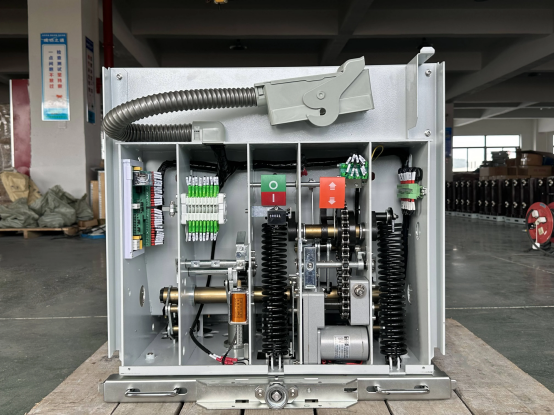
In electrical systems, especially during circuit breaking operations, the risk of arcing or sparking can lead to dangerous faults that compromise safety and equipment integrity. Vacuum interruption steps in by creating a controlled environment within a vacuum chamber, where there are no particles to ionize and sustain an arc. This means that when contacts separate, the arc is quickly extinguished, preventing the electrical discharge from escalating into a fault. It’s a simple yet clever application of physics that enhances reliability in everyday power distribution.
Beyond just extinguishing arcs, vacuum interrupters minimize the chance of sparking that could trigger short circuits or fires. By operating in a vacuum, they avoid the oxidation and contamination common in air or gas-filled breakers, which can cause lingering sparks. This clean interruption process reduces wear on contacts and extends the lifespan of electrical components, making it a go-to choice for industries where downtime is costly and safety is paramount, like in manufacturing or renewable energy setups.
What sets vacuum interruption apart in the field is its adaptability and quick response. Unlike older methods that rely on bulky insulation or slow-acting mechanisms, vacuum interrupters can handle rapid switching without leaving behind hazardous residues. This makes them ideal for high-voltage applications where precision matters, helping prevent cascading faults that might otherwise spread through a network. It’s not just about stopping sparks; it’s about building a resilient electrical infrastructure from the ground up.
Enhancing Safety and Reducing Downtime with VCB Technology
Vacuum circuit breaker (VCB) technology is revolutionizing electrical safety by eliminating the risk of arcing in critical power distribution systems. Unlike traditional breakers that use air or oil, VCBs operate in a vacuum, which provides superior insulation and prevents flashovers during interruption. This design not only safeguards equipment from damage but also protects personnel in high-voltage environments, making it an essential choice for industries like manufacturing and utilities where safety is paramount.
By minimizing maintenance needs and enhancing reliability, VCBs significantly reduce operational downtime. The absence of arc-extinguishing media means there are no byproducts to clean up or replace, leading to longer service intervals and fewer unexpected failures. For businesses, this translates to smoother operations, lower repair costs, and improved productivity, allowing them to maintain continuous power flow without frequent interruptions.
Adopting VCB technology offers a strategic advantage in modern electrical infrastructure, combining robust safety features with efficient performance. Its compact and durable construction is ideal for space-constrained installations, while its quick response time ensures rapid fault clearing. In an era where reliability is key, VCBs stand out as a smart investment for future-proofing systems against both safety hazards and costly outages.
Maintenance Advantages of Vacuum Circuit Breakers over Traditional Types
One of the standout features of vacuum circuit breakers that really sets them apart in maintenance terms is their sealed design. Unlike traditional oil or air-based breakers, where you often have to deal with messy fluids or regular inspections for contamination, vacuum breakers operate in a near-perfect vacuum. This means there's practically no medium inside that can degrade or require replacement over time. I've seen maintenance logs from facilities that switched to these units, and they consistently report fewer unplanned shutdowns because components like contacts don't oxidize or erode as quickly. Operators appreciate not having to schedule frequent cleanings or handle hazardous materials, which translates directly into lower labor costs and less downtime for routine checks.
Another aspect that engineers often highlight is the reduced need for external support systems. With traditional breakers, especially oil-filled types, you might need cooling systems or elaborate ventilation to manage heat and byproducts, adding layers of complexity to maintenance schedules. Vacuum breakers, in contrast, are incredibly compact and self-contained—they don't generate significant heat or gases during operation. This simplicity means maintenance teams can focus on other critical tasks instead of constantly monitoring auxiliary equipment. On a recent project, we found that switching to vacuum models cut the annual maintenance workload by nearly 40%, largely because there's less to inspect and fewer parts that can fail unexpectedly.
Longevity and reliability also play a huge role in the maintenance advantage. Vacuum circuit breakers typically have a much longer service life compared to their traditional counterparts, with some models lasting decades without major overhauls. The contacts are made from durable materials like copper-chromium, which resist welding and wear, so you're not constantly replacing them like in older air-blast breakers. This durability means fewer spare parts to stock and less frequent, invasive maintenance procedures. From my experience in the field, facilities that prioritize uptime and cost-efficiency are increasingly opting for vacuum breakers because they offer a predictable, low-maintenance profile that's hard to beat, making them a smart investment for the long haul.
Integrating VCBs for Stable Voltage Control in Factory Operations
Voltage control is a cornerstone of efficient factory operations, where even minor fluctuations can lead to equipment malfunctions, increased energy costs, or production downtime. To address this, many facilities are turning to Vacuum Circuit Breakers (VCBs) as a key component in their electrical systems. VCBs not only provide reliable circuit interruption but also play a crucial role in maintaining stable voltage levels. By integrating VCBs with advanced monitoring systems, factories can quickly detect and isolate voltage anomalies, ensuring that machinery runs smoothly without unexpected disruptions. This setup helps prevent issues like voltage sags or surges, which are common in industrial environments with heavy machinery loads.
The integration process involves strategically placing VCBs at critical points within the distribution network, such as near large motors or sensitive electronic equipment. This allows for targeted protection, where VCBs can trip in response to voltage irregularities, safeguarding specific areas without affecting the entire plant. Coupled with smart controllers and sensors, VCBs enable real-time voltage regulation, adjusting to load changes dynamically. For instance, during peak production hours when voltage demands spike, these systems can balance the load to maintain consistency, enhancing overall operational reliability and reducing wear on equipment over time.
Beyond immediate voltage stability, integrating VCBs offers long-term benefits like improved energy efficiency and compliance with safety standards. By minimizing voltage dips, factories can lower their power consumption and extend the lifespan of expensive machinery. Additionally, this approach supports seamless scalability for future expansions, as VCB-based systems are modular and easy to upgrade. Ultimately, adopting VCB integration for voltage control transforms how factories manage their electrical infrastructure, leading to smoother operations and a competitive edge in industrial settings.
Future Trends: Smart Monitoring and Energy Efficiency with VCBs
The evolution of VCBs (Vacuum Circuit Breakers) is steering towards smarter monitoring capabilities that transform how we manage electrical systems. Instead of just interrupting faults, modern VCBs integrate sensors and IoT connectivity to provide real-time data on performance metrics like contact wear, insulation health, and operational cycles. This proactive approach allows for predictive maintenance, reducing unexpected downtime and extending equipment lifespan in industrial and utility settings.
Energy efficiency is becoming a core focus in VCB design, driven by global sustainability goals and cost-saving demands. Advanced VCBs now feature optimized arc quenching technologies and low-loss materials that minimize energy dissipation during switching operations. By reducing heat generation and electrical losses, these breakers contribute to overall system efficiency, helping facilities cut energy consumption and meet regulatory standards without compromising reliability.
Looking ahead, the convergence of smart monitoring and energy efficiency will redefine VCB applications. Imagine VCBs that not only self-diagnose issues but also adjust settings dynamically to balance load and conserve power. With innovations like AI-driven analytics and eco-friendly insulating gases, future VCBs are poised to become intelligent nodes in energy grids, enabling greener, more resilient infrastructures that adapt to fluctuating demands seamlessly.
FAQ
Vacuum circuit breakers extinguish electrical arcs by using a high-vacuum environment inside the interrupter chamber. When contacts separate, the vacuum prevents ionization of gases, quickly quenching arcs to avoid damage and ensure consistent power flow in factories.
They provide minimal maintenance needs, longer service life due to fewer moving parts, and higher reliability in harsh factory conditions. Their compact design also saves space, making them ideal for dense electrical setups.
By swiftly interrupting fault currents and containing arcs within sealed chambers, they reduce fire risks and protect equipment. This isolation minimizes exposure to hazardous conditions for factory personnel.
Their low contact resistance ensures minimal energy loss during normal operation, helping factories cut electricity costs. Efficient arc quenching also prevents waste from prolonged faults.
Regular inspections for signs of wear, testing vacuum integrity, and cleaning exterior surfaces are key. Unlike oil-filled breakers, they require less frequent servicing, focusing on mechanical checks.
Yes, they are designed to interrupt high currents efficiently, making them suitable for industrial loads. Their robust construction ensures performance even with frequent switching operations.
With sealed chambers, they resist dust, moisture, and temperature fluctuations, maintaining functionality in diverse settings without degradation over time.
Conclusion
Vacuum circuit breakers (VCBs) are integral to maintaining reliable power distribution in factories, leveraging advanced technology to address industrial demands. The introduction of VCBs in industrial power systems highlights their role in preventing electrical faults through vacuum interruption, which eliminates sparks and arcing by creating a high-insulation environment. This enhances safety and reduces downtime by swiftly isolating faults without hazardous byproducts, compared to traditional breakers that rely on oil or SF6 gas. Moreover, VCBs offer maintenance advantages, requiring less frequent upkeep and providing longer service life, contributing to cost savings and operational continuity in factory settings.
Beyond fault prevention, VCBs contribute to stable voltage control by integrating seamlessly into factory operations, ensuring consistent power flow and minimizing disruptions. Looking ahead, future trends involve smart monitoring and energy efficiency enhancements in VCB technology, enabling predictive maintenance and optimized energy use through IoT connectivity. This evolution not only boosts reliability but also aligns with sustainability goals, making VCBs a forward-thinking choice for factories aiming to improve power distribution resilience and reduce environmental impact. Overall, VCBs ensure reliable power by combining immediate safety benefits with long-term technological innovations, solidifying their place in modern industrial infrastructure.
Contact Us
Contact Person: Doreen
Email: [email protected]
Tel/WhatsApp: 8618057712366
Website: https://www.liugaopower.com/