

How to Choose the Right Low Power Consumption Air Compressor
2026-08-17
Choosing a low power consumption air compressor isn't just about the wattage on the motor plate. It's about matching the machine's output to your actual air demand—and avoiding the costly habit of oversizing that drains energy year after year. Whether you're running a small workshop or a large plant, the right selection can trim your electricity bill without sacrificing pressure or flow. At Seize Air, we focus on that balance. In this post, we'll walk through the key questions to ask before you buy.
First, Nail Down the Airflow and Pressure You Really Need
Most people start by browsing fan models and comparing wattage, but that's backwards. Airflow and static pressure are the two numbers that determine whether a fan actually moves air through your specific duct, filter, or heat sink. Free-air ratings printed on boxes rarely reflect how the unit performs once it's installed. Guessing here usually means either a fan that stalls under back pressure or one that wastes energy pulling more air than the system can use.
To pin down airflow, measure or estimate the volume of air you need to displace per minute, then add a buffer for leaks, filter loading, or future modifications. If you're replacing an existing fan, don't just match the old CFM. The old unit may have been sized incorrectly from the start. Instead, work backward from the required cooling rate or ventilation standard. For example, a confined electronics cabinet needs roughly 2–3 air changes per minute depending on heat load, while a dust collection hood might demand a specific capture velocity at the inlet.
Pressure is the quieter but equally critical half of the equation. Static pressure is the resistance your system offers to airflow, and it rises sharply with bends, narrow ducts, or dense filters. A fan's performance curve shows how much airflow it delivers at any given pressure. Find the intersection of your required CFM and your system's static pressure curve, then choose a fan whose operating point sits in the middle of its curve, not at the far edge. Running a fan near its maximum pressure capability often leads to noise, vibration, and premature motor failure.
A Variable Speed Drive Can Cut Your Energy Bill Quietly
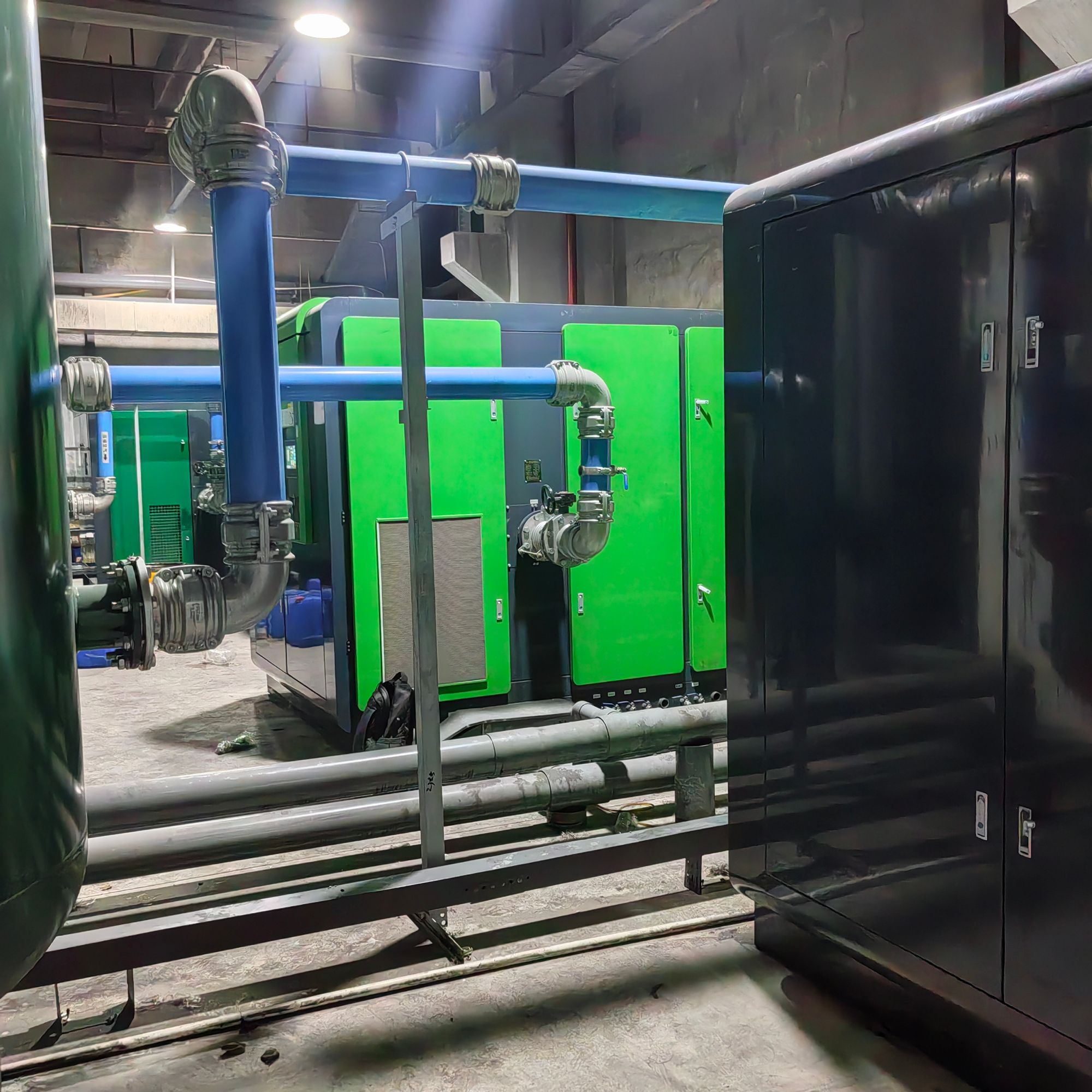
Most HVAC systems still run at one speed, even when the building doesn't need full output. That means fans, pumps, and compressors repeatedly ramp up to 100% and then shut off, wasting electricity every time they start. A variable speed drive changes this by allowing the motor to match the exact load required—whether it's 20% on a mild morning or 80% during a heat wave. The result is not just lower kWh usage, but fewer mechanical jolts that shorten equipment life.
One overlooked benefit is how quietly the savings accumulate. Since the drive never forces the motor into a hard start, there's no sudden surge in current or abrupt acceleration. You'll notice the system humming along at a lower, steadier pitch instead of roaring to life. And because the motor runs cooler at reduced speeds, the drive itself often outlasts the equipment it controls. For facilities managers, that means fewer service calls and a power bill that drops month after month without any daily adjustment.
The real trick is sizing the drive correctly and tuning its ramp-up curve. If you simply install it and leave the default settings, you might only capture a fraction of the possible savings. But when the acceleration time is stretched slightly and the minimum speed is set to match the building's base load, the system can coast through off-peak hours using barely more power than a couple of ceiling fans. That's the kind of quiet efficiency that never shows up in a flashy spec sheet—but it shows up clearly at the bottom of the invoice.
Watch for Low Decibels as a Clue to Smart Engineering
Low decibels often signal more than just quiet operation; they hint at tighter tolerances, better materials, and smarter isolation. Engineers who chase silence have to control resonance, airflow, and thermal expansion in ways that loud designs can ignore. When a device runs almost inaudibly, it usually means somebody cared about every joint, bearing, and seal.
That quietness also shows up in how components age. Noise is often friction or vibration working against the structure. By reducing it, the same changes that lower sound tend to reduce wear. A pump or drive that barely whispers at first will often stay smoother longer because the forces that create noise aren't chewing through the contact surfaces.
But low decibels alone aren't proof. Some products are quiet simply because they're underpowered or heavily damped in ways that mask inefficiency. The real clue is when quiet operation pairs with strong, consistent output. That combination—minimal acoustic energy and steady performance—usually points to a design where mechanical paths are short, components are well-matched, and nothing is fighting itself.
Small Tanks Work Better When Your Demand Is Intermittent
If your water usage spikes only at certain times—say, a busy morning shower rush or a weekly laundry marathon—a big storage tank can actually work against you. It holds gallons of water that sit idle most of the day, losing heat slowly and forcing your system to reheat the same volume over and over. A smaller tank, on the other hand, heats only what you're likely to use in a short burst, then refills and recovers quickly before the next demand hits. You're not paying to keep a large reservoir hot when nobody's home.
Think about how a coffee maker works: you don't brew a full pot if you only want one cup. The same logic applies to water heating for intermittent demand. A compact unit reaches temperature faster because there's less water to bring up to heat, and with a well-matched burner or element, it can replenish hot water in the time it takes you to finish one task and start another. This way, you get a steady stream of hot water exactly when you need it, without the standby losses that come from maintaining a giant tank around the clock.
In homes where hot water use comes in separated episodes rather than a constant flow, sizing the tank to your peak single-use rather than your total daily volume often makes more sense. You avoid the trap of oversizing, which wastes energy and floor space. A smaller, right-sized tank paired with a quick recovery rate means you're only heating what you'll actually use before it goes cold again—making the whole system feel more responsive and less wasteful.
Check the Duty Cycle Before Believing the Wattage Label
A wattage label can be a tempting shortcut when you're comparing tools, but it rarely tells the whole story. Many devices, especially compressors, welders, and portable generators, are rated at their peak output—a number they might only sustain for a few seconds before overheating or tripping a thermal protector. The duty cycle is what reveals how long the unit can actually run at that wattage within a given period, typically expressed as a percentage over ten minutes. Ignore it and you could end up with a machine that stalls exactly when the work gets demanding.
Take a 1,500-watt air compressor with a 30% duty cycle. That means in a ten-minute window, it should run for only three minutes and rest for seven. Push it harder and the motor windings heat up faster than the cooling system can manage, shortening its lifespan or causing an unexpected shutdown mid-job. What felt like plenty of power on paper suddenly becomes a bottleneck, forcing you to pause repeatedly or downgrade your task. The same applies to welders: a unit advertising 200 amps may only deliver that current for 20% of the cycle before it must cool down.
Before you trust the wattage on the box, find the manufacturer's spec sheet—not the marketing bullet points—and look for the duty cycle at the output you actually need. Ask yourself how long you'll realistically run the tool without a break. If you need continuous operation, aim for a unit with a 100% duty cycle at your target wattage, or accept that you'll need a larger, more robust machine. Checking this one detail before buying can save you from a frustrating cycle of overheating and downtime.
Long-Term Reliability Beats a Bargain Price Every Time
A low sticker price has a sneaky way of hiding how often you'll actually replace the thing. I've watched a bargain angle grinder die halfway through a deck project, sending me back to the store for another one—and then another. The reliable model cost twice as much but never missed a cut. Multiply that across a workshop or a household, and the cheap option becomes the expensive one in a hurry.
There's also a quiet cost to unreliable gear that rarely shows up on a receipt. Every strange noise from a washing machine or a truck engine becomes a small crisis waiting to happen. You second-guess whether to run the machine, hold off on a job, or brace for a repair bill. Paying more for something that just works removes that background worry. Over a decade, that mental relief is often worth more than the difference in price.
The real comparison isn't between two prices—it's between two life spans. A forty-dollar sump pump that fails every other year will cost you more than a hundred-dollar one that runs for ten without a hiccup. Add in the water damage from a failure and the math isn't even close. When you're looking at two options, skip the sticker shock and ask yourself which one will still be doing its job without drama five years from now.
FAQ
Look beyond the horsepower sticker. The useful number is specific power, usually shown as kW per CFM at a given pressure, or the motor's full-load amps compared to actual delivered air. A unit with a lower kW/CFM ratio does more work per watt, even if its motor looks smaller on paper.
If you run short bursts like nail guns or tire inflation, a smaller tank paired with a modest pump avoids long recovery cycles and keeps the motor from running more than needed. Continuous-use tools need larger storage, but that's where a higher-efficiency pump matters more than tank volume alone.
Not necessarily. Oil-lubricated pumps often have lower internal friction and can run cooler under sustained loads, which may translate to less energy per unit of air. Oil-free models win on reduced maintenance and portability, but their energy advantage shrinks if you use them hard and often.
Pay attention to starting current, idle or unloaded power draw, air leaks from poorly fitted fittings, and clogged intake filters. Those can quietly add 15-30% to your electric bill, so a unit with a slightly higher price but tighter system design can cost less over a year of real use.
A larger tank can act as a buffer, letting a smaller motor cycle less often for intermittent demand. But if the tool's peak CFM demand exceeds what the pump can sustain, the motor will run constantly or short-cycle, which wastes energy and shortens life. Match pump output to average demand, not just tank size.
Frequent start-stop operation creates inrush current spikes and pressure swings, so the compressor spends more time outside its efficient band. A variable speed drive adjusts motor speed to air demand, saving 20-35% in variable load applications, but it adds upfront cost and is overkill for occasional home use.
Clean or replace the intake filter regularly, drain moisture from the tank to prevent internal corrosion and lost capacity, check belt tension on belt-drive models, and fix any hissing fittings immediately. A compressor with dirty filters and small leaks has to work longer to fill the same volume, directly raising power use.
Conclusion
Ignore the sticker watts for a moment and figure out the exact airflow (CFM) and pressure (PSI) your tools actually demand. Oversizing wastes energy, undersizing starves the tool. A variable speed drive is a quiet money-saver: it ramps the motor up or down to match real-time air use instead of running flat out. Low decibel levels aren't just about comfort—they often point to better internal engineering, like reduced vibration and tighter parts. And if your usage is stop-and-go, a smaller tank can actually be more efficient because the compressor isn't spending energy keeping a large volume of air pressurized between cycles.
Before trusting any wattage label, check the duty cycle—how long the motor can run in a ten-minute span without overheating. A 'low power' unit rated for only 30% duty cycle will struggle or fail if you push it hard. Long-term reliability outweighs a cheap price: look for a cast-iron pump (or quality alloy), accessible air filters, and thermal overload protection. A compressor that matches your actual work pattern and is built to handle repeated starts will cost less over five years than a bargain model that needs replacing or constant repairs. So choose based on your real demand, not the lowest number on the box.
Contact Us
Contact Person: Mia
Email: [email protected]
Tel/WhatsApp: +86 19821985894
Website: https://www.seize-air.com