

Export Mechanical Reversing Ceramic Hydraulic Filter Press Piston Pump A Complete Guide for Global Buyers
2026-08-25
For global buyers sourcing industrial pumps, the mechanical reversing ceramic hydraulic filter press piston pump remains one of the most misunderstood components in high-pressure filtration systems. While many guides focus on generic specs, this one cuts through the noise to show how Sinou has re-engineered durability and flow consistency for demanding operations. Whether you are replacing a worn unit or designing a new line, understanding the interplay between ceramic plungers, reversing mechanisms, and real-world load cycles will save you from costly downtime. This guide breaks down what actually matters before you commit to a purchase.
Why Ceramic Outlasts Metal in Filter Press Piston Pumps
Metal pistons have a habit of wearing down just when you least expect it, especially in the gritty, high-pressure world of filter press operations. Every stroke against abrasive slurries slowly eats away at the surface, leaving behind scores and grooves that invite leaks and pressure drops. Then there's the corrosion angle: acidic or caustic process fluids quietly attack the metal, thinning walls and weakening the piston until it fails prematurely. Ceramic, by contrast, shrugs off both abrasion and chemical attack with an almost stubborn indifference. Its hardness sits far above most metals on the Mohs scale, and its chemical inertness means the nastiest slurries slide past without leaving a mark. That's not just a lab claim—it's what operators notice when the same ceramic piston keeps sealing tight month after month while the old metal one would have been swapped out twice already.
The real differentiator isn't just material hardness, though. It's how ceramic handles the constant micro-deformation under pressure. Metals flex and fatigue with every cycle, and that repeated stress eventually leads to cracking or permanent distortion. A ceramic piston, being exceptionally rigid, moves through the stroke with virtually no elastic give. There's no flex fatigue to worry about, no gradual loss of dimensional accuracy. The piston face stays flat, the sealing edges stay sharp, and the flow path stays consistent. In a filter press where pressure spikes are common and downtime is costly, that rigidity translates directly into fewer rebuilds and a predictable discharge cycle. You don't have to nurse a ceramic piston along with frequent adjustments or tolerate the slow decline in throughput that metal components quietly accept.
Of course, ceramics aren't magic—they can chip if hit hard or mishandled during installation. But in the controlled environment inside a pump cylinder, where motion is linear and loading is compressive, those risks fade into the background. What remains is a component that simply doesn't care about the abrasive mud, the caustic wash water, or the relentless pulse of the press. Metal may be familiar and forgiving in the machine shop, but when it comes to outlasting the conditions in a filter press piston pump, ceramic has already left it in the dust.
Mechanical Reversing Without the Usual Solenoid Headaches
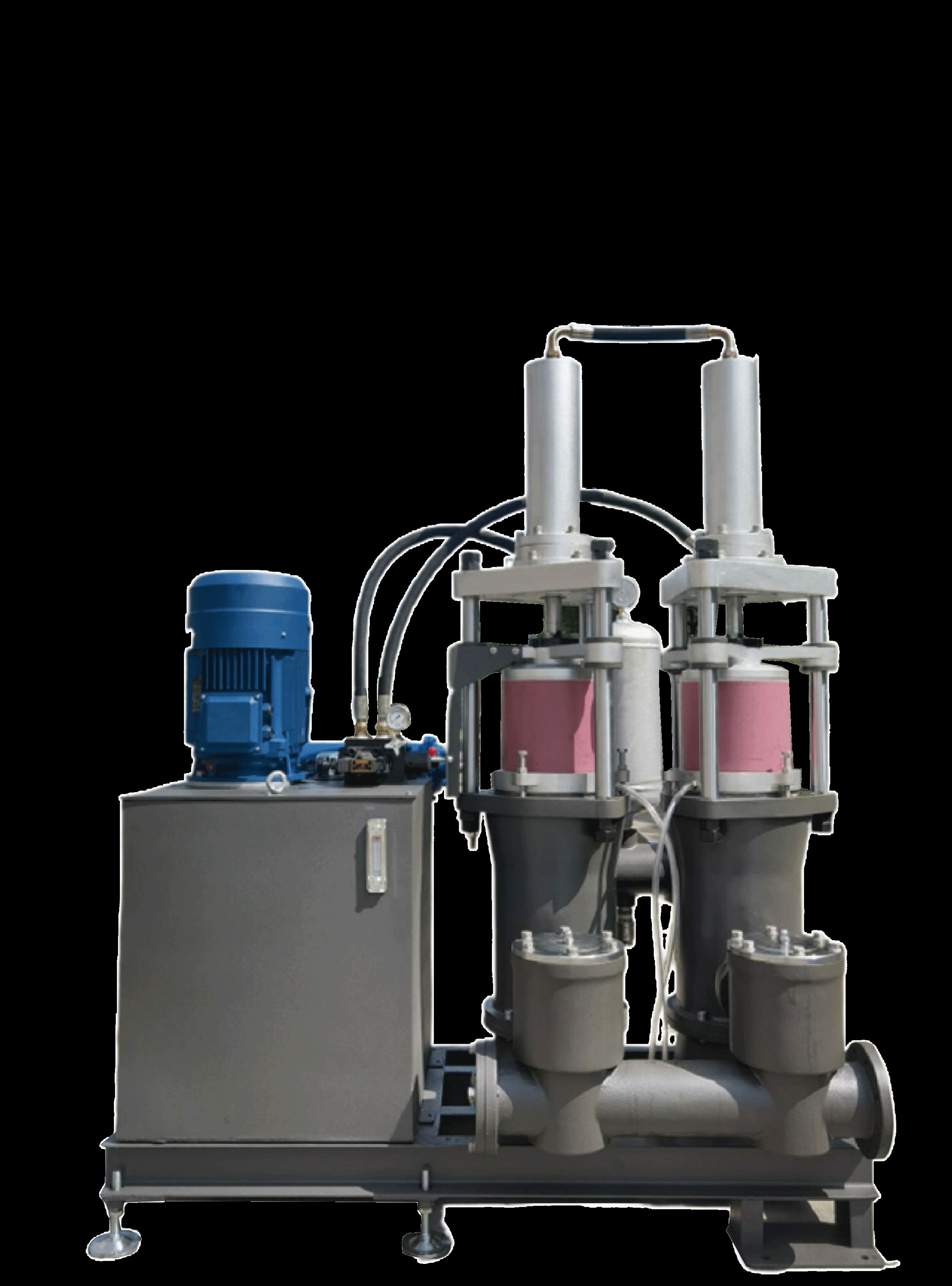
Solenoids have long been the go-to for reversing mechanisms, but they bring a pile of annoyances: heat buildup, sticking plungers, and that sharp click that echoes through the machine. There's a simpler path—using purely mechanical means to flip direction without relying on electromagnetic pull. Think of a sliding collar with helical grooves that engage a pair of bevel gears, or a rocking lever that toggles a ratchet. These designs sidestep electrical failure points entirely and keep the action smooth, almost silent, and predictable under load.
The trick is letting geometry do the work instead of magnetic force. For instance, a spring-loaded plunger with a cross pin can ride in a figure-eight slot cut into a rotating drum. As the drum turns, the pin follows the slot, shoving a fork back and forth—no coil, no contacts, no burnout. Another approach uses a centrifugal weight that shifts a dog clutch once the shaft reaches a certain RPM. The shift is gradual and self-regulating, so you never get the violent engagement that wears out solenoid plungers and linkages.
Maintenance drops to nearly zero because there are no wires to fray, no armatures to gum up. If something does jam, the mechanical parts are visible and easy to file or replace with basic hand tools. You also lose the voltage sensitivity problem—these reversing setups work the same at 9 volts or 240, as long as the rotating mass is moving. For anyone tired of replacing burned coils or listening to that metallic slam, mechanical reversing feels less like a compromise and more like an upgrade in reliability.
Hydraulic Pressure Tuning for Slurries That Change by the Hour
Slurry behavior rarely stays put. A thickener underflow can shift from 45% to 52% solids in under an hour, while viscosity swings with temperature and shear history. Running a hydraulic system at a fixed pressure setting means you are either over-pumping the thin batches or under-pumping the thick ones. The result is uneven pipeline wear, surging flows, and occasional plugging that forces operators to hover over manual bypass valves.
A better approach is to treat pressure as a live variable. Install a density meter and a pressure transducer on the discharge line, then feed both signals into a small controller that adjusts the hydraulic pump's compensator every 10 to 15 seconds. When solids jump, the compensator backs off slightly to keep velocity from dropping below the critical deposition point. When the slurry thins, pressure eases up to reduce shear and save energy. This is not a set-and-forget loop; it needs a tuning window that reflects the hour-to-hour range you actually see, not a single lab sample.
One plant running zinc tailings switched to this style of pressure tuning after three line blockages in a month. They set the control band at ±8% of a moving average based on the previous 20 minutes. Within two weeks, average pump energy dropped 11%, and the operators stopped overriding the system during shift changes because the pressure no longer lagged the slurry. The key is to let the hydraulic response follow the material, not the other way around.
Export Paperwork That Clears Customs Without a Call to the Broker
The fastest way to get freight through customs without a broker call is to make the commercial invoice do the heavy lifting. Include the correct harmonized system code for every line item, state the country of origin clearly, and list values in the same currency used on the purchase order. Discrepancies here trigger most routine clearance holds.
For shipments that require an export declaration, file your Electronic Export Information in AES before the cargo reaches the port. Attach the internal transaction number to the bill of lading and keep your packing list in the exact same order as the invoice. If you are claiming a preferential tariff under a trade agreement, include the certificate of origin and the applicable rule of origin statement rather than just writing "eligible" on the form.
Double-check the consignee details against the destination country's import regulations. A missing tax ID, a vague product description, or an unmatched weight on the air waybill can stall a shipment even when the broker is not involved. Fix those details while the goods are still in transit, and customs usually releases the freight with nothing more than a status check.
Matching Pump Stroke to Plate Capacity: A Buyer’s Reality Check
Spec sheets love to pair a pump's maximum stroke with the plate's nominal capacity, but anyone who's run one of these setups knows that number only works on a test bench. The real question is whether the pump can hold that stroke under backpressure without cavitating or losing prime, and whether the plate can actually handle the flow at that speed without channeling or uneven loading.
Before you commit, pull the actual performance curve—not the marketing summary—and plot your worst-case viscosity, temperature, and discharge head. If the curve flattens out right where your plate reaches its sweet spot, you're probably fine. If the promised stroke only shows up with a wide-open discharge and thin fluid, that's a red flag you'll be babysitting the throttle all shift.
A quick field test beats a dozen brochures: run the pump at 70% stroke against a partially closed valve and watch the plate for uneven flow or leakage. If it struggles there, full stroke is just a number with no practical home.
Supplier Red Flags: Coating Thickness Tests and Other Proof Points
When a coating supplier hands you a certificate that says "average thickness 80µm" and nothing else, treat that as the first warning sign. Real coating thickness control means measuring at multiple points on each part, comparing edge versus center readings, and keeping raw data from every production lot. A single averaged number hides the fact that some areas might be dangerously thin. Ask to see the actual gauge readings, not just the summary.
Another red flag is a supplier who gets defensive when you request a third-party cross-sectional check. If their lab results always match the spec, but independent tests show occasional undercoating, that gap tells you the in-house testing isn't reliable. Look for calibration records for the thickness gauges, and see if they test the same parts they ship rather than specially prepared samples. Proof points like micrographs of cut sections or time-stamped measurement logs separate genuine quality control from paperwork theater.
Beyond the numbers, pay attention to how a supplier handles disputed results. A good partner will walk you through their measurement procedure, show where the probe was placed, and discuss the allowable tolerance. A bad one will blame the instrument, the operator, or the test method. Coating thickness may seem like a minor detail, but a supplier who can't prove consistent thickness is likely cutting corners on other hidden parameters as well.
FAQ
The pump uses a cam or crank-driven linkage to shift the ceramic pistons back and forth without relying on electronic sensors or solenoid valves. When the piston reaches the end of its stroke, a mechanical actuator flips the flow direction, so the slurry feed stays continuous while the filter press builds pressure. This design removes the timing drift common in electric controls and keeps the stroke length consistent even under fluctuating load.
Ceramic pistons and liners resist the abrasive wear caused by mineral slurries, sludge, and fine solids far better than hardened steel or chrome-plated parts. The surface hardness also prevents scoring when small grit particles get trapped between moving surfaces, which extends service intervals and keeps volumetric efficiency stable over months of heavy use.
Yes, because the reversing stroke is mechanically timed rather than triggered by pressure spikes. The piston decelerates smoothly before reversing, so the discharge flow does not slam into the plate stack. That reduces cloth fatigue and helps maintain a uniform initial cake layer, which is critical for dry filter cakes and shorter cycle times.
Start with the press's total chamber volume and target fill time, then match the pump's output per stroke to that demand. Also confirm the maximum feed pressure rating, because some presses require 7 bar while others run up to 15 bar. The slurry's solids content and particle size distribution matter too—fine, sharp particles may call for a slower stroke rate with a larger piston diameter.
Most plants inspect the reversing linkage and cam surfaces every 500 to 800 running hours. Lubricate the pivot points, check for play in the connecting rods, and replace any worn bushings before they alter stroke length. The ceramic pistons themselves can run several thousand hours if the slurry does not contain oversized grit, but seal replacement is usually needed more frequently.
The mechanical reversing head works independently of the motor's electrical control scheme, so the pump can be coupled with standard IEC or NEMA motors rated for 380V/50Hz, 460V/60Hz, or other local supplies. You only need to specify the correct motor frame and coupling when ordering, and the pump's hydraulic performance stays the same.
Undersized suction piping is the most common mistake—it starves the pump and creates cavitation that damages ceramic surfaces. Another issue is mounting the pump on an uneven base, which misaligns the drive shaft and reversing linkage. A missing or incorrectly sized pulsation damper can also cause pressure oscillations that shake the filter press piping and loosen plate seals.
The absence of pilot valves, electrical position sensors, and PLC timing reduces both capital cost and the number of failure points. In remote mining or industrial sites where control water or clean power is limited, the mechanical reversing system keeps running with basic lubrication and periodic visual checks. That reliability, combined with ceramic wear parts, lowers the total cost per dry ton of dewatered solids.
Conclusion
For buyers outside the manufacturer's home market, the ceramic hydraulic filter press piston pump with mechanical reversing earns its keep in ways that don't show up on a basic data sheet. The ceramic plunger surface shrugs off abrasive slurries and acidic filtrates that would chew through chrome or stainless in a few hundred cycles. Mechanical reversing removes the solenoid valve and its coil from the wear equation, so a power fluctuation or a sticky spool doesn't leave the pump stroking one direction until something bends. Field tuning of hydraulic pressure matters just as much: a slurry that thickens after lunch needs a softer ramp than the thin morning batch, and the pump should let an operator or PLC adjust that without calling an engineer. Stroke length has to be checked against the plate pack volume, not copied from a competitor's spec sheet, because an overlong stroke hammers the plates and a short one leaves cake half-formed.
On the export side, paperwork is part of the machine. A proper supplier prepares the certificate of origin, packing list, and any required treatment certificates before the crate leaves the loading dock, so the pump doesn't sit in a bonded warehouse while someone tracks down a broker. Smart buyers ask for the coating thickness test report and a video of the ceramic sleeve under a dial indicator, not just a glossy brochure. Red flags include vague answers about ceramic grade, no third-party hardness data, or a refusal to show the reversing mechanism cycling dry. Asking for a documented stroke-volume test against the plate capacity at the quoted pressure separates vendors who understand the application from those who just assemble parts.
Contact Us
Contact Person: HaiYan
Email: [email protected]
Tel/WhatsApp: +86 18957325588
Website: https://www.senyoubeton.com/