

DIN Rail Power Supply Manufacturer: Reliable Solutions for Industrial Automation
2026-05-24
When it comes to industrial automation, the reliability of your power supply can mean the difference between seamless production and costly downtime. That’s where TPS, a seasoned DIN rail power supply manufacturer, steps in with robust solutions tailored for demanding environments. But what makes their approach different from the rest? Here’s a closer look.
Built for the Demands of Modern Factories
Modern factories don’t just ask for performance—they demand it. That’s why every component in this system is built to withstand the relentless pace of production. From reinforced frames to industrial-grade seals, no detail is overlooked. It’s the kind of durability that keeps lines moving, shift after shift, without missing a beat.
But raw strength isn’t enough. Today’s manufacturing environments need equipment that adapts as fast as the market changes. This platform integrates seamlessly with existing automation setups, handling everything from simple repetitive tasks to complex multi-step workflows. It learns your process, not the other way around.
Maintenance shouldn’t be a project. Clear access points, tool-free adjustments, and smart diagnostics turn what used to be downtime into a simple check-up. That means less time waiting for repairs and more time hitting your targets. It’s built for the real world, where every minute counts.
Why Our DIN Rail Units Outlast the Rest
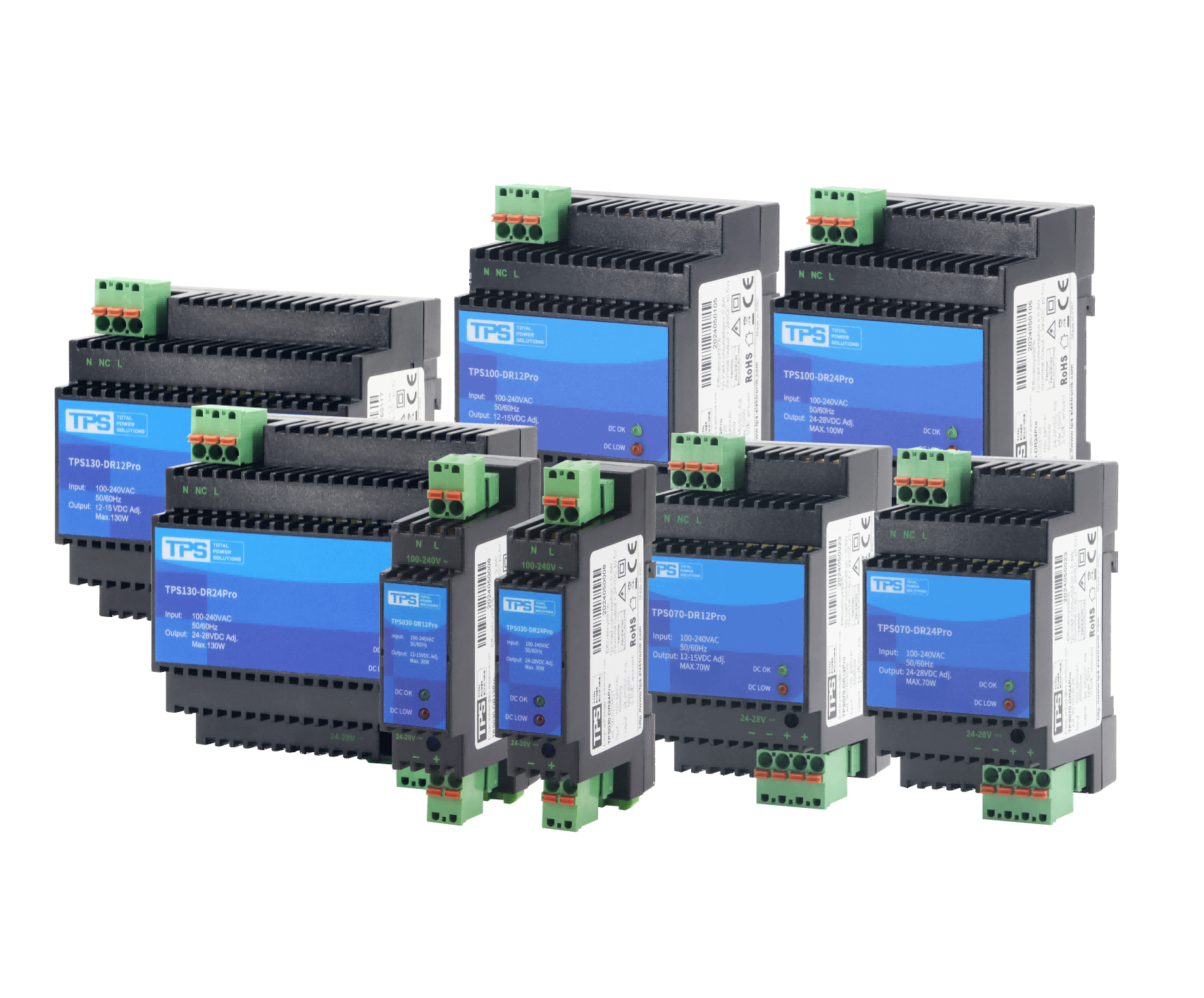
Every component inside our DIN rail units is selected for one reason: to keep working long after others have given up. Instead of the typical plastic parts that crack under thermal stress, we use glass-reinforced polyamide housings that shrug off heat, cold, and the occasional impact from nearby machinery. The internal circuitry isn’t just assembled—it’s bonded and conformal-coated, locking out moisture, dust, and the corrosive gases that quietly eat away at unprotected boards in industrial settings.
We’ve also engineered the power supply stage to operate well below its rated limits, so even when surges hit or ambient temperatures climb past 60°C, the core stays cool and stable. This isn’t about over-engineering for the sake of it—it’s about building in headroom that eliminates the slow, invisible damage that leads to early failure. Connectors are machined from solid brass with multiple contact points, meaning resistance stays low and heat buildup doesn’t slowly degrade the terminal blocks over time.
Every unit goes through a 72-hour burn-in test at full load before it leaves the factory, cycling through temperature extremes that mimic years of field abuse. That catches the weak spots that bench-top testing never sees. When you clamp one of our modules onto a rail, it’s already proven it can survive what the real world dishes out.
Simple Setup, Minimal Downtime
Getting things running doesn't have to mean wrestling with complex configurations or overnight maintenance windows. Our approach strips away the usual friction, letting you deploy in minutes, not days. Most configurations are pre-tuned right out of the box, so you spend less time clicking through settings and more time actually using the tool.
Updates and maintenance happen behind the scenes without forcing your team to pause their work. We've engineered the system to handle transitions gracefully, keeping disruptions so small they often go completely unnoticed. If something does require a brief hold, it's measured in seconds and scheduled when it suits your workflow, not ours.
The result is an experience where setup feels almost invisible and interruptions become a thing of the past. You stay focused on what matters, while the underlying platform adapts quietly, ready whenever you need the next step.
Powering Every Link in Your Automation Chain
Every automated workflow relies on a series of interconnected steps, each one a critical link. When one falter, the entire process loses momentum. Our approach ensures that from initial trigger to final action, every connection remains robust and responsive.
We focus on the subtle handoffs between tasks—the data transformations, conditional logic, and integrations—that often become bottlenecks. By strengthening these links, we eliminate friction and keep your operations flowing without interruption.
It’s not just about connecting A to B; it’s about maintaining integrity across the entire chain. Whether you’re orchestrating complex multi-system workflows or simple task sequences, we provide the reliability that powers your automation, link by link.
Behind the Scenes: Engineering That Puts Safety First
Every vehicle that rolls off our line carries an invisible signature—hours of meticulous engineering where safety isn't a feature, it's the starting point. From the first sketch, our team obsesses over material fatigue points, crush zones, and how a door frame holds up against impossible angles of impact. We test beyond regulations, not to meet a standard, but to find the breaking point long before you ever touch the steering wheel.
The real work happens in the details nobody talks about. Thousands of simulations run daily, modeling scenarios from a sudden highway hydroplane to a slow-speed parking lot bump. We analyze how a seatbelt anchors micro-adjust under load, how airbag deployment timing shaves off critical nanoseconds, and how reinforced pillars can channel force away from the cabin. It's a quiet, relentless pursuit where each failure in the lab is a step closer to something you'll never need to think about.
What sets this process apart isn't just the technology—it's the mindset. Engineers volunteer their own cars for teardown studies, pulling apart side panels to examine weld integrity after years of real-world use. That feedback loops back into design, reshaping brackets, adding a millimeter here or a reinforcement there. It's engineering driven by something simple: the knowledge that every calculation carries the weight of a life.
Adaptable Power for Any Voltage, Any Environment
It doesn’t matter if you plug into a 120V outlet in North America or a 230V socket in Europe — the internal sensing circuitry makes the adjustment in milliseconds without switches or toggles. You’re free to move between continents with a single device that simply works, no travel adapters or voltage converters needed.
Beyond voltage, the power supply shrugs off temperature swings that would cripple lesser units. Sub-zero cold where electronics typically stutter, or blistering desert heat inside a sealed enclosure — the gallium nitride components and wide-bandgap semiconductors keep efficiency high and heat low, so the unit never throttles even in unventilated spaces.
Humidity, salt fog, fine dust? The fully potted enclosure laughs at them. Every connection is sealed, every surface treated to resist corrosion, so whether it’s mounted on a fishing vessel or serving in a dusty factory, the power keeps flowing. This isn’t just universal input — it’s an immunity to environments that make other gear fail.
FAQ
In industrial settings, space is limited and reliability is non-negotiable. DIN rail power supplies clip directly onto standard mounting rails inside control cabinets, saving room and simplifying wiring. They convert unstable AC mains into clean DC power that sensitive automation equipment—like PLCs, sensors, and actuators—needs to function without interruption.
Reliability comes from robust design and quality components. Top manufacturers use wide-temperature-range components, conformal coating against moisture and dust, and rigorous testing—including burn-in, vibration, and thermal cycling. Redundancy modules and overload protections are also integrated to prevent downtime in critical applications.
First, match the wattage and voltage to your load, with a healthy margin for peaks. Check the input range—many industrial sites have fluctuating mains. Look for essential protections: short-circuit, overvoltage, and overtemperature. Also consider certifications like UL 508 for safety and efficiency ratings to minimize heat and energy costs.
Efficiency directly impacts operating costs and cabinet temperature. A highly efficient supply generates less waste heat, reducing the burden on cooling systems and extending the lifespan of nearby electronics. It also means lower ongoing electricity bills, which matters when you have dozens of units running 24/7.
Yes, if it's sized correctly. You need to sum up the current demands of all connected loads and then add a 20–30% buffer for inrush currents and future expansion. Using a power supply with multiple output terminals or adding a terminal block distributor can simplify connections while keeping everything neat.
One big mistake is ignoring derating—at high ambient temperatures, the rated output often drops. Also, poor ventilation can lead to overheating. Using undersized wiring or forgetting to torque terminals can cause voltage drops or even fire. Always follow the manufacturer’s mounting instructions regarding orientation and spacing for airflow.
Redundancy modules connect two or more power supplies in parallel. If one fails, the other takes over seamlessly, eliminating a single point of failure. This is crucial for processes where even seconds of downtime could be costly or dangerous. The system can also signal a failure alert, allowing maintenance without shutting down.
Conclusion
In the fast-paced world of industrial automation, reliable power is the backbone of every operation. Our DIN rail power supplies are built from the ground up to meet the relentless demands of modern factories, where fluctuating loads, tight spaces, and unforgiving environments are the norm. By combining heavy-duty components with smart thermal design, these units shrug off heat and electrical stress that would sideline lesser equipment. The result is a power supply that truly outlasts the rest, backed by field data showing a significantly lower failure rate than typical models. Installation is refreshingly simple—tool-less snap-on mounting and clear, push-in terminals cut setup time to seconds, slashing downtime when lines need to be reconfigured or expanded. From the control cabinet to the furthest sensor, our units deliver stable, clean power to every link in your automation chain, ensuring PLCs, drives, and I/O modules run without interruption.
Behind every unit is an engineering philosophy that puts safety and adaptability first. We design with reinforced isolation, overload protection, and comprehensive certifications that meet global standards, so you never have to second-guess risk in your panel. Voltage input ranges that span from 85 to 264 VAC and robust tolerance for vibration, altitude, and extreme temperatures mean these power supplies fit seamlessly into any environment—be it a bottling line in a humid plant or a remote pumping station. For OEMs and system integrators, this translates to one trusted platform that simplifies inventory and works wherever it’s needed. Whether it’s a compact 12V unit for edge devices or a high-wattage 48V model for motor controls, the focus remains on unwavering reliability. That’s the difference manufacturing experience makes: power supplies that don’t just meet specifications, but earn their place in the heart of your automation system.
Contact Us
Contact Person: Lily
Email: [email protected]
Tel/WhatsApp: +49 (0) 2161 49526-0
Website: https://tps-elektronik.com/en/