

Corn Flakes Production Line for Breakfast Cereals
2026-09-15
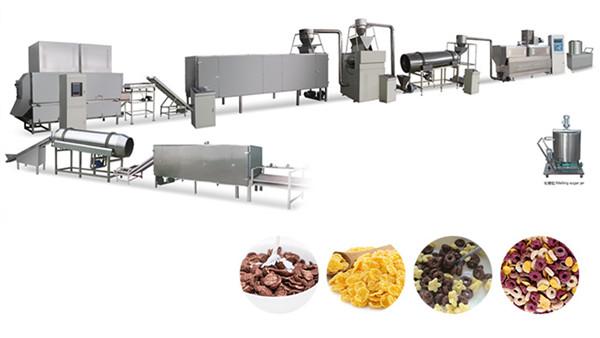
Have you ever wondered how those golden, crispy corn flakes make their way from simple corn kernels to your breakfast bowl? The journey is a fascinating blend of precision engineering and food science, and at the heart of it lies the corn flakes production line. Whether you're planning to launch a new cereal brand or upgrade an existing facility, understanding this process is the first step. That's where MINGDE comes in—with decades of expertise in breakfast cereal machinery, we turn complex production into a seamless reality. In this post, we'll explore the key stages of a corn flakes production line and how MINGDE's solutions can help you deliver the perfect crunch every morning.
From Field to Hopper: Sourcing the Perfect Corn
Most people assume all corn is the same, but anyone who has stood in a late-September Midwestern field knows better. Sourcing starts before harvest, walking rows and checking silk color, husk tightness, and kernel milk line. The ears worth keeping are the ones with uniform fill, no visible mold, and no signs of insect stress. That kind of attention at the field level separates clean, sweet-smelling corn from a load that will only cause trouble later.
Once the combine rolls, the clock starts. Moisture has to land between 14 and 15 percent, otherwise you get cracked kernels and a higher chance of spoilage in storage. Test weight matters too, because dense kernels flow and grind more evenly. And foreign material like cob bits or weed seeds has to stay low enough that it doesn't jam the hopper or throw off the flavor. These aren't just numbers on a clipboard; they determine how cleanly the grain moves and how consistent the final product ends up.
The last stretch is where many loads get rejected. Trucks are cleaned between hauls, bins are checked for hot spots, and the corn is screened one more time as it enters the hopper. There's no shortcut, because a single bad batch can ruin a day's production. A perfect load isn't a lucky find; it's the result of walking every row, checking every number, and refusing to rush the handoff from field to hopper.
The Steam-Powered Transformation: Cooking Corn Grits
Before steam made its way into the cookhouse, a pot of corn grits demanded a patient arm and a watchful eye. The coarse meal went into a heavy iron kettle suspended over live coals, where it had to be stirred almost constantly in a steady rhythm to keep it from seizing into lumps or scorching on the bottom. The heat wavered with the fire, and the cook's wrist ached long before the grits turned tender.
Steam power rewrote that ritual. By the mid-1800s, steam-jacketed kettles—already familiar in commercial bakeries and hotel kitchens—began turning up in larger plantation and community cookhouses across the South. Instead of direct flame licking the pot, a sealed jacket of pressurized steam wrapped the vessel in gentle, even heat. The grits could now simmer with only an occasional stir, freeing the cook to move between other tasks while the corn slowly drank in water and swelled into a smooth, creamy porridge.
The change went deeper than convenience. Steam's steady, moderate temperature let the corn's starches gelatinize more completely, coaxing out a silkier texture and a rounder, nuttier flavor than open-fire cooking could reliably produce. What had once been a dish that tethered one pair of hands to the hearth became a dependable staple for large tables and institutions, quietly reshaping how the South cooked one of its most everyday foods.
Precision Rolling: How Thin is Too Thin?
The pursuit of ever-thinner rolled metal foils pushes material limits in ways that defy intuition. At some point, the sheet becomes so slender that its own weight causes sagging, and surface defects that would be harmless in thicker stock suddenly tear through the entire cross-section. Aluminum, copper, and stainless steel each reveal a different breaking threshold, yet all share a common truth: the final few microns demand more from the mill than the entire preceding reduction sequence.
Operators learn to read the subtle shifts in roll force, strip tension, and thermal drift that signal the edge of stability. A foil that measures four microns may pass flawlessly today but rupture tomorrow under the same settings, simply because the incoming alloy's grain structure varied by a fraction. The real skill lies not in hitting a single number, but in understanding the band where 'thin enough' meets 'still rollable' — and knowing when to stop.
Many shops chase record thinness as a badge of capability, yet practical economics often argue otherwise. Below a certain gauge, the scrap rate climbs faster than any premium a customer will pay, and the time spent nursing a temperamental pass could have produced twice the tonnage at a slightly heavier specification. The smartest mills define their minimum not by what the equipment can theoretically endure, but by what the process can sustain shift after shift without heroic intervention.
The Toasting Tunnel: Where Flavor Develops
Green beans enter the toasting tunnel at a measured pace, the air inside already humming with dry heat. Within the first few minutes, free moisture starts to lift away, and the beans shift from a pale, grassy green to a dull yellow. The tunnel's length and the speed of the conveyor are tuned so that each bean absorbs the same amount of thermal energy, allowing subtle enzymatic activity to begin before the real browning kicks in.
As the beans move deeper into the tunnel, temperatures climb past the point where simple drying ends. Sugars and amino acids start reacting along the bean's surface and just beneath it, producing a wave of nutty, malty, and caramel-like aromas. The toasting tunnel does not rely on a single blast of heat; instead, it holds the beans in a narrow band of temperature long enough for these reactions to spread evenly. Airflow direction matters too, pulling away the chaff and any bitter smoke so the developing flavors stay clean rather than scorched.
Near the exit, the beans darken quickly and their structure becomes more porous. Oils that were locked inside the cellular matrix begin to rise, giving the surface a subtle sheen and intensifying the roasted character. The final stretch of the tunnel is where sweetness and bitterness find their balance, and the moment the beans drop out of the heat, the flavor profile is largely set. A rapid cooling zone right after the tunnel stops the process before any harsh, ashy notes can form.
Enrichment and Flavoring: Beyond the Basic Flake
Most people think of a flake as a simple, dry foundation—something you pour into a bowl and forget about. But once you start looking at how modern products are built, the plain flake is really just a blank canvas. Enrichment steps in with targeted micronutrients: B vitamins, iron, sometimes zinc or vitamin D, sprayed on or mixed into the dough before flaking. This isn't a one-size-fits-all process; the choice of nutrients depends on who the product is meant for and what gaps it's supposed to fill.
Flavoring takes a different path. Instead of just dusting on sugar or salt, producers now layer flavors through topical coatings, yeast extracts, malt, cocoa, or even fruit powders. The goal is to make the flake taste like something intentional rather than a carrier for milk or toppings. A toasted, nutty note can come from careful drying temperatures, while a hint of vanilla or cinnamon is often added after flaking to keep volatile aromas intact. The result is a flake that stands on its own, not one that needs to be disguised.
High-Speed Bagging: Keeping Crunch Intact
High-speed bagging isn't just about moving product fast—it's about sealing in that just-fried crisp before the outside world can soften it. Modern lines use gas flushing, blasting nitrogen into each pouch milliseconds before the seal closes, pushing out oxygen that would otherwise turn oils rancid and make chips go limp. The bag inflates like a tiny pillow, and the crunch inside stays suspended, untouched by ambient humidity.
The sealing jaws themselves are tuned to a hair's breadth. Temperature and pressure get dialed in so precisely that the film melts just enough to fuse without scorching, and no micro-channel is left for air to creep back through. Some machines even run optical checks on every single seal, kicking out any bag that's the slightest bit suspect—because a quiet, stale package is worse than no package at all.
FAQ
Whole corn kernels are cleaned, destoned, and conditioned with steam or hot water to bring moisture content to roughly 20–22%. Some lines use a degerminator to remove the germ and bran, leaving grits that flake more evenly.
Cooking usually takes place in a rotary pressure cooker or continuous steamer. The corn is heated under pressure at around 120–140°C for 60–90 minutes, which gelatinizes the starch and develops the classic toasted corn flavor later.
After cooking, the hot corn mass is sticky and too soft. Cooling and tempering for several hours allows moisture to equalize and the starch to firm up, so the flaking rolls can produce uniform flakes instead of a gummy paste.
A pair of counter-rotating steel flaking rolls presses the tempered corn grits into thin flakes. Roll gap, differential speed, and surface finish are adjusted based on desired thickness, usually between 0.5 and 1.2 millimeters.
Flakes move through a multi-zone oven, often a fluidized bed or conveyor dryer. The first zone removes surface moisture at lower heat, while later zones toast at 250–300°C. Airflow, bed depth, and residence time are tuned to reach final moisture below 3%.
Yes, after toasting and cooling, flakes pass under a spray coating drum. A metered solution of sugar, salt, malt extract, and heat-sensitive vitamins is sprayed while the drum gently tumbles the product. Then a final drying step sets the coating.
In-process checks monitor moisture after cooking, roll gap wear, and oven temperature profiles. Sifting screens remove fines and oversize flakes, while a texture analyzer measures crispness at regular intervals. Operators adjust settings based on this data.
The line uses stainless steel contact surfaces, sloped floors, and CIP spray heads for the cooker and coating drum. Metal detection and X-ray inspection sit before packaging, while HACCP plans control moisture, temperature, and allergen cross-contact.
Conclusion
The corn flake line starts long before kernels reach the mill, with buyers selecting hard dent corn that holds up through processing without turning pasty. Once the grain arrives at the hopper, it is cleaned, conditioned, and cracked into grits, then moved into large steam cookers where controlled moisture and pressure soften the starch and develop a mild, toasted base note. Cooking time and temperature shift slightly from batch to batch, and operators watch the texture closely because even a small change alters how the flake will roll. After cooking, the grits are dried and tempered, then fed through flaking rolls set to a gap measured in thousandths of an inch. Getting that thickness right matters more than most people assume: too thick and the flake turns hard and glassy in the toaster; too thin and it shatters before packaging. The rolled flakes enter a long tunnel oven where hot air removes the remaining moisture and triggers browning. Here the toasting profile is adjusted to balance crispness and color, and the result is that signature snap rather than a bland cereal chip.
Once the base flake leaves the toasting tunnel, the line shifts from cooking to finishing. Some runs are sprayed with a light sugar or malt solution that binds vitamins and minerals, while others get a dusting of flavor compounds designed to survive the trip to the bowl without clumping. The coating step is carefully timed because applying it while the flakes are still warm helps absorption, but too much moisture reintroduces softness. From there, the flakes are cooled and conveyed to high-speed bagging machines that fill by weight rather than volume, compensating for differences in flake size and density. Nitrogen flushing and heat-sealed liners keep oxygen out and preserve crunch through warehousing and shipping. Even at several hundred bags per minute, sensors reject underweight packages and check seal integrity before cartons are packed. The whole system is built around one idea: maintain the delicate crisp texture created in the oven, so that by the time a bowl is poured, the flakes still crackle under milk instead of turning to mush.
Contact Us
Contact Person: LILY SUN
Email: [email protected]
Tel/WhatsApp: 0086-13969103791
Website: https://www.snackfoodmachinery.com/