
China Swiss-type Precision Parts Machining Suppliers: Delivering Unrivaled Quality and Precision for Global Industries
2026-05-22
In the world of high-precision manufacturing, Swiss-type machining stands as the gold standard—but not all suppliers deliver the same caliber. Imagine components so finely tuned they redefine reliability, from medical devices to aerospace systems. That's where China's expertise meets global demand, and at the forefront is WINNRUI CNC. They don't just machine parts; they engineer micron-level perfection that keeps industries moving. Curious how this synergy of Swiss precision and Chinese innovation can elevate your next project? Let's dive in.
The Swiss-type Difference: Precision Machining Perfected
Swiss-type lathes redefine what's possible in small part manufacturing. Unlike conventional lathes where the tooling moves around a fixed workpiece, these machines feed the bar stock through a guide bushing, supporting the material mere millimeters from the cutting action. This simple yet ingenious shift in geometry eliminates deflection, allowing for extremely tight tolerances and surface finishes that often require no secondary operations.
The result is a machining process that handles long, slender, and complex parts with ease. From medical bone screws with intricate threads to micro-components for aerospace applications, the Swiss-type platform excels where others struggle. The ability to perform multiple operations simultaneously—turning, milling, drilling, and thread whipping—ensures that even the most elaborate parts come off the machine complete, dramatically reducing cycle times.
What truly sets this technology apart, however, is its consistency. Modern Swiss-type CNC machines maintain accuracy over high-volume runs, thanks to advanced thermal compensation and high-pressure coolant systems that flush chips away from the cutting zone. For manufacturers chasing zero-defect quality in miniature components, the Swiss-type approach isn't just an option—it's the benchmark.
China's Role in Affordable High-Precision Manufacturing
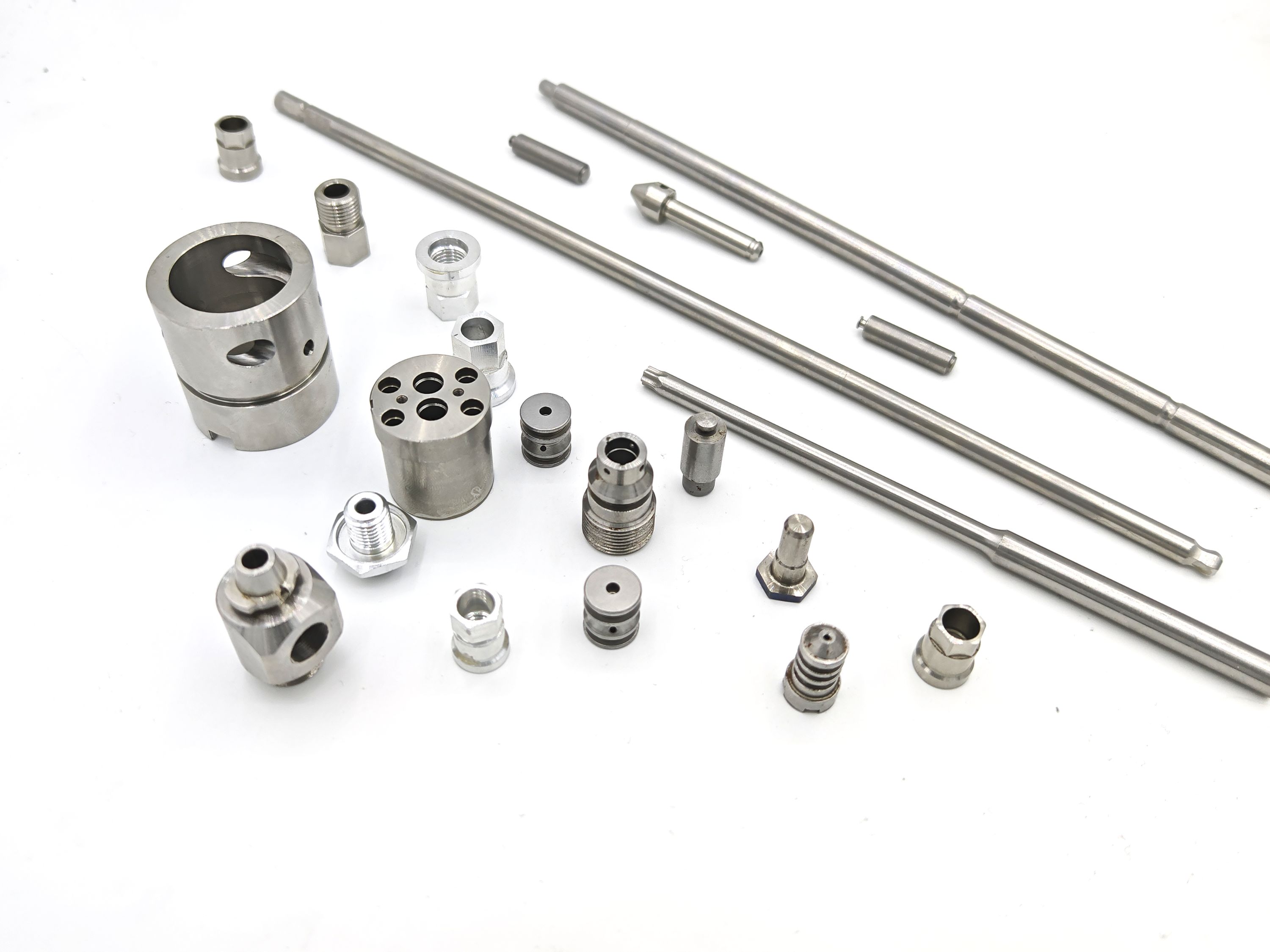
The transformation of China into a hub for affordable high-precision manufacturing didn't happen overnight. It grew from a deliberate, decades-long strategy to build ecosystems where tight tolerances and low costs coexist. Rather than competing solely on price, Chinese firms have layered advanced automation, lean production methods, and deep supplier networks to deliver components that once seemed impossible at these price points. This isn't just about cheap labor—it's about rethinking workflows so that precision becomes a byproduct of efficiency, not a costly add-on.
A key driver has been the clustered industrial model. In regions like the Pearl River Delta, hundreds of specialized workshops and mid-size factories are packed within a few miles. This density slashes logistics times and creates fierce, cooperative competition. A CNC machining shop might share insights with a neighboring surface-treatment plant, leading to innovations in finishing that maintain micron-level accuracy without driving up costs. The result is a collective learning curve that foreign competitors struggle to replicate, especially when they rely on isolated, vertically integrated facilities.
Meanwhile, the domestic market itself plays an underrated role. Massive demand for electronics, electric vehicles, and medical devices has forced suppliers to master high-precision processes at scale. When a smartphone brand needs ten million aluminum frames with sub-50-micron flatness, the supply chain adapts rapidly. Those hard-won capabilities then spill over into export markets, making China an almost default choice for anyone seeking 'good enough to be perfect' parts at a fraction of the traditional cost. It's a quiet but profound shift that continues to reshape global manufacturing benchmarks.
Industries We Empower: From Medical to Aerospace
Our expertise spans critical sectors where precision and reliability are non-negotiable. In the medical field, we support life-saving devices and diagnostic equipment with components that meet stringent biocompatibility and sterilization standards. From surgical robotics to patient monitoring systems, our solutions help deliver care with confidence.
Moving into aerospace, we tackle the extremes of performance and environment. Our materials and assemblies endure intense vibrations, thermal cycling, and vacuum conditions, enabling safer flights and more ambitious space exploration. Every rivet, sensor, and structural element is engineered to withstand the unforgiving demands of the sky and beyond.
Beyond these, our capabilities gracefully extend into automotive, energy, and industrial automation—translating deep domain knowledge into tangible progress. Whether it’s fuel-efficient engines or smart factory machinery, we bring the same obsessive attention to detail that high-stakes industries require, without compromise.
Quality Control That Rivals the Strictest Standards
Every product undergoes a multi-stage inspection process that leaves no room for compromise. From raw material sourcing to final assembly, trained specialists scrutinize details that automated systems often miss. This hands-on approach, combined with precision testing equipment, ensures each unit meets benchmarks well beyond industry norms.
We hold our manufacturing partners to agreements that mandate rigorous compliance audits and real-time reporting. Any deviation triggers an immediate line stop and corrective protocol, not a mere note in a log. It's an unforgiving system by design—because once a product reaches you, there's no second chance to earn your trust.
What truly sets our checks apart is the unpredictability of our sampling. Instead of pre-announced evaluations, our quality teams drop in unannounced, pulling random units off active lines. That element of surprise mirrors real-world consumer experience, pushing everyone in the chain to maintain a state of constant readiness.
Advanced Technology and Skilled Craftsmanship Combined
At the heart of every creation lies a seamless blend of cutting-edge machinery and the irreplaceable touch of experienced hands. We don't just rely on precision software or automated tools; our artisans interpret data with an intuitive understanding that only decades of practice can cultivate. This synergy ensures that even the most intricate designs retain a sense of warmth and individuality, transforming technical specifications into objects with genuine character.
In our workshop, digital modeling meets traditional hand-finishing to achieve a level of detail that neither method could accomplish alone. While advanced CNC systems deliver micron-level accuracy, our craftsmen refine surfaces, adjust textures, and apply subtle nuances that algorithms often overlook. It's a collaborative process where technology enhances human skill rather than replacing it, resulting in pieces that feel both precisely engineered and personally touched.
The result is a product that tells a story of balance—the quiet hum of innovation paired with the thoughtful pace of handwork. Each item passes through rigorous automated quality checks and equally demanding visual inspections by a senior craftsperson. This dual-layer approach catches imperfections that computers can't see and ensures longevity beyond standard metrics. It's not about choosing between the old and the new; it's about letting each strengthen the other to create something truly remarkable.
Why Global Leaders Choose Our Swiss-type Parts
Precision isn't just a specification on a drawing—it's the foundation of reliability when components operate in the most demanding environments. Our Swiss-type parts are crafted to consistently hold tolerances that mass production simply cannot touch, giving engineers the confidence to push design boundaries. This level of exactness flows from decades of honing the machining process, ensuring every micro-detail aligns with the stringent demands of global innovators.
Beyond the numbers, there's a human thread that runs through every part we deliver. We don't just receive orders; we absorb the challenges our clients face, often proposing tweaks that simplify assembly or extend product lifespans. That kind of proactive partnership means leaders can scale their operations without the hidden delays and communication gaps that plague distant supply chains. They trust that the parts arriving will work, first time, every time.
FAQ
Chinese suppliers have really stepped up their game by blending advanced Swiss-type CNC technology with tight process controls and cost efficiency. You get micron-level precision parts that often match or exceed the quality of European or North American competitors, but at a more competitive price point without skimping on materials or finish.
These parts are everywhere in medical devices, watchmaking, aerospace connectors, automotive fuel systems, and electronics. Basically, any sector that needs tiny, intricate components with super tight tolerances—think surgical tool shafts or micro-connectors—turns to these suppliers.
They usually invest in temperature-controlled workshops, high-end Swiss lathes like Tsugami or Citizen, and rigorous in-process inspection using laser systems or optical comparators. Many also have ISO 9001 and even medical-grade cleanroom certifications, so consistency is built into every batch.
Absolutely. Most work directly with client CAD files and have in-house tooling teams to adapt setups rapidly. Turnaround from quote to prototype can be as short as a week, and they’re used to iterating designs for manufacturability without slowing down the project.
Beyond standard dimensional checks, you’ll see automatic sorting machines for defect detection, statistical process control charts, and sometimes even endoscopy for internal burr inspection. Many suppliers also provide full material certifications and lot-level batch traceability as part of the package.
It’s common to see lead times shrink by 20–30% compared to purely domestic sources, especially for middle-volume orders. Strategic locations near major shipping ports and well-oiled logistics handling mean parts arrive faster than expected, even with custom packaging requirements.
Reputable suppliers are extremely transparent—they source raw materials from certified mills (often from Europe or Japan) and can provide full mill test reports. For regulated industries like medical or aerospace, they’re familiar with RoHS, REACH, and FDA requirements, so you won’t get caught off guard.
You can get parts from as tiny as 0.3 mm diameter up to around 32 mm, in materials ranging from stainless steels and titanium to high-performance polymers like PEEK. Exotic alloys such as Inconel or Monel are also routinely machined, giving designers a lot of freedom.
Conclusion
Swiss-type machining has set the benchmark for producing small, intricate components with extraordinary accuracy, and Chinese suppliers have truly perfected this art. The unique sliding headstock design, which feeds bar stock through a guide bushing while the tool cuts in close proximity, eliminates deflection and achieves tolerances measured in microns. This level of precision is indispensable for parts with complex geometries, deep holes, or delicate threads. China’s manufacturing landscape has evolved dramatically, moving far beyond low-cost stereotypes to become a powerhouse of high-precision engineering. Top suppliers here invest in the latest multi-axis Swiss-type CNC lathes, integrate robotics for lights-out production, and foster a culture of continuous improvement. Skilled technicians blend deep metallurgical knowledge with advanced CAM programming to extract maximum performance from materials like stainless steel, brass, and exotic alloys. Rigorous in-process inspection using laser micrometers and vision systems, combined with full ISO 13485 and AS9100 certifications, means every single part is a testament to unwavering quality. This fusion of cutting-edge technology, human expertise, and meticulous process control enables Chinese Swiss-type machining to rival any global counterpart while delivering exceptional value.
The impact of these precision parts spans a vast array of critical industries. In the medical field, Swiss-type components become orthopedic screws, dental implants, and endoscopic instruments where flawless surface finish and biocompatibility are non-negotiable. Aerospace applications rely on them for hydraulic fittings, sensor housings, and fasteners that must endure extreme temperatures and vibrations. Automotive fuel systems, luxury watch movements, and fiber optic connectors all benefit from the same exacting standards. Global industry leaders are increasingly turning to Chinese Swiss-type specialists not solely for cost-effectiveness, but for their ability to execute highly complex, multi-feature parts in a single setup, drastically reducing lead times and handling variations. The combination of real-time statistical process control, comprehensive material traceability, and a collaborative engineering approach from prototype to mass production builds deep trust. Whether it’s a batch of fifty or fifty thousand, the consistency remains absolute. Choosing these suppliers means gaining a partner that is relentlessly focused on precision, innovation, and long-term reliability—qualities that empower products to perform their best in the world’s most demanding environments.
Contact Us
Contact Person: Tim
Email: [email protected]
Tel/WhatsApp: +86 15522553731
Website: https://www.winnrui-cnc.com/