

Bag in Box Manufacturer Insights: What to Look for in a Reliable Packaging Partner
2026-07-09
In the competitive food and beverage industry, your product's first impression often comes down to its packaging. When it comes to bag-in-box solutions, choosing the right manufacturing partner is critical to maintaining freshness, extending shelf life, and ensuring customer satisfaction. But what truly sets a reliable supplier apart? At Kody, we understand that innovative design, material quality, and production consistency are just the starting point. This guide cuts through the noise to help you identify the key attributes of a dependable packaging partner, so you can safeguard your brand and streamline your supply chain.
Beyond Surface-Level Quality: What Actually Makes a Bag in Box Supplier Stand Out
It’s easy to get caught up in the tangible aspects of bag-in-box packaging—film clarity, valve performance, fill speed. But what truly separates a vendor from the crowd often has nothing to do with the product spec sheet. The suppliers that earn long-term loyalty are the ones who understand your production rhythm, who anticipate your pain points before they become fires, and who treat your success as their own. They’re the quiet force behind your filling line, not just a box on an invoice.
A standout partner brings more than material; they bring perspective. They’ll notice if a slight adjustment to your bag dimensions could reduce freight costs, or if a film upgrade might extend shelf life for a new market you’re eyeing. This kind of consultative mindset isn’t about upselling—it’s about genuine problem-solving. It shows up in the way they handle a quality hiccup, too: no finger-pointing, just a rapid root-cause analysis and a fix that sticks. That level of ownership is rare, and it makes all the difference when deadlines are tight.
Finally, look beyond the sales pitch and study how a supplier behaves when things don’t go according to plan. Do they proactively communicate? Do they have the flexibility to adapt to your evolving needs without drowning you in change fees? In a world where many suppliers can deliver a decent bag, the ones you remember are those who deliver reliability, creative thinking, and a genuine sense of partnership. That’s the real benchmark—the stuff you can’t measure with a caliper but feel every day on the plant floor.
Material Integrity Unpacked: How to Gauge Long-Term Durability and Safety
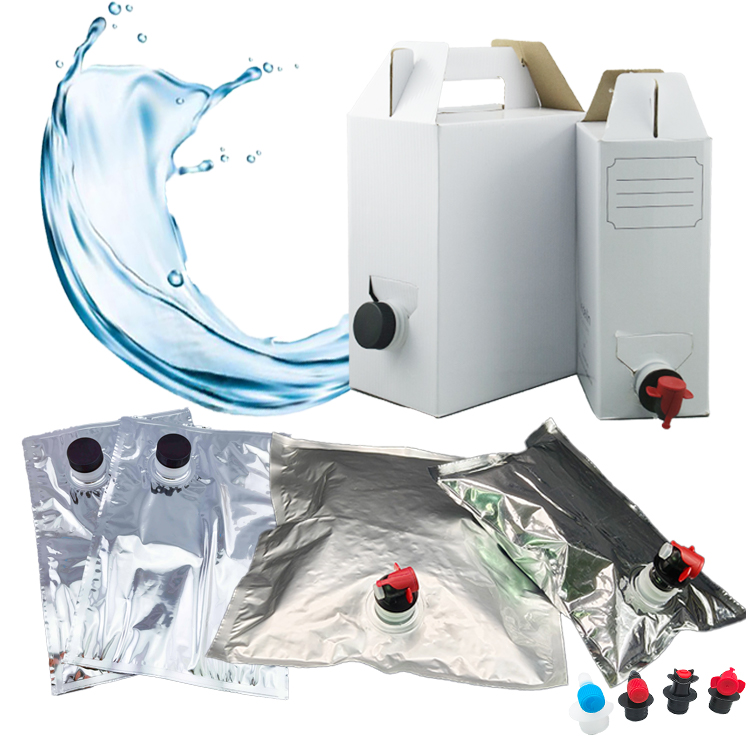
When we talk about material integrity, we’re really digging into the hidden story behind every product—how it holds up over years of use, exposure, and stress. It’s not just about whether something feels sturdy on day one; genuine durability is measured in how well a material resists wear, corrosion, fatigue, and environmental factors without compromising its core structure. To gauge this, engineers and designers often rely on a mix of accelerated aging tests, real-world field data, and failure analysis. These methods reveal the subtle ways materials degrade—from micro-cracks that spread under cyclic loading to chemical reactions that slowly eat away at surfaces. The goal is to understand the “why” behind failures, so we can predict lifespan with more confidence.
Safety, on the other hand, adds another layer of complexity. A material might last decades, but if it leaches harmful substances, becomes brittle abruptly, or fails catastrophically without warning, then longevity means little. That’s why modern assessment frameworks combine mechanical testing with chemical analysis and toxicology. For instance, in sectors like construction or medical devices, standards like ISO 10993 or ASTM F1980 push manufacturers to consider not just immediate performance but long-term biocompatibility and structural stability. It’s a balancing act: a tough material might be riddled with additives that pose risks, while a safer alternative could wear out too fast. The trick lies in mapping the entire lifecycle—from raw components to end-of-life disposal—and spotting where integrity might be compromised.
Ultimately, unpacking material integrity means going beyond spec sheets and marketing claims. It demands a hands-on, skeptical approach where you question how a material behaves in edge-case scenarios—like sudden temperature swings, continuous vibration, or prolonged UV exposure. Simple at-home checks can sometimes reveal early warning signs: discoloration, surface pitting, or unexpected flexibility changes. But for critical applications, sophisticated tools like scanning electron microscopes or dynamic mechanical analysis are indispensable. The takeaway? Long-term durability and safety aren’t static properties; they’re dynamic traits that require ongoing monitoring and a healthy dose of common sense to ensure the materials we rely on don’t let us down when it matters most.
Customization Without the Runaround: Finding True Design Flexibility
There’s a quiet frustration that settles in when yet another tool promises endless customization, only to hand you a maze of rigid templates and buried settings. True design flexibility isn’t about more options—it’s about the right ones, placed where you’d naturally reach for them. The moment you realize you can tweak spacing, reorder blocks, or swap a color without hunting through menus or waiting for a developer, the whole creative process shifts from negotiation to flow.
Some platforms treat customizability as a checklist item, piling on features that look good in a demo but feel disjointed in daily use. Real flexibility is quiet; it lets you build exactly what you picture without reminding you that you’re using a template. It’s in the ability to drag an element a few pixels to the left, not because the grid demands it, but because your eye says it belongs there. It’s in the freedom to layer content in unconventional ways without crashing into guardrails disguised as “best practices.”
What changes everything is when the tool recedes into the background, and what’s left is simply your idea, fully formed. That kind of design partnership is rare because it requires the builder to anticipate not just what you want to do, but *how* you want to do it. It’s not about giving you a hundred fonts; it’s about making sure the one you choose renders beautifully in every context. It’s not about unlimited sections; it’s about making each section feel like clay, not concrete. When you find that, you stop working around the tool and start working through it—and that’s when the real design happens.
Consistency You Can Count On: Why Batch-to-Batch Uniformity Is Non-Negotiable
In fields where precision is paramount—whether pharmaceuticals, advanced materials, or food production—even the slightest variation between batches can cascade into costly failures. Imagine a drug formulation where the active ingredient concentration drifts by a few percent; the therapeutic effect could be compromised, or worse, safety risks emerge. This isn't just a quality issue—it's a matter of trust. When customers integrate your product into their own processes, they rely on the assumption that every shipment will perform identically to the last. Without that guarantee, entire supply chains can grind to a halt while root causes are investigated, and reputations built over decades can erode in weeks.
Achieving true uniformity goes far beyond a final quality check. It demands rigorous control over raw materials, process parameters, and environmental factors, often requiring real-time monitoring and adaptive adjustments. For example, subtle shifts in ambient humidity during powder blending might alter particle size distribution, which in turn affects dissolution rates. A robust system doesn’t just catch these deviations—it prevents them through predictive models and feedback loops. This level of consistency transforms a product from a commodity into a reliable cornerstone of your customers’ operations, allowing them to innovate faster without worrying about variability from their suppliers.
Ultimately, batch-to-batch uniformity is a silent promise that you understand the criticality of your role in your clients’ success. It’s not just about meeting specifications on paper; it’s about delivering predictable outcomes in the real world, where conditions are never perfectly static. Companies that master this art build fiercely loyal relationships because they remove an invisible risk that most people never notice until it’s too late. In an era of complex global supply chains and escalating quality expectations, that consistency isn’t a differentiator—it’s the baseline for staying in the game.
Sustainability Beyond the Label: Decoding Genuine Environmental Commitment
In a marketplace flooded with green buzzwords, it’s increasingly difficult to tell which brands are truly walking the walk. Many companies have mastered the art of eco-branding, slapping leafy logos and vague claims like “eco-friendly” onto products without meaningful action behind the scenes. This performative environmentalism can mislead well-intentioned consumers and dilute the urgency of real change. Decoding genuine commitment requires looking past the surface and examining the concrete practices, supply chain transparency, and long-term strategies that actually reduce harm.
Truly sustainable businesses embed environmental responsibility into their core operations, not just their marketing. They set measurable targets—such as carbon neutrality or zero-waste goals—and publicly report on progress, even when it’s imperfect. Certifications from third-party organizations (like B Corp, Fair Trade, or the Forest Stewardship Council) can offer some reassurance, but they aren’t foolproof. It’s crucial to investigate how a company tackles its most significant environmental impacts: where are materials sourced? How are workers treated? What happens to products at the end of their life? Honest brands often acknowledge their challenges and share detailed roadmaps for improvement, instead of hiding behind a polished green facade.
As consumers, we have the power to reward depth over hype—but it demands curiosity and a willingness to dig deeper than the label. Look for specifics: does the company disclose its factory locations and environmental data? Does it invest in circular design or regenerative practices? Favor brands that offer repair services, take-back programs, or clear instructions for recycling. Ultimately, a genuine environmental commitment is not about perfection; it’s about consistent, verifiable progress and a willingness to be held accountable. When we choose to support that kind of integrity, we help shift the entire market toward a more honest and regenerative future.
The Hidden Half of Partnership: Support, Responsiveness, and Problem-Solving
In the quiet moments of a partnership, support often means seeing a struggle before it’s spoken aloud. It’s not the grand gestures that hold two people together—it’s the morning coffee ready just the way they like it, or the way you give space when their eyes look tired. That kind of support doesn’t need a manual; it grows from paying attention to the small rhythms of a person’s life and letting them feel that someone’s got their back, particularly when the world feels heavy.
Responsiveness turns those small acts into a living, breathing conversation. It isn’t about perfect timing or always having the right answer. Sometimes it’s simply a hand placed on a shoulder when words fail, or a text message that says ‘Take your time, I’m here.’ When two people are responsive, they learn to read the unsaid—adjusting their energy to meet the other’s mood, building a bridge that makes each person feel truly heard, without having to ask.
Problem-solving transforms support and responsiveness into forward motion. True partnership tackles issues together, but it’s less about fixing and more about listening. It’s holding space for the messy, unpolished thoughts before solutions appear. Healthy pairs don’t race to resolve; they sit on the same side of the table, puzzling pieces into place at a pace that respects both hearts. The real skill is staying curious when things get uncomfortable, trusting that the tangle of problems untangles best when both people hold the threads.
FAQ
Look beyond flashy certifications. A truly dependable partner demonstrates consistent material sourcing, flexible production runs, and a willingness to tailor solutions rather than just shipping off-the-shelf products.
It’s critical. You need to know where the films, taps, and connectors originate—down to the resin grade. A partner who openly shares this helps you avoid supply chain surprises and ensures product compatibility.
Chasing the lowest price can backfire. A partner with strong technical support helps refine your filling process, cut waste, and troubleshoot issues, which lowers your total cost of ownership in the long run.
It’s everything from fitment design to multi-layer film structures. The right partner co-engineers a solution that extends shelf life, reduces leaks, and matches your brand’s specific functional requirements.
Ask for sample batches, audit reports, and traceability data. A manufacturer confident in their approach will supply documented evidence, not just verbal assurances.
Dig into their production capacity, typical turnaround times, and backup plans for sudden demand spikes. A reliable partner builds in redundancy and communicates proactively about any scheduling hiccups.
It goes beyond marketing claims of recyclability. Examine their waste reduction efforts, lightweighting initiatives, and whether they design for circularity. Real commitment is visible in factory practices, not just brochures.
Vague answers about past product failures or hesitation to provide client references. A trustworthy partner learns from setbacks and has enduring relationships they’re eager to share.
Conclusion
Finding a bag in box manufacturer that truly adds value requires digging deeper than glossy product samples. The most dependable suppliers set themselves apart through an almost obsessive commitment to material integrity—carefully selected laminates and films that maintain barrier properties over time, combined with rigorous testing that simulates real-world handling and storage. This translates directly to fewer leaks, longer shelf life, and consistent end-user experiences. Equally vital is the kind of batch-to-batch uniformity that ensures your hundredth order performs exactly like the first, eliminating unexpected quality shifts that can erode customer trust. A partner that invests in automated process controls and transparent quality documentation makes this reliability tangible, not just a promise.
Equally important are the elements that turn a supplier into a strategic ally. Genuine design flexibility means you’re not forced into standard molds; a responsive manufacturer collaborates on customized fits, styles, and printing to align with your brand’s evolution—without adding layers of delays and hidden charges. Sustainability, too, must go beyond marketing language: look for environmentally focused engineering that reduces material use, enables recyclability, and is backed by third-party audits rather than vague claims. Yet the true measure of a partnership surfaces when challenges arise. Rapid, thoughtful problem-solving and direct access to technical experts can prevent minor hiccups from disrupting your supply chain, making support and communication the hidden half of every successful packaging collaboration.
Contact Us
Contact Person: Cindy Lee
Email: [email protected]
Tel/WhatsApp: 8613622669331
Website: https://www.dgkody.com