

Angiographic Control Syringe Factory: Inside Precision Manufacturing for Reliable Contrast Delivery
2026-11-19
Every angiographic procedure depends on one thing most teams never think about until it fails: precise, reproducible contrast delivery. Behind that reliability is a manufacturing process where tolerances are measured in microns, not millimeters. At INT Medical, angiographic control syringes are built inside a facility designed to eliminate variability at every stage—from raw polymer handling to final pressure testing. This inside look reveals how focused engineering turns a seemingly simple syringe into a critical safety component for interventional cardiology and radiology.
The batch record is filled out before the first angiographic syringe is molded
Filling out the batch record before the first angiographic syringe hits the mold is a deliberate pause, not a clerical afterthought. The operator logs the date, shift, machine number, material lot, and any cleaning or changeover notes while the line is still idle. That way the record reflects what was known before production, rather than a memory assembled after the fact.
The record also forces a check of mold temperature, barrel zone settings, injection pressure, and drying time against the work instruction. Any value outside the approved range gets written down and flagged before plastic ever enters the barrel. This early documentation gives the quality team a clean starting point and makes it harder to overlook a setup change that should have been caught.
Once the page is complete and signed, the first molding cycle can begin. If something drifts later in the run, the pre-mold entries show exactly which conditions were in place from the start. It keeps the paper trail ahead of the process instead of chasing it from behind.
The barrel ID gets more scrutiny than the OD
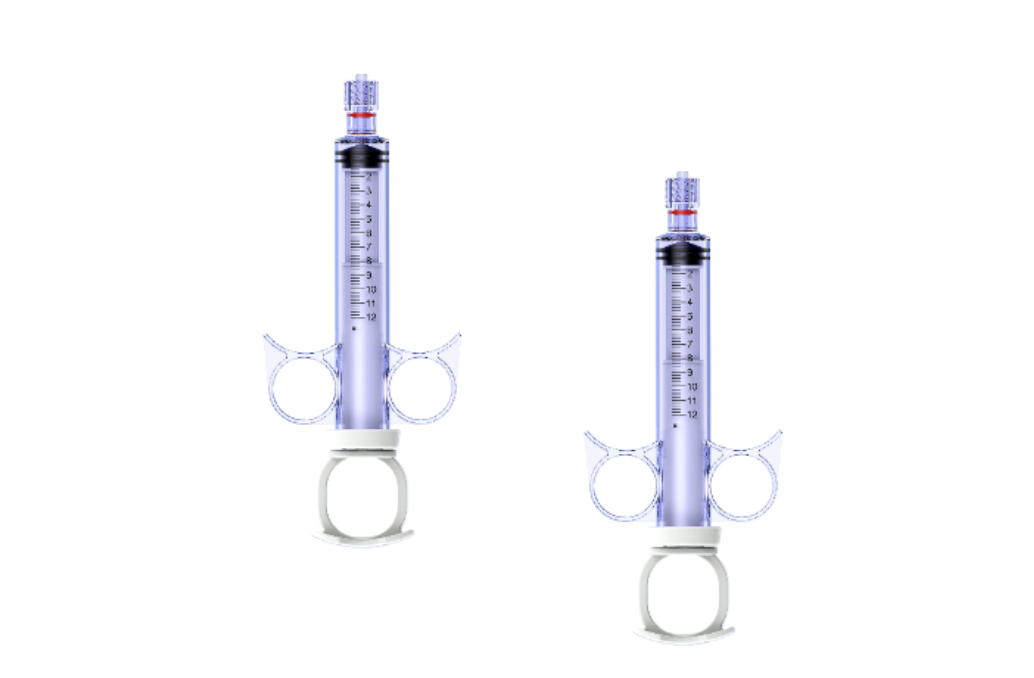
Walk through most barrel shops and you will notice the outside diameter gets a quick pass with a micrometer, maybe a caliper, and then it is on to the next part. The inside diameter, though, gets handled differently. It is measured at several depths, rotated, measured again, and often checked with more than one tool. It is not that the OD is unimportant, but ID errors tend to hide where the eye cannot reach, so they get chased harder.
A few tenths of variation on the ID can change how a projectile seats, how gas builds pressure, and how consistently the barrel performs from shot to shot. If the bore runs slightly tight, friction climbs. If it runs loose, gas blows past and velocity drops. Those effects do not always show up until the part is already in use, which is why inspectors spend extra time mapping the bore instead of trusting a single reading.
The outside surface is easy to access and easy to verify, so a problem there tends to be caught early. The inside surface is a different story. Tool wear, thermal drift, and material springback all leave their marks in the bore before anyone sees the result. That is why the ID gets the slower, more suspicious treatment, and why a clean OD reading rarely settles the argument on its own.
Rubber formulation matters as much as mold temperature
A compound with a fast sulfur donor or an aggressive accelerator can scorch long before the cavity fills if the mold is running at the upper end of its range. At the same setting, a heavily plasticized EPDM or a low-durometer NBR flows easily and fills thin ribs, yet the same temperature may leave thick sections under-cured because the cure system is designed for a different heat profile. That gap is not a mold problem; it is a formulation mismatch that no amount of temperature tweaking will fully solve.
Fillers and oils shift the way a stock takes up heat and releases volatiles. High carbon black loading raises viscosity and internal friction, so the material generates heat during injection but may also trap air at sharp corners. Silica-filled compounds often respond more slowly to a given mold temperature, while a high oil content can create a wider processing window but lower the heat deflection resistance of the cured part. Changing the recipe by a few parts of plasticizer can easily outweigh a five-degree adjustment at the press.
A more useful routine is to start with the rheometer curve and map how the compound cures at two or three mold temperatures, then match the cure package to the actual part geometry. That might mean adjusting the scorch delay, splitting the accelerator blend, or adding a retarder only in the thickest sections. Once the formulation is aligned with the thermal profile, mold temperature becomes a fine control instead of a constant fight against short shots and porosity.
A pressure decay test catches contrast leaks that no visual check can see
Visual inspection has a hard stop at the surface level. A tiny crack in a valve seat or a micro-fracture along a weld can hold contrast media without ever showing a single droplet on the outside. Pressure decay testing works differently: it seals the component, applies a steady gas pressure, and watches for any drop over time. Even a leak path that would be invisible under bright light or magnification becomes measurable as the internal pressure falls. This turns guesswork into a repeatable pass or fail signal.
The real advantage appears when contrast agents behave unpredictably. Some leaks open only under thermal cycling or slight mechanical flex, conditions that a static visual check never reproduces. A pressure decay test can be run at operating temperature or after a short stress soak, catching defects that close back up before anyone looks at the part. That means the leak you would otherwise ship out is found on the bench, not in the field.
There is also a matter of consistency. Two inspectors may disagree about whether a faint stain counts as a leak, but a pressure transducer does not argue. The test gives a number, a curve, a clear threshold. For production lines dealing with high-consequence parts, that shift from subjective looking to objective measuring removes one of the quietest sources of warranty returns.
Cleanroom discipline is about movement, not just garments
Most cleanroom training treats gowning as the main event. But the suit only works if the person inside it moves like the room matters. A rapid turn, a sleeve grazing a cart, or a brisk walk toward a laminar flow bench can release more particles than a poorly tied mask. The garment is the visible control; movement is the one nobody sees until a particle counter catches it.
Slow, deliberate movement is not about ceremony. It is about keeping the air around you from being disturbed. Sharp gestures push particle-laden air across critical surfaces. Bending down to retrieve something from the floor brings your body into a zone where particles collect. Even the habit of reaching across an open container can transfer contamination that no amount of gowning will stop.
In practice, disciplined movement means opening doors with your elbow, turning with your whole body, and keeping your hands low and close. It means pausing before you enter, moving as if the air has weight, and treating every transfer as a reason to slow down. When movement becomes part of the cleanroom routine, the garments stop being a costume and start doing their job.
The final lot ships only after a peel-open test on the sterile pouch
Each production batch stays in quarantine until samples are pulled from the sealed pouches and peeled open by hand. The feel of the peel matters just as much as the visual result: the bond should release with steady, even resistance from one side to the other, without sudden tears through the film or a seal that gives way with almost no effort. If the opening line wanders too close to the sterile field or leaves ragged edges, the lot is held back for investigation.
Operators also compare the separated seal against approved reference samples, checking the width of the opened seam and the pattern left on both mating surfaces. A clean peel usually leaves a light, uniform transfer along the seal area, while a weak or over-fused seal shows either a bare, glossy line or torn fiber that could compromise the barrier. Only pouches that match the reference range move forward.
Release is recorded after that inspection is complete, not before. Until the peel-open results are signed off, the finished pouches remain physically segregated from ready-to-ship stock, so a late order or a tight schedule does not override the final check.
FAQ
They are built to handle high injection pressures and fast flow rates required for pushing contrast media through catheters. The barrel walls are thicker, the plunger seal is engineered to avoid sticking or leaking, and the tip connection fits power injectors without backing off.
Medical-grade polycarbonate or cyclic olefin copolymer for the barrel, synthetic polyisoprene or silicone-free rubber for the plunger tip, and low-extractable lubricants. Materials are chosen for clarity, dimensional stability under pressure, and compatibility with iodinated contrast agents.
Injection molds are precision-cut and monitored with in-process vision systems. Every cavity is checked against tight tolerances for barrel diameter and plunger travel, so each syringe produces repeatable volume delivery and low friction.
Even a small air bubble can become an embolus if introduced into a coronary or cerebral artery. The syringe design includes a clear barrel and a plunger that moves smoothly to let clinicians purge air easily, and final packaging often supports vacuum or cap features that reduce trapped air.
Each lot undergoes burst pressure testing, leak testing, plunger glide force measurement, and particulate counts. Some production lines also run automated imaging to detect cracks, flash, or inclusions that could compromise the fluid path.
The plunger seal is designed to maintain consistent resistance over multiple actuations without binding or free-flow. The barrel's internal surface is coated or polished to prevent contrast crystallization and reduce friction changes from temperature or pressure.
Many are produced to match specific injector interfaces, but some factories offer adapter-compatible designs. The key is a rigid connection that stays secure under pressure while still allowing a quick quarter-twist or click-in loading motion.
Conclusion
Inside the molding suite, paperwork precedes polymer. Every production run starts with a batch record completed before the first angiographic syringe barrel is formed, tying raw material lots, tooling setup, and operator sign-offs to the shift ahead. Once molding begins, the bore receives more attention than the exterior. Technicians measure barrel ID with air gauges and vision systems at multiple depths because even a slight taper or ovality changes contrast injection resistance and dose accuracy. The outer diameter still matters for fit, but the inner profile is what the clinician's hand and the patient's vessel ultimately feel. Rubber formulation is treated with the same seriousness as barrel temperature profiles. Different stopper compounds are tested for compression set, lubricity, and break-loose force under dynamic injection pressures, because a plunger that sticks in the middle of a coronary case is not acceptable.
Leak detection moves beyond human eyes. Each assembled syringe passes through a pressure decay test that holds a set pneumatic load and watches for any drop too small for a visual bubble check to catch, flagging microcracks, seal voids, or insert gaps before labeling. Cleanroom discipline focuses as much on motion as on garments. Slow, deliberate movements, limited door openings, and careful transfer of trays reduce particle shedding more than a fresh coverall alone, so the production floor is designed around minimizing turbulence rather than just enforcing gowning. Before a finished lot can ship, operators peel open sample pouches from that run to confirm the sterile barrier releases cleanly without tearing or delamination. Only after those results match the batch record does the lot leave the warehouse, carrying contrast dye from a control syringe into the angiography suite with a predictable, sealed handoff.
Contact Us
Contact Person: Jeffrey
Email: [email protected]
Tel/WhatsApp: 86-0633-2230056
Website: https://www.sd-intmedical.com