

Air Compressor Supplier Selection: Finding the Perfect Match for Your Industrial Needs
2026-07-13
Selecting the right air compressor supplier is more than just a procurement decision—it’s a strategic move that can define your operation’s efficiency and bottom line. With countless options promising reliability and performance, how do you cut through the noise? Whether you’re scaling up production or optimizing an existing setup, the partner you choose matters. That’s where Seize Air comes in, offering a fresh perspective on tailored industrial solutions. In this guide, we’ll walk you through the key factors to consider, so you can stop guessing and start making informed choices that truly fit your needs.
Sizing Up Your True Air Needs Without the Guesswork
Determining the right compressed air requirements for your facility isn’t about picking the biggest compressor on the market. It starts with a clear-eyed look at your actual consumption patterns, not just the peak demand numbers that equipment labels often suggest. Many operations overlook how intermittent usage and pressure drops affect overall efficiency, leading to oversized systems that waste energy during lighter loads. Taking inventory of every tool and process that relies on compressed air—and logging their demand cycles over a typical workday—reveals a more accurate picture of what you truly need.
Rather than relying on nameplate ratings, which can be misleading, measuring real-time cubic feet per minute (CFM) and pressure at point-of-use gives you hard data to work with. Simple flow meters and data loggers can be attached temporarily to gather this information, highlighting not just the volume of air but the consistency of demand. You might find that simultaneous use of certain tools creates a short-lived spike that a properly sized receiver tank can handle, avoiding the expense of a larger compressor entirely.
Accounting for future growth matters, but it should be informed by reality, not guesswork. Analyzing historical trends and planned expansions helps you size for additional capacity without overshooting by a wide margin. A system that’s tailored to your genuine air profile pays for itself through lower energy bills and reduced maintenance, proving that a measured approach beats blind over-specification every time.
The Efficiency Trap: Why Cheap Compressors Drain Your Budget
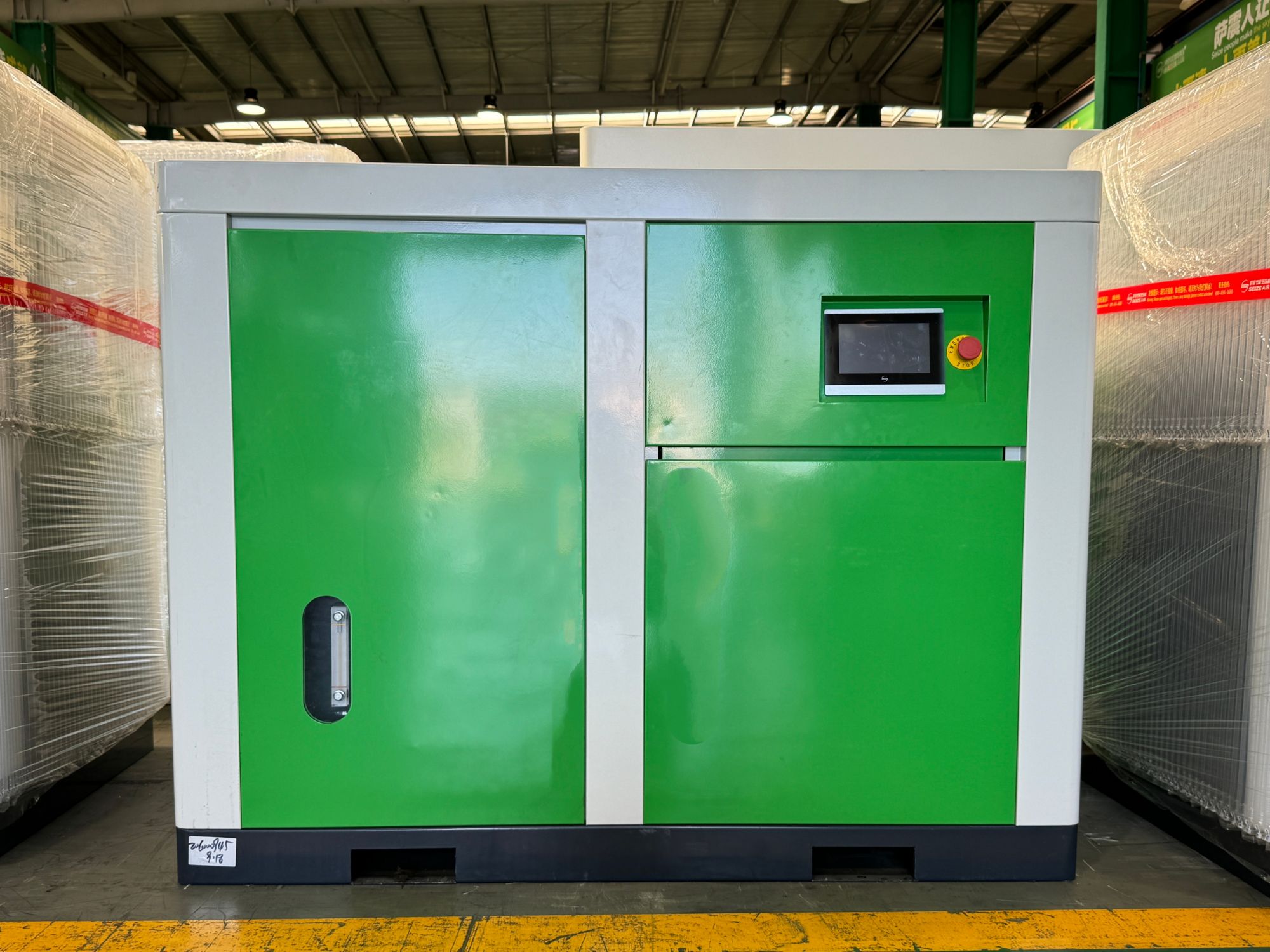
The sticker price of a budget air compressor might look tempting, but that initial saving is rarely the whole story. These units often cut corners on motor efficiency and internal sealing, meaning they draw far more electricity to produce the same output. Over a typical year, the additional energy consumption alone can quietly erase any upfront discount, and then some.
Frequent breakdowns are another hidden cost that few buyers anticipate. Low-cost machines tend to use inferior bearings, thinner castings, and minimal filtration, all of which accelerate wear. Repair bills add up quickly, and worse, every hour of downtime on a production line or in a workshop translates directly into lost revenue that far outweighs the compressor's purchase price.
There's also the performance gap you don't notice until it's too late. Cheap compressors often struggle to maintain consistent pressure under real-world loads, forcing downstream equipment to work harder or produce inconsistent results. When you factor in wasted materials, rework, and the sheer frustration of nursing a temperamental machine along, that 'bargain' compressor starts looking more like a liability than an asset.
Reading Between the Lines of Supplier Claims
When a supplier promises “premium quality” or “industry-leading innovation,” those phrases often carry more weight in marketing brochures than on the factory floor. A closer look at certifications, sample consistency, and production audits usually tells a different story. Real quality isn’t declared—it’s demonstrated through traceable processes and repeatable results. Asking for evidence like third-party test reports or visiting the facility unannounced can quickly separate substance from style.
Vague timelines and overly optimistic lead times often mask deeper operational cracks. If a supplier claims they can ship in half the typical turnaround for your industry, probe into their capacity and backlog. Look for concrete data: actual order histories, real-time production schedules, and raw material sourcing timelines. A supplier who is transparent about potential bottlenecks and offers buffer plans is far more trustworthy than one who only tells you what you want to hear.
Pricing that seems too good to be true usually is. Some suppliers slash unit costs by cutting corners on materials, labor compliance, or environmental standards—costs that may later surface as defects, delays, or reputational damage. Dig into how those prices are achieved. Request a breakdown of materials, labor, and overhead. A reliable partner will appreciate the scrutiny and back up their numbers with open-book costing, while a less scrupulous one will deflect or grow defensive.
Building a System That Grows with Your Operations
Scaling a business isn’t just about adding more servers or hiring more staff—it’s about designing processes and tools that flex without breaking. A system that truly grows with you anticipates change, rather than reacting to it after bottlenecks appear. The foundation lies in modular thinking: each component should operate independently yet connect seamlessly, so you can upgrade, replace, or expand pieces without tearing everything down.
Real growth happens when your tools fade into the background, letting your team focus on what they do best. That means building with APIs that talk to each other, automating the repetitive tasks that eat up hours, and choosing platforms that don’t lock you into a single way of working. When your system mirrors the fluidity of your operations, you stop wasting energy on workarounds and start investing it in meaningful innovation.
The most resilient setups aren’t the ones with the most features; they’re the ones that adapt when the unexpected hits. Whether you’re handling a seasonal surge or pivoting to a new market, a well-built operational backbone doesn’t flinch. It quietly handles the load, learns from patterns, and keeps your business moving forward—without demanding constant attention.
The Unseen Factors: Sound, Footprint, and Service Access
When you walk into a space, you rarely think about how its sound shapes your mood. A humming air conditioner, the clatter of keyboards, or the muffled din from the street—these layers of noise can either soothe or subtly fray your nerves. Designers often obsess over visuals, but acoustics remain a quiet puppeteer, pulling strings we only notice when something feels off. It's not just about decibels; it's about texture, rhythm, and how sound waves bounce off bare walls or get swallowed by soft furnishings.
Then there's the physical footprint—the way you navigate a room without a second thought. Is there enough space between tables in a cafe, or do you have to squeeze past strangers? The width of a corridor, the placement of a power outlet, the height of a counter: these are the silent choreographers of daily life. A well-considered footprint lets you move without friction, while a clumsy one forces you to contort. It's not about luxury; it's about respecting the unspoken rhythms of the human body.
And what about service access—not just for maintenance crews, but for everyone who keeps a building alive? Delivery drivers, cleaners, IT technicians: their pathways are often afterthoughts, crammed into leftover corners. When a server room has no clear access, or a trash room is hidden down a twisting staircase, the ripple effects are felt in delays, frustration, and even safety risks. True usability isn't just for the front of house; it's woven into the backstage, where the ordinary heroes pass unseen.
Learning from Other Facilities’ Wins and Failures
Stepping outside your own operation to study how other facilities handle maintenance, safety, and workflow can uncover patterns you’d never spot from the inside. One plant’s clever way to reduce downtime might be something you can adapt, even if the industry is different. Their success often lies in simple shifts—like reorganizing tool storage or changing shift handover routines—rather than expensive new gear. And when they openly share what didn’t work, you get something equally valuable: a shortcut past pitfalls they already hit.
Failures from other sites serve as free lessons, but only if you listen without judgment. A chemical facility’s misinterpretation of a safety protocol might mirror a risk hiding in your own marine terminal. By picking apart their incident reports, you can spot weak signals—near misses, communication gaps, or equipment quirks—that might have gone ignored. The trick is to avoid viewing their mistakes as isolated events; instead, ask what systemic flaw allowed the problem to occur and whether your team could fall into a similar trap.
Building a habit of learning externally means setting aside competitiveness and ego. Informal conversations during site visits or cross-industry groups often reveal more than polished presentations. What makes this approach stick is embedding it into daily routines: a five-minute discussion on a recent industry event during a morning meeting, or a shared log where operators jot down insights from vendors and peers. Over time, these small acts turn other people’s wins and losses into your own operating wisdom.
FAQ
Look beyond price alone. A supplier's track record in your specific industry, availability of local support, and ability to offer turnkey solutions matter greatly. Check certifications like ISO 9001, and ask about their testing procedures. A credible supplier should be willing to provide performance data and references from similar applications.
Request a service-level agreement detailing response times, spare parts availability, and maintenance commitments. Visit their service center if possible, and talk directly to their support team, not just sales. Inquire about their technician training programs and whether they stock parts locally or rely on remote warehouses.
Different production environments have vastly different air quality and demand profiles. A pharmaceutical cleanroom requires oil-free, highly filtered air, while a construction site might prioritize portability and durability. Selecting a supplier who thoroughly assesses your load profile, contaminants, and duty cycle prevents inefficient operation and premature wear.
A hybrid approach often works best. Local suppliers can offer faster on-site support and personalized service, while large global manufacturers may bring advanced technology and broader R&D. The ideal partner combines global engineering standards with local responsiveness—ask about their network and how they handle urgent downtime situations.
Request a full lifecycle cost analysis that includes energy consumption, expected maintenance intervals, part replacement schedules, and projected downtime. Compressed air is energy-intensive; even a 5% efficiency difference can dwarf the upfront savings over a decade. A trustworthy supplier will help you model these costs transparently.
A compressor is rarely a standalone unit. The supplier should be able to design the entire compressed air system, including dryers, filters, receivers, piping, and controls, tuned to your facility’s layout and future expansion plans. Ask for case studies where their engineering team solved a complex plant-wide air challenge.
Inquire about their investment in IoT-enabled monitoring, smart controls, and integration with Industry 4.0 frameworks. Suppliers adopting predictive maintenance and remote diagnostics can help you avoid surprise breakdowns. Also, ask about their product roadmap—are they evolving toward more sustainable, low-carbon solutions that align with your ESG goals?
Watch for vague technical explanations, reluctance to provide performance guarantees, or a lack of willingness to conduct a site survey. If a supplier pushes standard packages without understanding your unique demand patterns, they may be prioritizing a sale over a lasting partnership. Also, check for slow communication or high staff turnover in their support teams.
Conclusion
Selecting an air compressor supplier isn't just about picking a machine; it's about ensuring your production stays efficient and uninterrupted. The first step is to accurately size your compressed air needs without guesswork—pinpointing exactly what your workflows demand, from peak flow rates to pressure consistency, avoids costly over-specification or crippling shortfalls. Beyond the initial purchase, many fall for the efficiency trap: a low upfront price often masks poor long-term energy consumption, which can drain your budget year after year as electrical costs stack up. When evaluating suppliers, reading between the lines of their claims becomes essential; glossy brochures and impressive performance curves rarely tell the full story under real-world conditions. You need proof of sustained efficiency, not just peak performance numbers, and transparency about total lifecycle costs.
A supplier should also help you build a system that grows with your operations—modular compressors, variable-speed drives, and smart controls can adapt as demand shifts, preventing the need for another capital purchase too soon. Unseen factors like sound levels, physical footprint, and service access can make or break your installation's daily usability and maintenance ease. Smart buyers dig into how compressors perform in actual factories, learning from other facilities' wins and failures. Did a similar plant chase a bargain only to face chronic downtime? Did they underestimate the noise complaints or the space needed for routine servicing? Those real-world lessons, combined with a rigorous evaluation of your own needs, lead to a supplier partnership that truly fits—not just a transactional purchase.
Contact Us
Contact Person: Mia
Email: [email protected]
Tel/WhatsApp: +86 19821985894
Website: https://www.seize-air.com